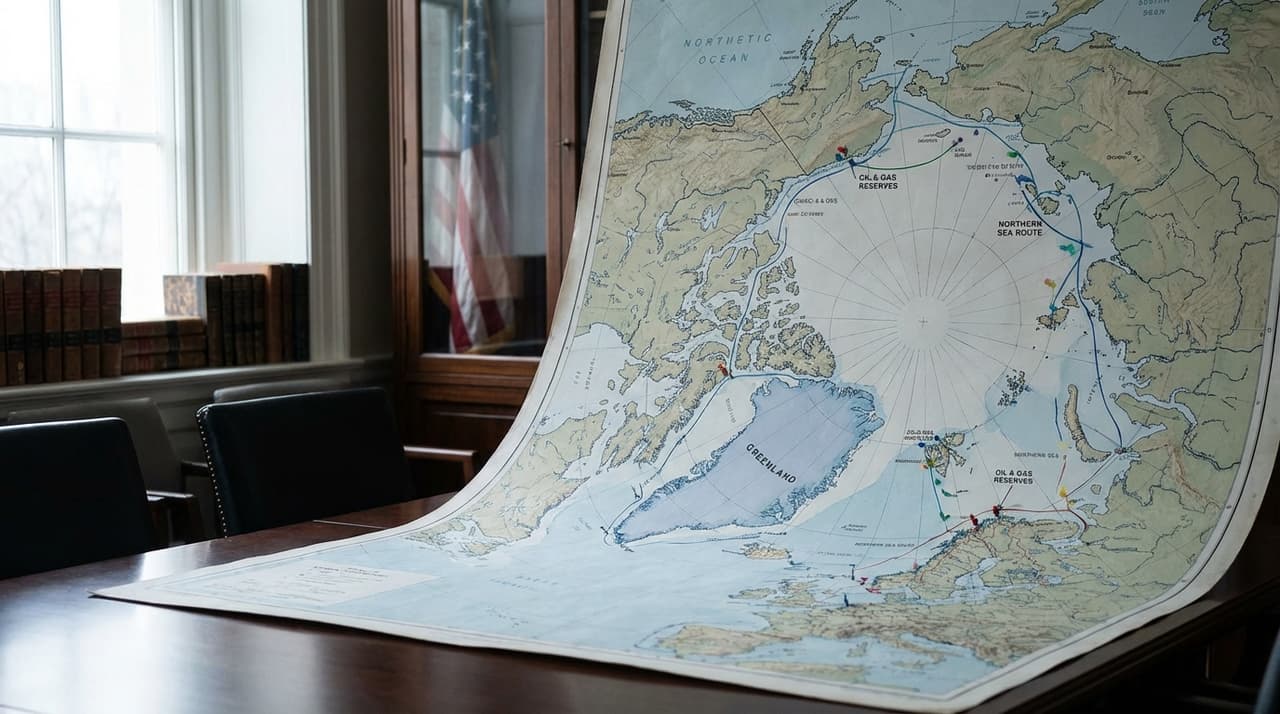
- U.S. Secretary of State Marco Rubio asserts improved diplomatic relations with Greenland, emphasizing a strategic focus on Arctic resources and security.
- The Trump administration prioritizes diplomatic channels over military options in efforts to purchase Greenland, despite firm rejections from Denmark and Greenland.
- Tensions within the U.S. political landscape emerge, with congressional Republicans criticizing potential military pressure while highlighting national security imperatives.
A Diplomatic Push for Arctic Dominance
U.S. Secretary of State Marco Rubio stated on January 28, 2026, that relations with Greenland are "in a good place," as the Trump administration intensifies efforts to acquire the territory from Denmark. Speaking after a classified Capitol Hill briefing, Rubio framed the move as a national security imperative to counter China and Russia in the Arctic, leveraging Greenland's vast natural resources, such as rare earth minerals, and its strategic location. According to people familiar with the matter, the White House has confirmed discussions of "all options," including military force, but Rubio stressed that diplomacy remains the priority, with plans for meetings next week following urgent requests from Danish and Greenlandic counterparts.
Economic and Political Stakes
Greenland's economic appeal lies in its potential to bolster U.S. supply chain security against Chinese dominance in critical minerals, amid intensifying great-power competition for polar resources and shipping routes. However, Denmark and Greenland have firmly rejected sale talks, issuing a joint European statement asserting self-determination and sovereignty. This stance has drawn rebukes from European leaders and Danish MEP Anders Vistisen, who decry U.S. "bullying," straining ties with NATO allies. Within the U.S., stakeholders are split: "America First" supporters eye security gains, while congressional critics, including House Speaker Mike Johnson and Sen. Thom Tillis, warn of alliance damage, with Mitch McConnell calling military force "catastrophic self-harm."
Ongoing Negotiations and Future Implications
Rubio's comments revive historical U.S. interest in Greenland, dating back to Truman's 1946 offer and Trump's 2019 proposal, which was dismissed by Denmark as "absurd." In the short term, diplomatic talks scheduled for next week may de-escalate tensions, but persistent U.S. pressure risks further NATO friction. Experts note that without a deal, the U.S. could face accelerated rival investments by China and Russia in the Arctic. Efforts to restructure this geopolitical landscape have hit a snag, as Greenlanders and Danes view the proposals as infringing on sovereignty, sparking public backlash. Rubio underscored the security imperatives, stating, "What we're focused on is regulatory stability and strategic advantages," in a slightly more conversational tone, while the administration plans to prioritize diplomacy over floated military options.
Correction: An earlier version misstated the date of Rubio's comments; it was January 28, 2026.