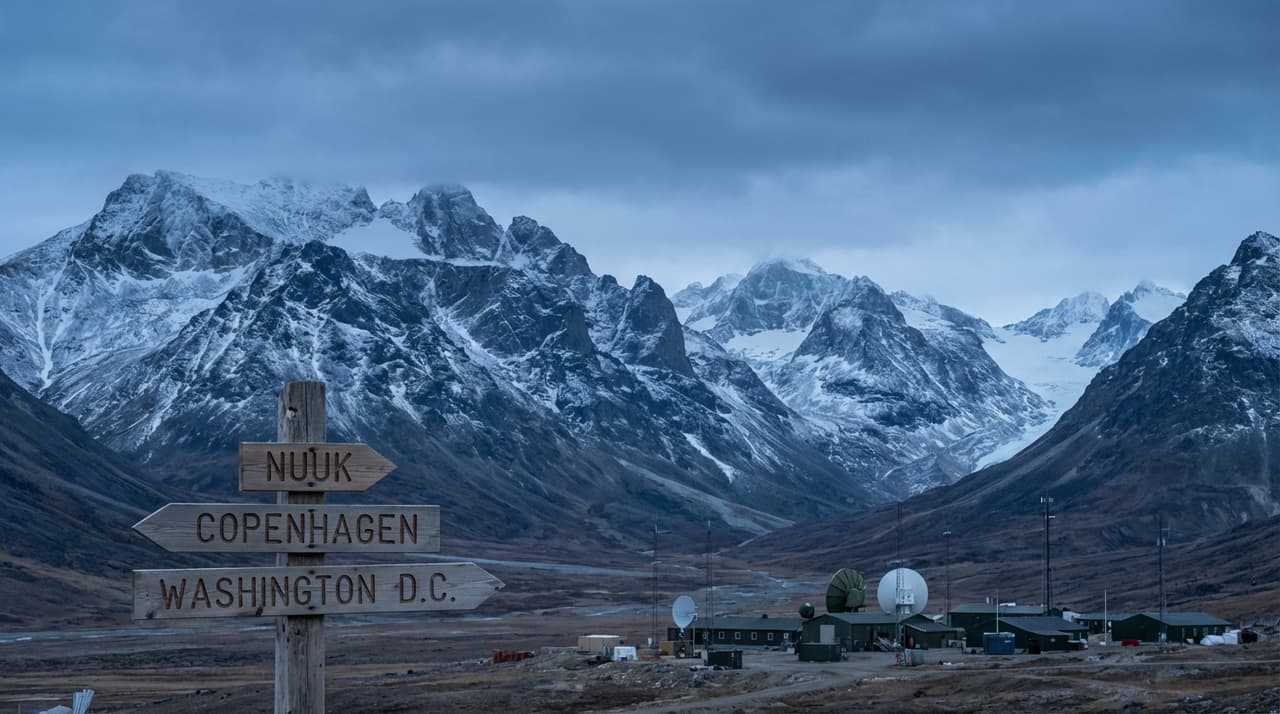
- Denmark's Foreign Minister Lars Løkke Rasmussen asserts threats cannot secure ownership of Greenland, emphasizing Europe's collective response to U.S. tariff threats.
- U.S. President Trump escalates pressure with demands for Greenland's acquisition, citing security needs against Russia and China, while threatening tariffs on eight European countries.
- Diplomatic talks in Washington aim to address the dispute, with Denmark and Greenland firmly rejecting any sale or transfer, invoking NATO protections and sovereignty rights.
Diplomatic Standoff Intensifies Over Arctic Territory
Denmark's Foreign Minister Lars Løkke Rasmussen has taken a firm stance against U.S. efforts to acquire Greenland, stating unequivocally that "you can't threaten your way to ownership" of the autonomous territory. In remarks that underscore the escalating tensions, Rasmussen noted that "it's Europe that will respond to the tariff threat, not Denmark," highlighting the broader implications of President Trump's aggressive posture. The comments come as Danish and Greenlandic officials, including Foreign Ministers Rasmussen and Vivian Motzfeldt, prepare for high-stakes meetings with U.S. counterparts like Secretary of State Marco Rubio and Vice President JD Vance in Washington on January 21, 2026.
Trump's demands for U.S. ownership of Greenland, driven by security concerns over Russian and Chinese influence in the Arctic, have been met with outright rejection from Copenhagen and Nuuk. According to people familiar with the matter, the President has threatened tariffs on eight European countries and even hinted at military action, insisting "one way or the other, we're going to have Greenland." This rhetoric has sparked joint statements from Denmark and Greenland affirming Greenland's status within the Kingdom and invoking NATO protections, with Danish Prime Minister Mette Frederiksen calling the acquisition idea "absurd."
Economic and Security Stakes in the Balance
Amid the political wrangling, economic factors loom large. Trump announced 10% import tariffs on eight European countries over the Greenland dispute, a move that could disrupt EU-U.S. trade valued at billions and raise costs for European exports. On the ground, Greenland's untapped mineral resources, including rare earths and uranium, attract U.S. interest for supply chain security, while Denmark's $6.5 billion Arctic defense package last year aims to bolster economic sovereignty through military investments. As global trends show rising Arctic investments due to melting ice, U.S. concerns over Chinese and Russian influence are driving demands for expanded basing beyond the 1951 U.S.-Denmark defense agreement.
Efforts to restructure diplomatic relations have hit a snag, with Trump prioritizing "ownership" over existing treaties, echoing his deal-making approach in other contexts like the Panama Canal. Without a resolution, analysts warn the dispute could fracture NATO unity, with Denmark threatening to invoke Article 5 if invaded and EU officials cautioning it could end the alliance. In Greenland, the 57,000 residents, mostly Indigenous Inuit, face heightened anxiety over cultural autonomy, sparking large anti-U.S. protests under slogans like "Hands off Greenland." Attempts to reach U.S. officials for further comment were unsuccessful, but sources indicate that short-term talks may yield compromises such as U.S. military expansions or mineral deals, though Trump's insistence on ownership remains a "conundrum" for all parties involved.
Correction: An earlier version of this article misstated the date of the Washington meetings; they are scheduled for January 21, 2026, not mid-January.