- U.S. President Donald Trump escalates efforts to acquire Greenland from Denmark, citing national security concerns over potential Russian or Chinese incursions, with threats of tariffs and not ruling out military force.
- Danish and Greenlandic officials reject any sale or takeover, prompting diplomatic talks, increased NATO military presence, and U.S. base upgrades at Pituffik Space Base.
- A high-level working group established in January 2026 explores U.S. security needs without challenging Danish sovereignty, while Trump's tariff threats deepen transatlantic tensions.
A Diplomatic Standoff with Economic Stakes
President Donald Trump has ramped up pressure to acquire Greenland, framing it as a critical move to counter Russian and Chinese ambitions in the Arctic, according to people familiar with the matter. In a recent statement, Trump emphasized that without a deal, the U.S. might be forced into a defensive posture under NATO commitments, sparking fears of a broader alliance rift. Efforts to restructure this geopolitical equation have hit a snag, with Danish and Greenlandic leaders firmly opposing any transfer of sovereignty "under any circumstances," as one official put it. The White House, however, continues to frame ongoing discussions partly as acquisition talks, even as a working group formed in mid-January aims to address security concerns without upending Danish control.
Tariffs and Troop Movements
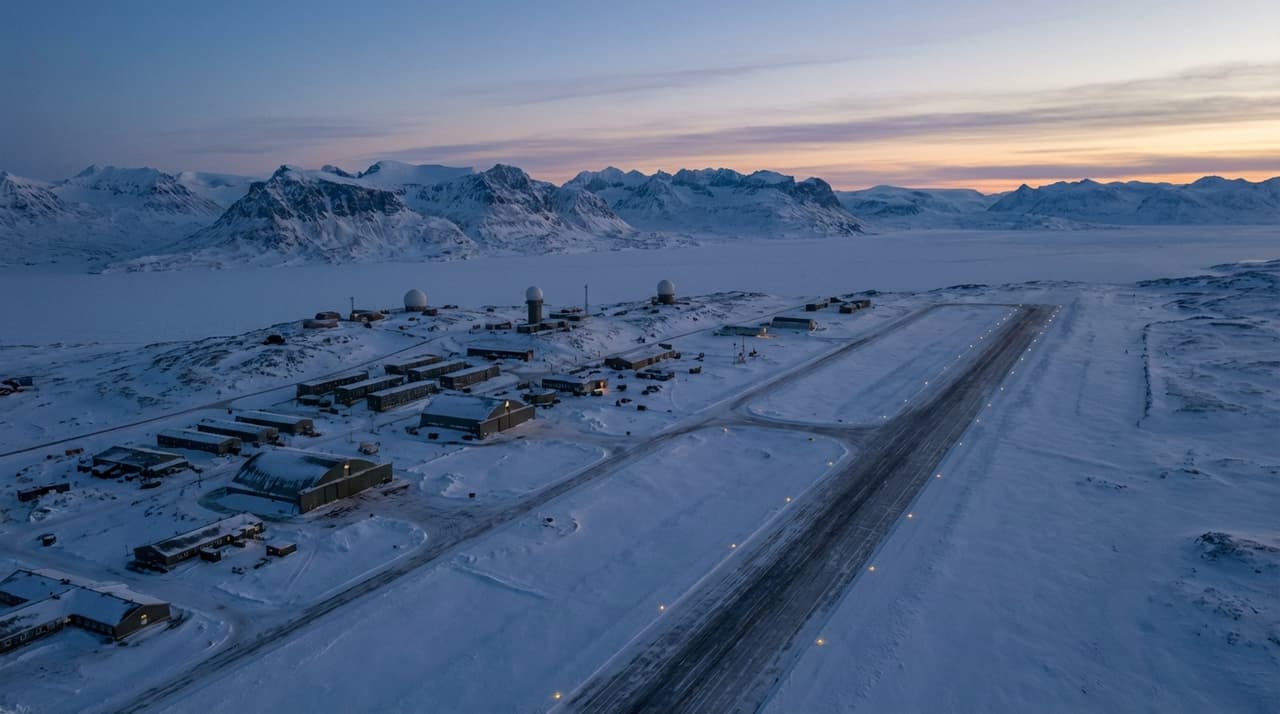
In a move that has rattled European markets, Trump announced escalating tariffs on Denmark and the broader European Union until a purchase agreement is reached, a tactic that could strain trade flows and economic stability. Meanwhile, Denmark unveiled a $6.5 billion Arctic defense package last year, boosting troops, naval vessels, drones, and space capabilities in Greenland, with NATO allies like France and Germany joining the buildup. On the ground, the U.S. is soliciting bids for $25 million in upgrades at Pituffik Space Base, including runway lighting and bridges, despite the diplomatic crisis—a sign that military preparations are proceeding apace. A special envoy appointed by Trump in December 2025 to focus on Greenland has drawn sharp criticism from allies, who warn of undermining NATO cohesion.
Strategic Implications and Future Outlook
Greenland's value lies in its vast mineral, oil, and gas reserves, as well as strategic Arctic resources, with melting ice opening new shipping routes that heighten its geopolitical importance. The 1951 Defense of Greenland Agreement, amended in 2004, grants the U.S. extensive basing rights at Pituffik, where about 150 troops are stationed, and allows for reopening Cold War-era bases without ownership—a framework experts say could be renegotiated to expand U.S. presence without annexation. Trump's "Golden Dome" missile defense initiative relies on Greenland to counter Russian hypersonic threats like the Tsirkon and Kinzhal missiles, with Denmark already ordering SAMP/T systems in 2025 to complement potential U.S. deployments of Patriot or THAAD systems. In the short term, the working group may yield a revised agreement, but tariffs and military escalations risk sparking a broader confrontation, with stakeholders from U.S. troops to Greenlandic locals caught in the crossfire. As one analyst noted, "This isn't just about real estate; it's a test of whether the U.S. can secure its interests without fracturing the alliances that have underpinned global security for decades."