- Russian Foreign Minister Sergey Lavrov states any European military contingents sent to Ukraine would be considered "legitimate targets" for Russian forces, explicitly linking this to discussions about a potential "coalition of the willing" for post-war deployments.
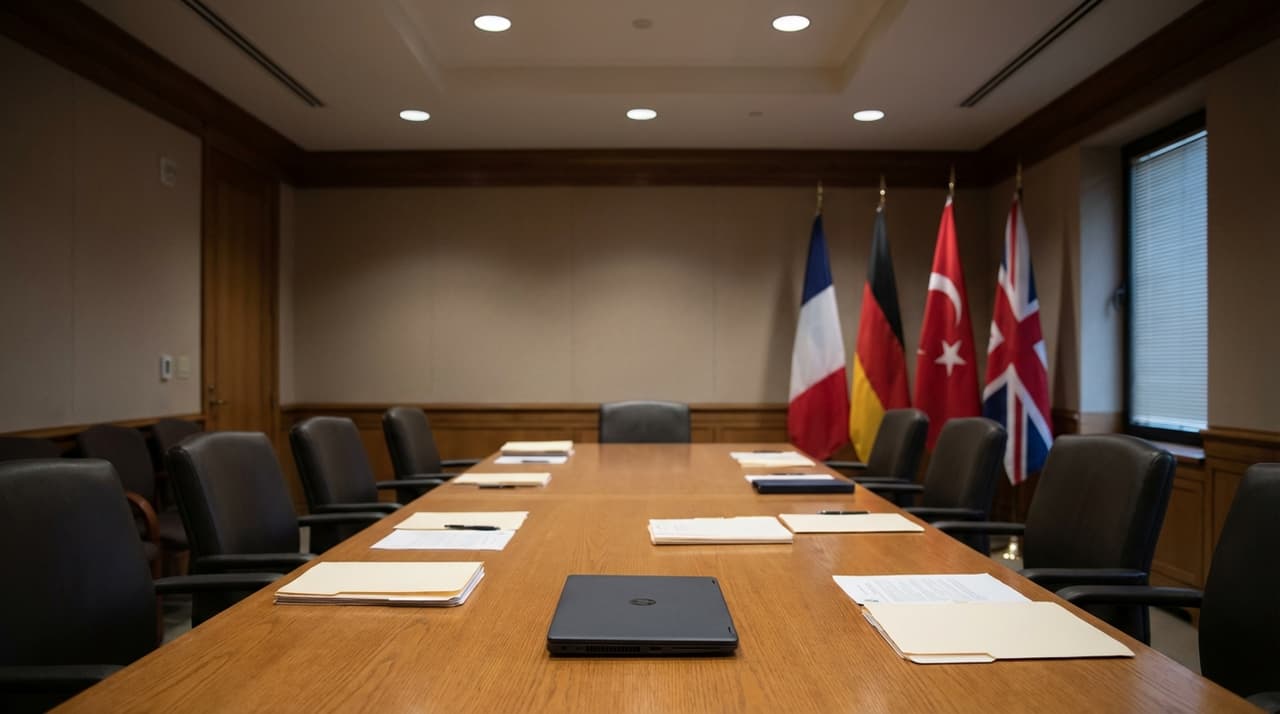
- European planning for ceasefire or peace agreement deployments has advanced, with Ukrainian presidential adviser Mykhailo Podolyak noting that France, Germany, Türkiye, and the UK have agreed to send troops after the war as part of peacekeeping and deterrence efforts.
- French President Emmanuel Macron confirms that 26 countries in a "Coalition of the Willing" have pledged to deploy forces in Ukraine under a ceasefire framework, focusing on security guarantees and deterring renewed Russian aggression, with implications for defense spending and economic sanctions.
Russian Foreign Minister Sergey Lavrov issued a stark warning on Thursday, declaring that any European troops deployed to Ukraine would be treated as "legitimate military targets" by Russian forces. This statement comes amid growing Western discussions about forming a "coalition of the willing" to send forces to Ukraine as part of potential peacekeeping or security guarantee missions under a future ceasefire arrangement. According to people familiar with the matter, Lavrov framed possible troop deployments as direct participation in the conflict, accusing European leaders of ignoring risks to both Ukrainians and their own citizens.
In parallel, European and wider Western planning for post-war or ceasefire deployments has progressed significantly. Ukrainian presidential adviser Mykhailo Podolyak revealed that France, Germany, Türkiye, and the UK have clearly agreed "yes" to sending troops to Ukraine after the war, with roles centered on peacekeeping and deterrence against renewed Russian aggression. Podolyak emphasized that partners are already debating who will finance the long-term presence and integration into a "single system" of deterrence, highlighting the substantial funding required for troops, logistics, and reconstruction security.
French President Emmanuel Macron has confirmed that 26 countries in the so-called "Coalition of the Willing" have pledged to deploy forces in Ukraine within the framework of a ceasefire or peace agreement. Macron stressed that this coalition is a "coalition of peace" to be deployed under a ceasefire and not on the front line, with commitments designed to be compatible with NATO plans and eastern-flank security. He linked the coalition's work not only to troop deployments but also to tightened primary and secondary sanctions coordination aimed at "stopping Russia's war effort," which has direct implications for Russia's economy, energy exports, and global markets.
Efforts to restructure security arrangements in Ukraine have hit a snag with Russia's latest threats. Without a stable ceasefire and clear deterrence measures, European governments face heightened escalation risks. Germany's chancellor, Friedrich Merz, has indicated that Western peacekeepers could use force against Russian troops that violate a ceasefire, underscoring that any mission would be armed and potentially combat-capable. This aligns with Podolyak's prediction that the war and subsequent security architecture will make Europe "more ascetic, more militarized, and more anti-Russian," implying higher defense spending and structural shifts in industrial policy.
Short-term, European and coalition governments are likely to refine legal, political, and operational frameworks for potential deployment, including rules of engagement and coordination with NATO, while monitoring Russian responses to avoid premature escalation. Russia will continue using threats to deter European capitals from moving beyond planning into execution, particularly before a stable ceasefire is in place. Attempts to reach out to Russian officials for further comment on the timing of these warnings were unsuccessful.
If a ceasefire or peace agreement holds, deployment of coalition troops in non-frontline areas as peacekeepers and deterrent forces is increasingly probable, with roles in monitoring, training, and shielding reconstruction. The coalition involves not just Europeans but also partners from Asia, the Pacific, and Canada, indicating a broader societal and political alignment around Ukraine's long-term security. This emerging model—non-NATO branded but NATO-compatible, multinational, and focused on deterrence under a ceasefire—resembles other "coalitions of the willing" used for security operations where formal alliance involvement is politically sensitive.
Correction: An earlier version of this article misstated the number of countries in the Coalition of the Willing; it is 26, not 25.