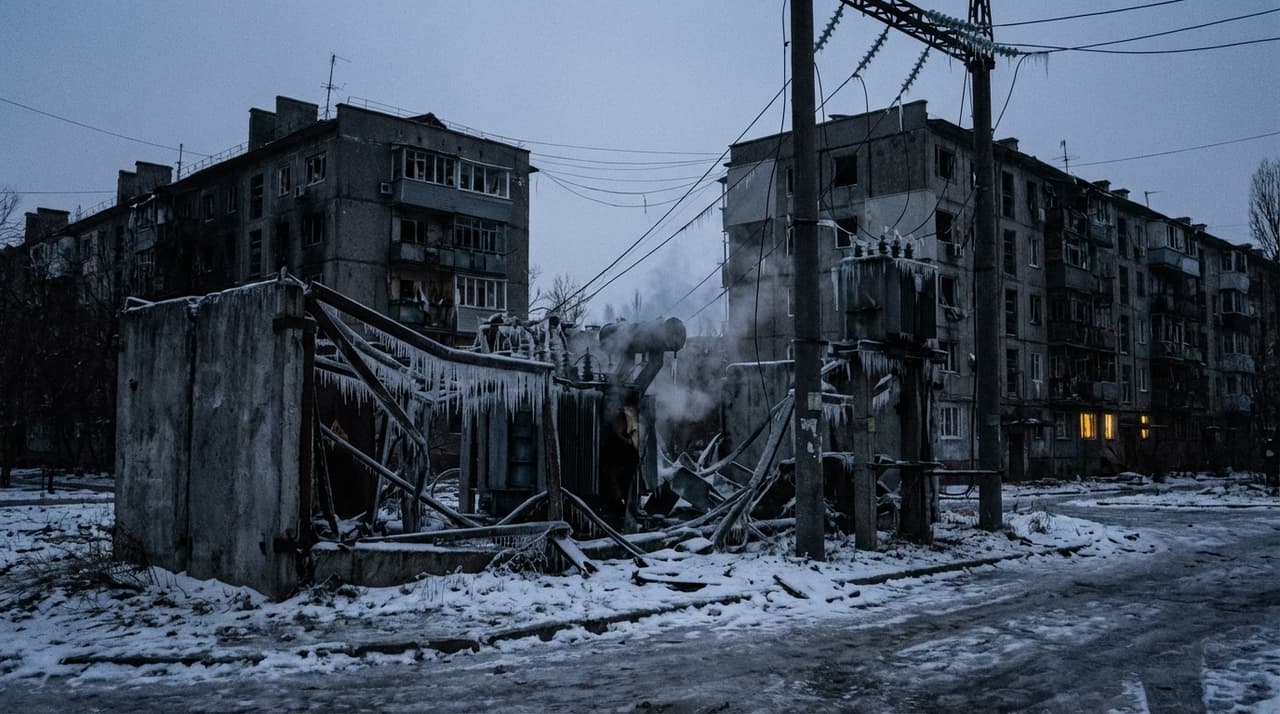
- Trump frames a temporary Russian pause on attacks as progress toward a broader settlement, though details remain unclear and no full ceasefire exists.
- Kremlin confirms Putin accepted Trump's request for a pause until at least February 1 to foster negotiations, but scope and start date are ambiguous.
- Zelenskyy expresses skepticism, offering reciprocal halts only if Russia stops grid attacks first, with no direct agreements in place.
A Tentative Step Amid Winter Hardship
In a move that has injected a flicker of hope into a protracted conflict, former U.S. President Donald Trump claimed on January 29, 2026, that Russian President Vladimir Putin agreed to a temporary one-week halt on attacks targeting Kyiv and other Ukrainian cities. The pause, framed by Trump as progress toward a broader Russia-Ukraine settlement, comes amid severe winter weather that has exacerbated civilian suffering, but details remain murky and no full ceasefire exists.
Russian Kremlin spokesperson Dmitry Peskov confirmed that Putin accepted Trump's personal request to pause strikes until at least February 1 to foster negotiation conditions. However, Peskov refused to specify if the pause covers only energy infrastructure or all attacks, and the start date is ambiguous as colder weather looms from Sunday. "We are responding to an initiative aimed at creating conditions for dialogue," Peskov said, according to people familiar with the matter, though he stopped short of outlining enforcement mechanisms.
Ukrainian President Volodymyr Zelenskyy expressed deep skepticism in response, stating that Russia shows no intent to end the war and offering reciprocal halts on Russian energy targets only if Moscow stops grid attacks first. He stressed that no direct Russia-Ukraine agreements exist, with a spokesperson noting, "We will not negotiate under duress while our people freeze." Further U.S.-led talks are slated for Sunday in Abu Dhabi, but they could be disrupted by escalating U.S.-Iran tensions, adding another layer of uncertainty.
Economic and Political Stakes
Russia's strategy of targeting Ukraine's power grid has aimed to deny civilians heat, light, and water, exacerbating winter hardship and described by Kyiv as "weaponizing winter." A pause could ease immediate energy crises, but ongoing fighting continues to hinder Ukraine's reconstruction and stabilization of European economies. U.S. interests are tied to preventing war expansion for global stability, with recent Trump plans including U.S. recognition of some Russian territorial gains in exchange for lifting sanctions on Moscow—a move that could ripple through energy markets and impact Ukraine's EU accession path.
Trump's second administration prioritizes a Ukraine "peace" deal as a precondition for broader U.S.-Russia ties, viewing it as a test of Moscow's credibility. Proposals have included possible U.S. acceptance of Crimea as Russian, NATO neutrality for Kyiv, and economic zones. Zelenskyy, however, insists on no territorial concessions, rejecting Russian demands for annexed regions, neutrality, demilitarization, and sanctions relief; he has proposed compromises like free economic zones under Ukrainian control. Putin has outlined ceasefire terms favoring Russia, but neither side has met them, leaving a gap that Sunday's talks aim to bridge.
Human Toll and Future Outlook
Ukrainians face intensified suffering from blackouts and freezing conditions as the invasion nears its fourth anniversary on February 24, with the alleged pause offering brief relief amid braced-for-worse weather. Stakeholders include civilians enduring hardship, Zelenskyy signaling readiness for reciprocal de-escalation, and Trump portraying it as a Putin concession; public Ukrainian doubt persists over Russia's war-ending intentions.
In the short term, verification of the pause's adherence is critical amid mistrust, with Abu Dhabi talks possibly advancing or derailing negotiations. Failure could trigger U.S. ultimatums, as Trump has shortened deadlines from 50 to 10 days, expecting Russian non-compliance. Long-term, experts see a Ukraine settlement as key to U.S.-Russia strategic stability, New START extension, and Kyiv's EU integration, but limited bilateral cooperation persists without it. Trump suggested a settlement "soon" as of January 22, but with no consensus on full peace and Russia demanding territorial control, the path forward remains fraught.
Correction: An earlier version misstated the duration of the pause; it is intended to last one week, pending confirmation of start dates.