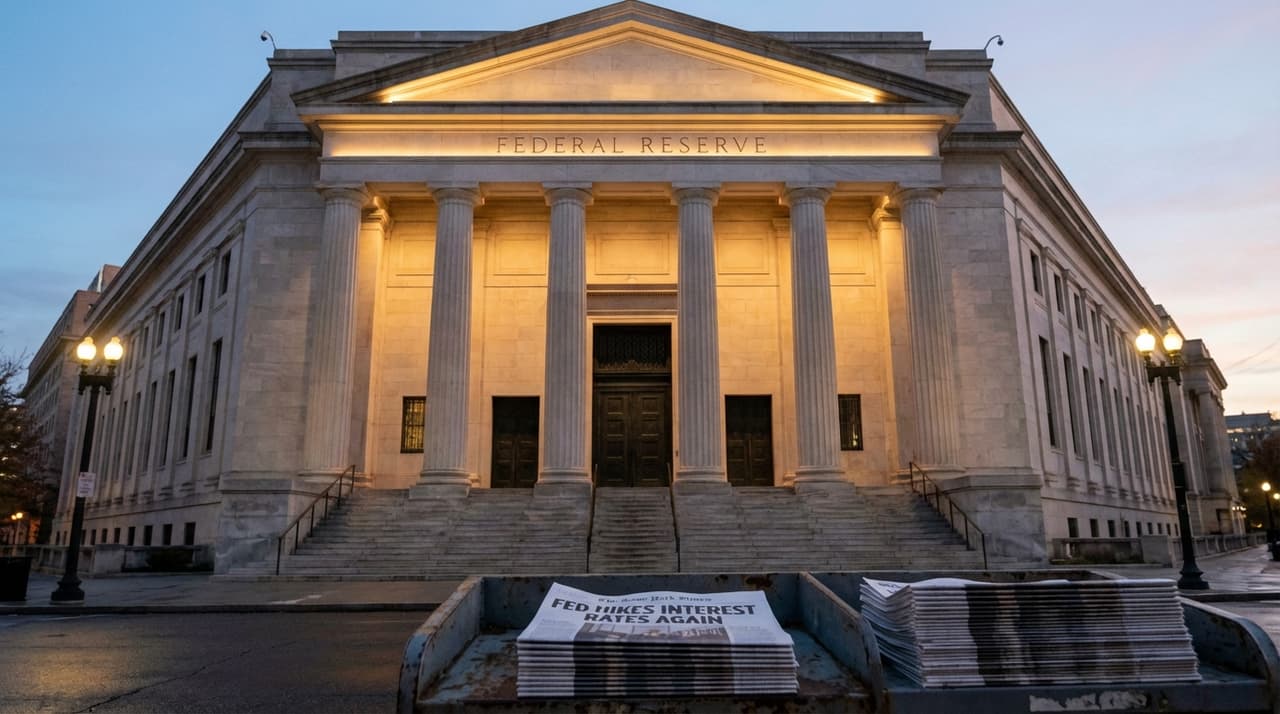
- Federal Reserve Chair Jerome Powell holds interest rates steady at 3.5%-3.75% on January 28, 2026, emphasizing a data-driven approach amid political pressure from the Trump administration.
- The pause follows three consecutive rate cuts in late 2025, with Powell stating decisions are made on a 'meeting by meeting basis' to prioritize economic data over political demands.
- The announcement comes amid institutional turbulence, including a DOJ investigation into Powell and uncertainty over his successor as his term expires in May 2026.
Federal Reserve Chair Jerome Powell held interest rates steady at 3.5%-3.75% on January 28, 2026, maintaining the central bank's data-driven approach amid intense political pressure from the Trump administration to cut rates more aggressively. This decision underscores the Fed's commitment to navigating a complex economic landscape where inflation remains above the 2% target and the labor market shows signs of weakness.
Powell's statement about making decisions 'on a meeting by meeting basis' was a clear signal to markets and policymakers that the Fed is sticking to its independent, data-dependent stance. According to people familiar with the matter, internal discussions at the Fed have focused heavily on balancing these competing economic pressures, with some officials expressing concern that premature rate cuts could fuel inflationary risks. The pause follows three consecutive rate reductions in late 2025, which had already led to modest declines in borrowing costs for consumers and businesses.
The political context adds a layer of volatility. President Trump has repeatedly pressed for deeper rate cuts, arguing they are needed to address affordability concerns, but Powell has resisted, emphasizing that policy must be guided by economic indicators. In a recent development, the Department of Justice opened a criminal investigation into Powell related to the Fed's building renovation project, which Powell characterized as a pretext for weakening Fed independence. Sources close to the situation suggest this investigation has intensified tensions between the Fed and the White House.
Looking ahead, leadership uncertainty looms large. Trump is expected to announce Powell's successor as early as this week, with Powell's term expiring in May 2026. Leading candidates include National Economic Council Director Kevin Hassett, Federal Reserve Governor Christopher Waller, and former Federal Reserve Governor Kevin Warsh, according to insiders. However, experts note that even if a new chair is appointed, the Fed chair holds only one vote among 12 FOMC members, limiting any single leader's ability to shift policy dramatically unless the entire committee composition changes.
For stakeholders, the rate hold means credit card rates, averaging 19-20%, along with car loans and personal loans, will remain elevated in the near term. But recent improvements from 2025 cuts should continue to slowly benefit borrowers. Powell is likely to use upcoming press conferences to defend central bank independence, framing it as essential to sound monetary policy. As one analyst put it, 'The Fed's steady hand here is crucial for market stability, even amid the political noise.'
Correction: An earlier version of this article misstated the date of the Fed's decision; it was January 28, 2026, not late January 2025.