- President Trump announces 10% tariffs on eight NATO allies deploying troops in Greenland, effective February 1, 2026, amid ongoing rejections from Denmark and Greenland.
- Trump reiterates openness to using military force to acquire Greenland, framing it as a national security imperative against Russia and China.
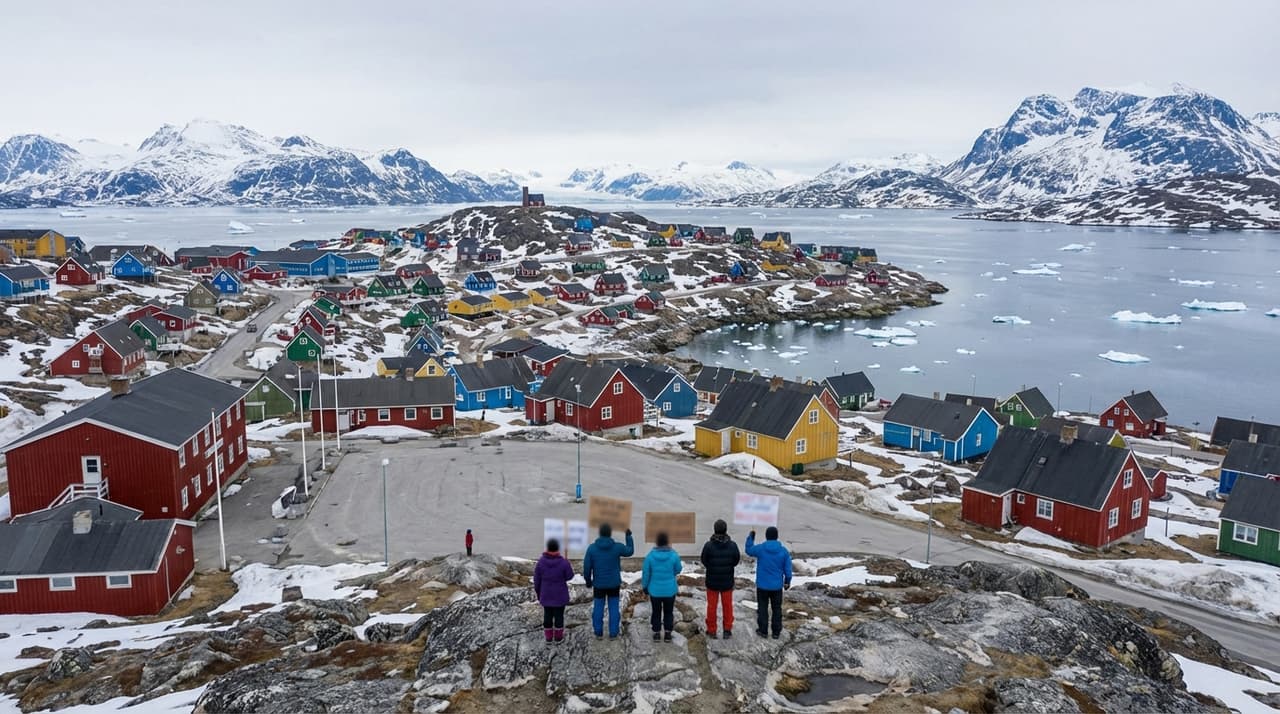
- Protests erupt in Nuuk with a "Stop Trump" march, while experts question the economic viability, citing high costs and infrastructure gaps.
A Strategic Gamble with Global Repercussions
President Trump has intensified his controversial bid to acquire Greenland, unveiling 10% tariffs on eight NATO allies that maintain small troop contingents on the island, starting February 1, 2026. The move, announced over the weekend, targets countries opposing U.S. control, according to people familiar with the matter. In a sharp escalation, Trump refused to rule out military force, stating, "We're going to do something on Greenland whether they like it or not," after Danish Foreign Minister Lars Løkke Rasmussen met with U.S. officials to discuss Arctic security goals.
Efforts to restructure this geopolitical play have hit a snag, with Denmark repeatedly rejecting purchase talks led by Secretary of State Marco Rubio. Without a deal, the administration risks fracturing NATO unity and violating international law through potential invasion. Protests in Nuuk drew huge crowds against the proposal, highlighting local resistance, though some Greenlanders see leverage for independence from Danish subsidies, preferring U.S. cooperation over Chinese influence.
Economic Hurdles and Market Reactions
The business case for annexation appears weak, with experts estimating a $700 billion purchase price plus hundreds of billions for infrastructure like mines and ports, taking 10-20 years until returns materialize. The U.S. would inherit Denmark's $700 million annual subsidies for Greenland's 56,000 residents, adding to the financial burden. While Greenland offers rare earths potential, such as the Tanbreez project now 92.5% owned by Critical Metals with a January pilot, historical mining and oil failures and infrastructure gaps limit viability. Current U.S. treaties already allow investment and military expansion without annexation, making the push seem more about strategic signaling than practical gain.
Prediction markets like Kalshi show 42% odds of a deal before Trump's term ends, with $17 million wagered, reflecting uncertainty. Tariffs risk broader trade disruptions with NATO allies, potentially straining alliances further. The administration plans upgrades to Pituffik Space Base regardless of purchase outcomes, underscoring a focus on Arctic security amid competition with Russia and China.
Political Fallout and Future Outlook
Trump frames Greenland as part of a "Donroe" doctrine, invoking recent actions in Venezuela and threats to countries like Colombia, Cuba, and Mexico. Danish leaders have decried what they call "conquering" wishes, insisting Greenland is not for sale and sparking a "Greenland crisis" since 2025. This threatens NATO cohesion and could lead to legal violations if force is used. Analysts favor negotiation or status quo expansion over military action, citing poor economics, but warn that security concerns might override costs in Trump's calculus.
Short-term, tariffs effective February 1 could escalate tensions, while base expansions proceed. Long-term, annexation risks alliance fracture, but experts urge cooperative Arctic dialogue to avoid catastrophe. The situation remains fluid, with ongoing back-channel talks and no consensus predictions beyond market odds.