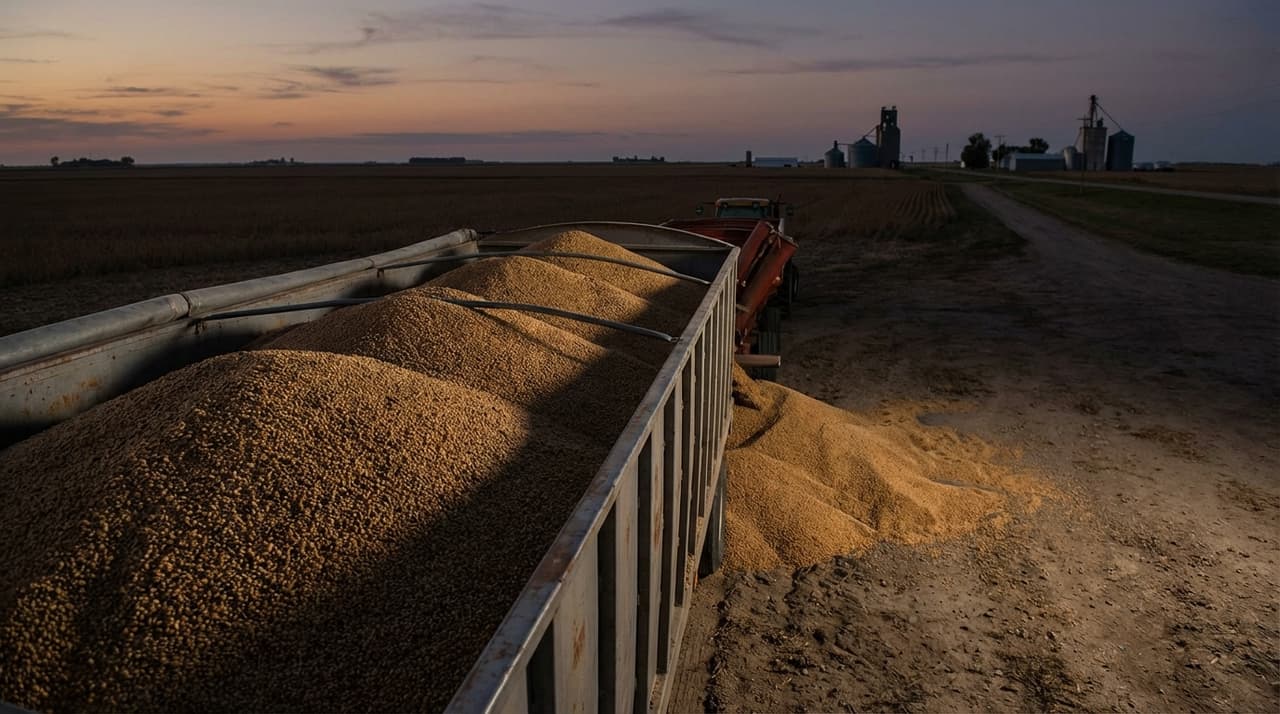
- The USDA confirmed a 132,000 metric ton soybean sale to China on December 5, 2025, part of renewed purchases under a November trade deal committing China to 12 million metric tons in late 2025 and 25 million annually through 2028.
- Cumulative U.S. soybean exports to China in 2025 are projected at 18 million metric tons, 33% below 2024 levels and the lowest since 2018, despite a recent uptick in sales.
- Soybean futures rose to nearly $11 per bushel after the deal but remain below many producers' break-even points, with challenges from a 13% Chinese tariff, a strong U.S. dollar, and Brazil's dominant market share.
Renewed Purchases Signal Fragile Recovery
U.S. exporters sold 132,000 metric tons of soybeans to China, as confirmed by the USDA on December 5, 2025, marking a step in the recovery from a six-month near-zero export suspension due to trade tensions. This sale, part of the 2025/2026 marketing year, contributes to 1.8 million metric tons sold since October 30, according to people familiar with the matter. Private exporters reported this alongside larger weekly totals, such as 792,000 metric tons and 264,000 metric tons to China, signaling a tentative rebound.
Efforts to stabilize agricultural trade have hit a snag in the past, but the November U.S.-China deal has provided a lifeline. "This sale supports short-term price stability for Midwest producers," one industry analyst noted, though many still face financial stress from earlier losses. Attempts to reach USDA officials for further comment were unsuccessful.
Economic Headwinds Persist
Despite the uptick, cumulative 2025 U.S. soybean exports to China are projected at 18 million metric tons—33% below 2024's 26.8 million metric tons—representing the lowest since 2018. Soybean futures rose to nearly $11 per bushel post-deal but remain below many producers' break-even after basis adjustments. A strong U.S. dollar is reducing competitiveness, and a 13% Chinese tariff lingers, complicating the outlook.
Brazil's record 79 million metric tons of exports to China from January to October 2025, capturing about 80% of its total, continues to overshadow U.S. efforts. Global shifts favor South America, with Brazil's 2025 exports to China now forecasted at 82 million metric tons despite the U.S. return, and expanded 2025/26 planting in Brazil and Argentina adding to supply pressures.
Political and Market Implications
The November deal ends China's import suspension tied to retaliatory trade measures, suspending some tariffs but retaining others; it follows the 2020 Phase One agreement. U.S.-China ties are warming, boosting crop prices, though tensions persist from the 2018 trade war onset. Without sustained purchases, U.S. producers could face further revenue declines, especially as they navigate harvest season relief.
Industry-specific elements like filing deadlines and specific financial agreements underpin these developments. For example, fulfilling the 12 million metric ton commitment by year-end could lift prices further, but competition may limit gains. In the long term, the 25 million metric ton annual commitment through 2028 is 14% below recent averages, with South America's dominance likely persisting via lower costs and production growth.
Correction: An earlier version misstated the timing of the sale; it was confirmed on December 5, 2025, not earlier in the week.