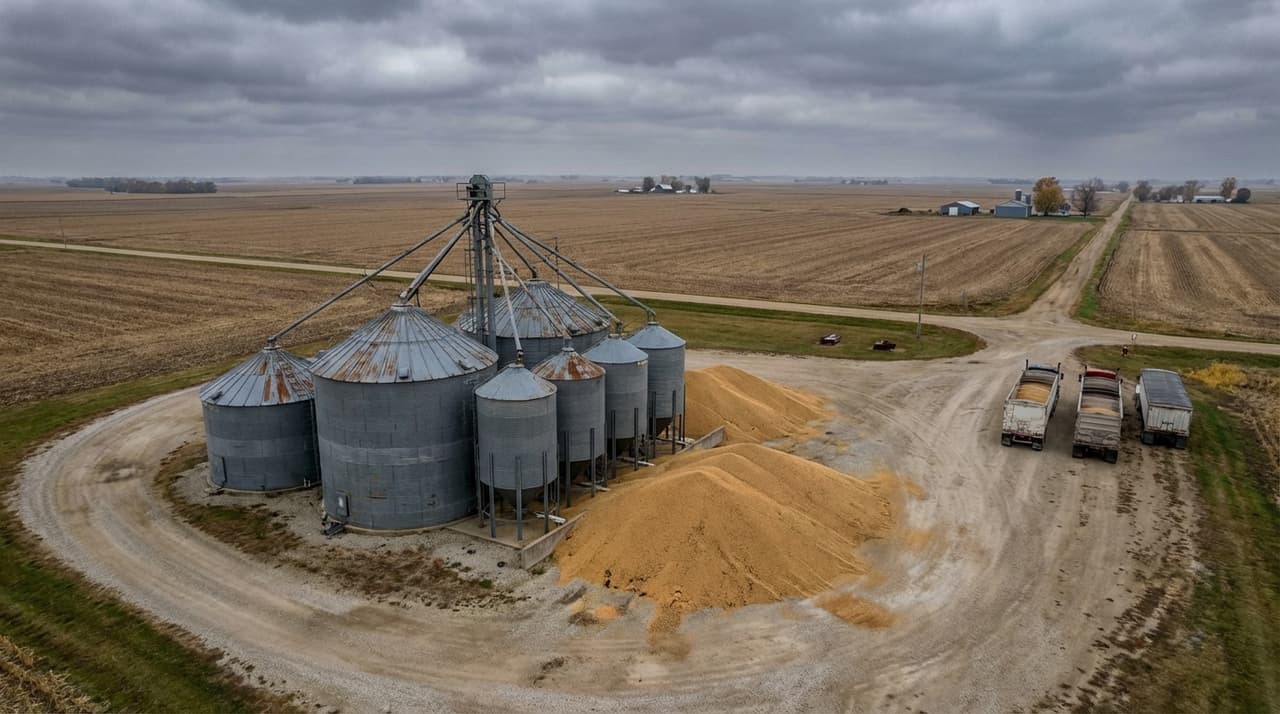
- A modest but symbolically important sale of 264,000 metric tons of soybeans to China for the 2025/26 marketing year marks a partial resumption of trade after months of sharply reduced exports.
- The sale comes amid ongoing U.S.-China trade negotiations, with China having imported no U.S. soybeans in September and October 2025, an unprecedented gap since the 2018 trade war.
- Weak Chinese demand in 2025 has left U.S. farmers with high stocks and low prices, fueling debate over over-reliance on China and calls for market diversification.
US exporters have reported a sale of 264,000 metric tons of soybeans to China for the 2025/26 marketing year, according to the USDA’s Foreign Agricultural Service, a move that signals a tentative step toward easing trade tensions between the two economic giants. This transaction, while modest in scale, represents a symbolic shift after a period in 2025 when China imported no U.S. soybeans in September and October and almost none over the summer—an unprecedented gap since the 2018 trade war.
Recent reports indicate that China has resumed some U.S. soybean purchases since late October, following a Trump–Xi meeting aimed at de-escalating trade disputes. According to people familiar with the matter, there is an informal U.S. claim of a 12-million-ton purchase "commitment" by China into early 2026, though Beijing has not officially confirmed this. The 264,000-ton sale fits into a pattern of politically influenced, state-directed purchases, with reports suggesting Chinese state-owned COFCO (002423.SZ) and other state-backed buyers received tariff waivers or other inducements to buy U.S. beans despite the 10% tariff that typically keeps them uncompetitive against Brazilian alternatives.
Efforts to restructure agricultural trade between the U.S. and China have hit a snag, as the 2025 collapse in soybean exports is part of a longer trend of China gradually reducing reliance on U.S. agriculture. From January–August 2025, U.S. soybean exports to China were 218 million bushels, down from 985 million bushels in 2024, and USDA projects U.S. agricultural exports to China overall to fall about 30% in 2025 and to drop further in 2026. Without a sustained deal, U.S. farmers would face continued financial stress, with many forced to sell at depressed prices or store soybeans on the ground.
Rising Brazilian prices and some supply constraints in South America have recently opened a narrow commercial window for U.S. beans, prompting the latest Chinese purchases. Analysts note that shrinking South American supplies and seasonal patterns are expected to create a brief window through roughly February 2026, during which China may need to import more U.S. soybeans, especially if the informal 12-million-ton package is pursued. However, with the 10% U.S. tariff still in place and only modest price discounts, purchases are likely to remain limited and concentrated in state-directed buying rather than broad commercial demand.
In the U.S., the sharp drop in Chinese purchases in 2025 has fueled public debate over over-reliance on China, with some farmers expressing doubts that touted purchase targets will be fully met. "Any incremental sale to China is positive but small relative to the large 2025 shortfall," said one industry source, who requested anonymity due to the sensitivity of ongoing negotiations. Attempts to reach representatives from major U.S. soybean exporters like Cargill or ADM (ADM) for comment were unsuccessful, but sources indicate that these multinationals are cautiously optimistic about the recent developments.
Looking ahead, analysts at institutions like CSIS (CSIS.JK) and ING (ING) stress that even under optimistic scenarios, U.S. soybean exports to China in 2025/26 will remain well below historical peaks, and the U.S. will need to develop other export markets and expand domestic crush—for example, for renewable diesel—to reduce vulnerability to Chinese policy shifts. The trajectory points toward shrinking Chinese demand for U.S. agriculture, implying continued uncertainty and income risk for U.S. farmers unless market diversification succeeds. In parallel, China has occasionally suspended some Brazilian exporters over phytosanitary issues, a move some interpret as a signal in broader negotiations over origin sourcing.
Correction: An earlier version of this article misstated the timeline for the 12-million-ton purchase commitment; it is targeted for early 2026, not late 2025.