Alkermes plc
Q1 FY2026 · Earnings Call TranscriptMay 5, 2026
Operator
Greetings, and welcome to the Alkermes first quarter 2026 financial results conference call. My name is Carrie, and I will be your operator for today's call.
All participant lines will be placed on mute to prevent background noise. If you should require operator assistance during the call, please press star zero from your telephone keypad.
Please note this conference is being recorded. I will now turn the call over to Sandy Coombs, Senior Vice President of Investor Relations and Corporate Affairs.
Sandy, you may now begin.
Sandy Coombs
Good morning. Welcome to the Alkermes plc conference call to discuss our financial results and business update for the quarter ended March 31, 2026.
With me today are Richard Pops, our CEO; Joshua Reed, our Chief Financial Officer; Todd Nichols, our Chief Commercial Officer; and Blair Jackson, our Chief Operating Officer. A slide presentation along with our press release, related financial tables, and reconciliations of the GAAP to non-GAAP financial measures that we'll discuss today are available on the investor section of alkermes.com.
We believe the non-GAAP financial results, in conjunction with the GAAP results, are useful in understanding the ongoing economics of our business. During the quarter, we closed the acquisition of Avadel Pharmaceuticals plc.
The financial results announced today reflect the mid-February closing of the transaction and the integration of Avadel into our business, including 6 weeks of contribution from LUMRYZ, Avadel's once-at-bedtime sodium oxybate for the treatment of narcolepsy. Our discussions during this conference call will include forward-looking statements.
Actual results could differ materially from these forward-looking statements. Please see slide 2 of the accompanying presentation, our press release issued this morning, and our most recent annual report filed with the SEC for important risk factors that could cause our actual results to differ materially from those expressed or implied in the forward-looking statements.
We undertake no obligation to update or revise the information provided on this call or in the accompanying presentation as a result of new information or future results or developments. After our prepared remarks, we'll open the call for Q&A.
Now I'll turn the call over to Richard for some opening remarks.
Richard Pops
Thank you, Sandy. Good morning, everyone.
We had an excellent financial first quarter with another strong period of commercial execution and business performance. The quarter was consequential in other ways.
Perhaps most significantly, we completed the acquisition of Avadel, a key element of our strategy to become a leader in the sleep medicine space. With LUMRYZ, we add a new, differentiated medicine to our portfolio, one that's early in its commercial life and has significant potential for growth.
LUMRYZ addresses a clearly defined patient need and fits logically into our portfolio, consistent with our focus on medicines delivering meaningful clinical benefit to patients. From a financial standpoint, the acquisition further enhances our financial growth and provides additional resources and flexibility to advance our development portfolio.
Beyond the financial consideration, the acquisition allows us to establish a commercial footprint in sleep medicine now, well in advance of the potential approval and launch of alixorexant. This early presence enables us to engage directly with sleep specialists and other key stakeholders critical to ensuring access to prescribed medications.
Building these relationships now provides a strong foundation to accelerate our potential launch trajectory for alixorexant. Another consequential event occurred at the very end of the quarter with the announced entry of Eli Lilly into this therapeutic space.
This is an important external validation of the breadth of the scientific and commercial potential in developing new medicines targeting the orexin pathway. I think it underscores important aspects of this emerging therapeutic class, namely, the limited number of competitive entrants and the scarcity of available intellectual property around the chemistry, as well as the broad potential clinical and commercial opportunity.
It starts with diseases of hypersomnolence and extends beyond that to a range of potential conditions in neurology, psychiatry, and other rare diseases. For Alkermes, we believe alixorexant and our other development candidates represent substantial opportunities to advance patient care and drive significant value for shareholders.
We have a clear strategy and we're well positioned to advance these programs. Blair and I will provide an update on our development efforts at the end of the call, but first I'll turn to Todd and Joshua to review our commercial and financial performance for the first quarter.
Todd.
Todd Nichols
Thank you, Rich. Good morning, everyone.
I'm pleased to report that we're off to a strong start to the year with first quarter performance ahead of our expectations and solid execution across the commercial organization. It is exciting to note the evolution of our commercial team as our portfolio of commercial products expands.
We now have commercial capabilities in 3 distinct categories: in addiction with VIVITROL, in psychiatry with ARISTADA and LYBALVI, and now, following the closing of the acquisition of Avadel, in sleep medicine with LUMRYZ. The integration of Avadel commercial team is progressing well, and we enter the second quarter with the combined team fully in place.
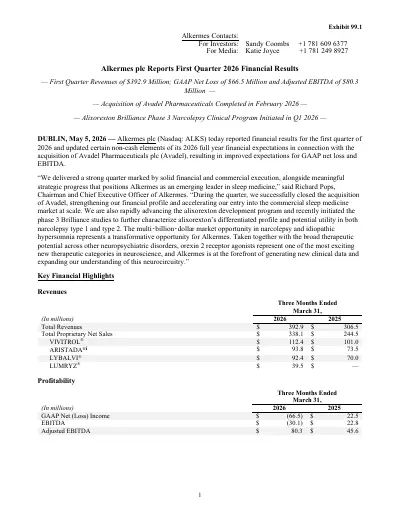
Looking ahead, with clear strategic priorities, a seasoned commercial team, and a portfolio of important medicines in addiction, psychiatry, and sleep disorders, we are in a strong position to deliver on our performance goals for 2026. Turning to our first quarter results, net sales from our proprietary product portfolio increased 38% year-over-year to $338.1 million, reflecting solid demand across our psychiatry and addiction portfolios and certain favorable gross-to-net adjustments during the quarter and 6 weeks of commercial contribution from LUMRYZ.
Starting with VIVITROL, net sales in the quarter were $112.4 million. VIVITROL performance continued to be driven by our ability to capitalize on highly localized market dynamics in certain states and payer systems.
Looking ahead, we continue to expect VIVITROL net sales for 2026 in the range of $460 to $480 million. For our psychiatry franchise, in the first quarter, net sales for the ARISTADA product family were $93.8 million, reflecting solid underlying demand.
In 2026, we continue to expect ARISTADA net sales in the range of $365 to $385 million. LYBALVI net sales grew 32% year-over-year to $92.4 million.
Underlying TRx growth was 21% year-over-year, driven by sustained momentum in new patient starts and continued expansion in prescriber breadth. Gross-to-net adjustments were approximately 33%, which we expect will continue to widen into the mid-30s during the course of the year as we continue to build on our market access profile.
For the full year, we continue to expect LYBALVI net sales in the range of $380 to $400 million. The first quarter results for these products benefited from gross-to-net favorability of approximately $14 million, driven primarily by favorable patient mix.
Approximately 2/3 of this favorability related to VIVITROL, and the remainder related to ARISTADA and LYBALVI. Across the brands, inventory levels in the channel were relatively stable in the first quarter of 2026.
As a result, we expect Q1 to Q2 growth trends to generally track in-market demand. Turning to our sleep franchise, we are now 10 weeks post-close of the acquisition of Avadel.
As we build on our commercial presence in this space, we are pleased with feedback from the sleep medicine community regarding the LUMRYZ commercial organization, the utility and expected durability of the oxybate class, and the differentiation of LUMRYZ within this category. The LUMRYZ team is off to a strong start since joining Alkermes.
For the first 6 weeks following the close of the acquisition in mid-February, we recorded LUMRYZ net sales of $39.5 million. For the full quarter, LUMRYZ generated approximately $72 million of net revenue.
We exit the quarter with approximately 3,600 patients on therapy and with solid momentum in new patient enrollments, which we expect to build on as we move through the year. For the full year, we expect LUMRYZ to generate total net sales in the range of $350 to $370 million.
Of this, we expect Alkermes to record $315 to $335 million, reflecting the period since the mid-February close of the transaction. In sleep medicine, our near-term focus is on driving growth and executing against the LUMRYZ opportunity while advancing our broader strategy in this space, including preparation for the potential launch of alixorexant.
Narcolepsy and idiopathic hypersomnia represent multibillion-dollar market opportunities, and our goal is to establish Alkermes as the leader in sleep medicine based on deep expertise in this disease area and differentiated and competitively positioned product portfolio. With solid performance from our established franchises and the recent addition of LUMRYZ, we are operating from a strong position of increasing scale and diversification.
As we move forward, our focus remains on disciplined execution, driving demand across our brands, and advancing our strategy in psychiatry, addiction, and sleep medicine. The first quarter was a strong start to the year, and we are well positioned as we work toward achieving our 2026 objectives.
With that, I will pass the call to Joshua to review the financial results for the quarter.
Joshua Reed
Thank you, Todd. In the first quarter, we delivered financial results that reflect continued growth across our proprietary product portfolio and the initial contribution from LUMRYZ following the close of the Avadel acquisition.
Post-acquisition, our financial profile is further enhanced and diversified. We manage the business to drive significant operating cash flow and maintain a strong balance sheet, and we do so now with increased scale and flexibility.
We are in a strong position to invest in the expanding development pipeline that will shape the future of our business. Turning to our financial results, during the quarter, we generated total revenues of $392.9 million.
These results provide a solid foundation for the year. Today, we are updating certain non-cash elements of our 2026 financial expectations to reflect refinements to the purchase price accounting for the acquisition of Avadel.
These adjustments improve our full-year expectations for GAAP net loss and EBITDA. For our portfolio of proprietary products, we generated net sales of $338.1 million, ahead of the expectations we outlined on our fourth quarter call.
As we move into the second quarter, we expect Q2 net sales from our proprietary portfolio, including a full quarter of revenues from LUMRYZ, in the range of $385 to $405 million. Manufacturing and royalty revenues were $54.8 million for the quarter, including revenues of $27.3 million from VUMERITY and $18 million from the long-acting INVEGA products.
Turning to expenses, cost of goods sold was $61.6 million, which includes the purchase price accounting of LUMRYZ inventory. Recall that at closing, LUMRYZ inventory held by Avadel was marked to fair market value.
Net of the LUMRYZ inventory step-up charge, cost of goods sold would have been $48.9 million in Q1 of this year compared to $49.2 million in Q1 of the prior year. In the second quarter, we expect COGS to be in the range of $85 to $95 million, reflecting a full quarter of LUMRYZ sales and associated inventory step-up charge.
R&D expenses in the quarter were $103.3 million compared to $71.8 million in Q1 of the prior year, reflecting the initiation of the alixorexant BRILLIANCE phase 3 clinical program in narcolepsy, which began in the first quarter, the ongoing VIBRANCE-3 phase 2 study of alixorexant in idiopathic hypersomnia, and the phase 1 studies and development efforts for our next orexin 2 receptor agonist candidates, ALKS 7290 and ALKS 4510. In the second quarter, we expect R&D expenses to be in the range of $110 to $120 million.
SG&A expenses were $264.6 million for the quarter, which included approximately $55 million of costs associated with the closing of the acquisition of Avadel, including transaction expenses and share-based compensation. Excluding these one-time expenses, SG&A would have been $209.4 million compared to $171.7 million in Q1 of last year, primarily reflecting the addition of the Avadel commercial infrastructure mid-quarter.
As we look ahead to the second quarter, we expect SG&A expense to be in the range of $210 to $220 million. During the quarter, we also recorded amortization of intangibles of $11.7 million and net interest expense of $12.4 million.
In Q1, we generated GAAP net loss of $66.5 million and EBITDA of -$30.1 million. We also generated positive adjusted EBITDA of $80.3 million, well ahead of our prior Q1 expectation of adjusted EBITDA of $30 to $50 million due to higher than expected revenues and the timing of R&D expenses.
Looking ahead to the second quarter, we expect adjusted EBITDA to be in the range of $100 to $120 million. Turning to our balance sheet, we ended the first quarter with approximately $538 million in cash and total investments.
To finance the acquisition of Avadel, we used approximately $775 million of cash from our balance sheet and entered into term loans totaling $1.525 billion due in 2031. We expect to pay down this debt quickly with cash flows from the business.
During the quarter, we also deployed $28 million to repurchase approximately 1 million shares at an average price of approximately $28 per share. We continue to have $172 million of remaining share repurchase authorization.
As I mentioned, in connection with the purchase price accounting related to the Avadel acquisition, we have refined our expectations for several non-cash expense items, including the inventory step-up charge, which flows through cost of goods sold, and the amortization of intangible assets associated with LUMRYZ. These changes have a net positive impact on our 2026 expectations for GAAP net loss and EBITDA.
We now expect to expense approximately $105 million of LUMRYZ inventory fair value step-up in 2026 compared to a prior estimate of approximately $150 million. As a result, our 2026 cost of goods sold is now expected to be $320 to $340 million, an improvement from our prior estimate of $365 to $385 million.
For amortization of intangible assets, we now expect full-year amortization expense in the range of $75 to $85 million compared to our previous estimate of $95 to $105 million. For income tax, we now expect no income tax expense or benefit for the year from a prior estimate of an income tax benefit of $20 million.
Taken together, these purchase price accounting adjustments improve our expectations for GAAP net loss, which is now projected to be in the range of $70 to $90 million, as well as for EBITDA, which is now expected to be in the range of positive $105 to $135 million. All other components of our 2026 outlook, including adjusted EBITDA, remain unchanged.
Taking a step back, it was a strong start to the year, and we look forward to carrying this momentum into the second quarter and beyond. With that, I'll now hand the call back to Rich.
Richard Pops
Thank you, Joshua. The commercial and financial elements of the business are strong.
With expected revenue of more than $1.7 billion and adjusted EBITDA of more than $370 million, we have the financial resources to invest aggressively in our pipeline and generate significant cash flow. I think it's becoming increasingly clear that our orexin program has brought us to the threshold of substantial value creation.
To date, we've developed and shared with you comprehensive clinical datasets across the first area of focus for this therapeutic class, disorders of hypersomnolence. That dataset reflects the design and execution of a broad phase 2 program: randomized, controlled, multi-center, multi-week across multiple doses and indications using established clinical endpoints as well as additional measures, such as fatigue and cognition, that relate specifically to the brain circuitry that we're activating.
At the same time, we're broadening our development efforts beyond disorders of hypersomnolence, leveraging our portfolio of orexin 2 receptor agonist candidates. In this area more than most, we believe that chemistry-based intellectual property represents an important strategic asset.
Blair will speak in more detail about our expansion strategy and development plans, but first I want to update you on where we are with alixorexant. This year, our focus is on continuing the momentum we built in phase 2 to enroll the phase 3 BRILLIANCE studies in narcolepsy.
Phase 3 for us is all about execution. We're on the path now to potential registration.
The BRILLIANCE phase 3 program is now open for enrollment in narcolepsy type 1 and type 2 with site initiation and patient screening underway. Because of the strength of the phase 2 results, investigator interest in the studies is strong.
We're working to enroll these studies quickly with a sharp focus on quality and execution to support the strongest competitive positioning. From an operational perspective, the duration and scale of the VIBRANCE-2 the VIBRANCE phase 2 studies generated important and proprietary data that informed the design of our phase 3 program.
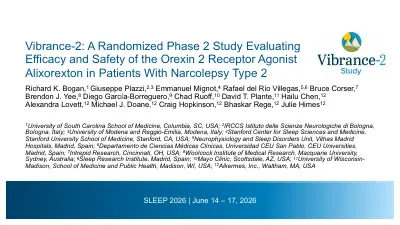
With alixorexant, we're building a broad and robust clinical data package across narcolepsy and idiopathic hypersomnia. In June, we'll present data from the VIBRANCE-2 narcolepsy type 2 study at the annual SLEEP meeting in Baltimore.
We reported the positive toplines in November, so much of the dataset will be familiar to you. Along with the positive outcome of the study, VIBRANCE-2 is important because it's one of a very small number of clinical studies ever conducted exclusively in patients with NT2.
As such, it provides a depth of insight into the characteristics and variability of this population that is largely absent from the existing literature. The SLEEP meeting gives us an opportunity to share the data with a broader sleep community.
One-on-one engagements with clinicians and investigators over the last several months have already given us a clear sense of the treatment community's high level of interest and excitement about these data. For idiopathic hypersomnia, or IH, our VIBRANCE-3 phase 2 study is ongoing and on track to be completed in the fourth quarter of this year.
We've initiated enrollment of a split-dose cohort of approximately 30 patients across sites in both the US and Europe with patients randomized to alixorexant or a matching split-dose placebo. As a reminder, in IH, the Epworth Sleepiness Scale and the Idiopathic Hypersomnia Severity Scale are the established and preferred clinical and regulatory endpoints.
In addition to those measures, VIBRANCE-3 also includes mean sleep latency assessed by the Maintenance of Wakefulness Test, which will help us to characterize the durability of wakefulness over the course of the day. The clinical development program for alixorexant has been deliberately designed to support strong competitive positioning, both in the quality of the clinical data generated and the breadth of potential dosing options and regimens being evaluated to address individual patient needs.
We believe this approach positions alixorexant, if approved, to become the orexin of choice across both narcolepsy indications. Importantly, alixorexant has the potential to be first-in-class in narcolepsy type 2, and our lead in development in NT2 continues to widen.
In the meantime, while the orexin development story in narcolepsy continues to mature, with LUMRYZ, we now have an important new medicine being used in current clinical practice. Later this quarter, we expect to announce topline data from the LUMRYZ phase 3 REVITALYZ study in IH.
Data from this double-blind, placebo-controlled, randomized withdrawal study, which enrolled approximately 150 patients, would serve as the basis for an sNDA submission with a potential launch in early 2028, if approved. This represents a potential growth opportunity for LUMRYZ in an underserved patient population, and we'll look forward to data this quarter.
Now I'll turn the call over to Blair to provide an update on our expanding development work in our orexin portfolio. Beyond central disorders of hypersomnolence, there are many adjacent disease areas that may benefit from modulating the orexin pathway.
We identified this opportunity early on, and we're moving aggressively with new molecules. Go ahead, Blair.
Blair Jackson
Thank you, Rich. As we outlined earlier in January, this year we are expanding our orexin development programs into disease areas outside of sleep medicine.
We are doing so with 2 new molecules from our portfolio, ALKS 7290 and ALKS 4510. Each of these orexin 2 receptor agonists has been advancing through single and multiple ascending dose cohorts in healthy volunteers, and we're pleased with the profiles we've observed to date.
This year, our development plans take us into patient populations in ADHD and fatigue. Early on, based on our emerging data and feedback from clinical investigators, we identified attention deficit hyperactivity disorder as one of the most compelling initial opportunities for orexin 2 receptor agonists outside of sleep medicine.
ADHD is a common neurodevelopmental disorder characterized by persistent difficulty in maintaining attention and concentration, and is frequently accompanied by hyperactive and impulsive behavior. Despite the availability of some treatment options, many patients continue to experience residual symptoms, functional impairment, tolerability issues, and adherence challenges even when receiving current standard of care treatment.
Against that backdrop, Alkermes is working to advance the evidence base supporting the potential use of orexin 2 receptor agonists in ADHD. We have established a foundation of data from validated preclinical behavioral models, assessment of neurotransmitters, and human EEG that support our conviction in this program.
Based on this foundation, we are initiating our first clinical studies of ALKS 7290 in adults with ADHD this year. The first is a phase 1b randomized, placebo-controlled proof-of-concept study designed to enroll approximately 50 adult patients.
Participants will receive 2 weeks of treatment with ALKS 7290 or placebo. In this study, we will assess the safety and tolerability of ALKS 7290 along with the effects of treatment on translational measures where we expect to see more rapid changes, including quantitative EEG and certain neuropsychological performance measures.
These assessments are designed to evaluate sustained attention, vigilance, and impulse control in a shorter-duration study. For exploratory purposes, we'll also assess changes from baseline on established clinical ADHD scales.
Results from this phase 1b study are expected in the fourth quarter of this year, and we will provide the first clinical data generated with an orexin 2 receptor agonist in patients with ADHD. Enrollment in that study is already underway with the first patients dosed in April.
As enrollment in the phase 1b study progresses, we plan to initiate a well-powered phase 2 study in adult patients with ADHD this summer. This randomized, double-blind study is expected to enroll approximately 300 patients and will evaluate ALKS 7290 versus placebo over a 4-week treatment period.
The primary endpoint will be change from baseline on the Adult ADHD Investigator Rating Scale. Data from this study, which we expect to complete in 2027, may serve as the foundation to advance to a potential registrational program in ADHD.
We are excited to be the leaders in this exciting area of clinical development, and we look forward to updating you on our progress. For ALKS 4510, we are advancing in single and multiple ascending dose studies in healthy volunteers and plan to initiate a multi-dose phase 2a study later this year in patients with fatigue associated with multiple sclerosis and Parkinson's disease.
Fatigue is one of the most common and burdensome symptoms in neurodegenerative disorders and remains a significant unmet need in MS and Parkinson's. Our interest in fatigue in these populations is also informed by observations from our phase 2 narcolepsy studies where we saw improvements in patient-reported fatigue that appeared distinct from effects on sleepiness or wakefulness alone.
Fatigue represents a novel area of pharmaceutical development, and we'll provide more details regarding the design of the development program as the phase 2 study opens later this year. As we advance through the development program, our strategy will be stepwise, data-driven, and informed by interactions with regulatory authorities as we seek to make a meaningful contribution to patient care.
Taking a step back, the potential utility of orexin 2 receptor agonists across a broad range of indications is a significant and striking opportunity. This will be the year that we generate a substantial new increment of data to the clinical evidence base supporting these potential opportunities.
With that, I'll turn the call back to Sandy to manage the Q&A.
Sandy Coombs
Thanks, Blair. We'll now open the call for Q&A.
Operator
Thank you. We will now be conducting a question-and-answer session.
If you would like to ask a question, please press star one on your telephone keypad. A confirmation tone will indicate your line is in the question queue.
Please limit yourself to one question and one follow-up. You may press star two if you would like to remove your question from the queue.
For participants using speaker equipment, it may be necessary to pick up your handset before pressing the star keys. Our first question will come from David Amsellem with Piper Sandler.
David Amsellem
Thanks. On the orexin programs beyond sleep-wake, in ADHD, can you talk about your thought process regarding development as monotherapy versus adjunctive therapy in ADHD and what preclinical data you can point to that gives you confidence that a monotherapy approach makes sense?
Then regarding the fatigue program, might be a little early to talk to this, but can you talk about endpoints that you're exploring? I realize this is going to be informed by your discussions with regulators, but what are you going to be looking at in terms of early outcome measures on fatigue?
Thanks.
Blair Jackson
Sure. Hey, David, it's Blair.
With regards to ADHD, we have a substantive amount of data with regards to orexin agonists in this space. In fact, it's probably the most tangential of the indications out there for the next place for us to go.
We did a lot of preclinical work looking at neurotransmitter release, looking at behavioral models, EEG. We saw increased levels of acetylcholine in the prefrontal cortex, which is a high indication of activity and attentiveness.
We also used what's a highly translatable model within the preclinical testing where it's called the 5-choice serial reaction test. Our initial hypothesis was exactly where you started was what if we did an adjunctive therapy perhaps with a non-stimulant, would that provide a really beneficial outcome?
When we did that model, what we found is across all our studies, we were performing as well as or better than stimulants themselves as a monotherapy. We feel that both in the attention and the impulsivity aspects of those programs that we have a really good opportunity here.
Our clinical studies that we're kicking off are actually designed to look at just that. We'll be looking at monotherapy across a broad population, both in tension and impulsivity.
I think the 2 studies that we've set up are going to be really really well positioned to give us a full idea of how this could proceed moving forward. With regards to fatigue and that program, we're moving into the clinic with a drug called ALKS 4510.
That's a really interesting area, and we are looking very carefully at the scales to be used within those studies. We're going to be testing this in MS fatigue patients and Parkinson's disease patients.
One scale that we're going to use is the PROMIS Fatigue Scale. This is a scale that we used in our NT1 study where we showed a really strong benefit within the NT1 patients, taking them really from severe to normal on that scale.
That hasn't been shown very widely within clinical literature. We also saw similar outcomes as we moved into the NT2 patient population.
That bodes well as we go to an intact orexin tone system. The other thing to keep in mind is a lot of these disease areas, they also have their own scales that have been developed as part of that patient population.
We're going to be testing those too and trying to understand best how the different characteristics of the scales work and also how these drugs perform within different subcategories of fatigue.
Sandy Coombs
Thanks, David.
Operator
Our next question will come from Umer Raffat with Evercore ISI.
Umer Raffat
Hi, guys. Thanks for taking my question.
I have a 2-part question. Clearly there's been a ton of interest, strategic interest in the orexin space.
What I'm wondering is twofold. Number one, can you lay out timelines for indications beyond narcolepsy, because I feel like that aspect of the value has not been captured by much of the valuation numbers that have been thrown around so far.
I ask that in particular because it seems like Lilly's early interest in Centessa was perhaps not even on the lead program. Number two, more importantly, is Alkermes and the board open to the idea of asset sale rather than a whole company sale if that were to be a possibility at any point?
I'm thinking back to examples like Biohaven. Thank you very much.
Richard Pops
Umer, maybe I'll start and then I'll hand over to Blair as well. I think Blair just referred to in the prepared comments, which is in the 2 most immediate adjacencies to the hypersomnolence are fatigue and ADHD.
We're enrolling patients right now in the first ADHD study, that translational study in adult patients. That'll be a 50-patient study.
We'll get data this year on ADHD. It'll give us our first sense, and we won't even wait for those data before we light off a bigger, proper phase 2 program, which we'll light off this summer in ADHD because we feel like the preclinical evidence in that space is quite compelling.
The enrollment in the fatigue studies in Parkinson's and whatever, MS, that starts this year as well. We're right on the threshold of new datasets that expand the understanding of pharmacology in patients without demonstrable orexin deficits.
As the first hints of that come from our NT2 data and our IH data that we've already developed. With respect to the second question, our company, our board, we're a public company, we react to whatever circumstances present themselves.
We feel like right now we're right on the threshold of major valuation changes as we mature this program. I think Lilly coming into the market underscores the fact that there's more than just hypersomnolence here at play.
This circuitry is directly associated with human wakefulness defined broadly, and I think that opens up a whole bunch of adjacencies. We start with hypersomnolence and we go from there.
Blair, any other thoughts?
Blair Jackson
No, I'd just reiterate what Rich said, which is we're in a process right now. We're going to be turning over a lot of cards with regards to a number of these clinical areas, and we're looking to really execute and drive value over the next couple of years.
I think it's a little premature to talk about any potential sale process.
Umer Raffat
Thank you very much.
Operator
Moving next to Paul Matteis with Stifel.
Julian Pino
Hey, this is Julian on for Paul. Thanks so much for taking our questions.
I guess just to piggyback again on the orexin program and in the pipeline, it would be great to hear about for this larger phase 2 that you're kicking off this summer, what types of patients are you hoping to enroll? Can you just talk a little bit about the translatability of what you'd expect based on past clinical data, literature in terms of success on the primary endpoint and how may that translate to a larger randomized phase 3?
I guess in comparison, how larger phase 3 studies relative to the phase 2 that you plan on kicking off? Thanks.
Blair Jackson
Thanks for the question. I think with regards to the ADHD, as I said earlier in the call, we saw pretty broad activity in some of our early models with regards to this asset and this mechanism.
As we look to enroll our patients in the phase 2 study, we think a broad base of patients will be beneficial from this. We're not going to look at individual subtypes.
Our key primary endpoint for this is the AISRS, which is the adult tool that's been used widely in industry. What we're really looking to do is see the relative effect size across the patient population.
Just to give an idea of what people have seen in the past, it kind of breaks into 2 main areas. You typically see the non-stimulants and they typically have Cohen effect sizes that are kind of 0.3 to 0.45 or so.
Then what you see is a very different result with stimulants. Stimulants typically can be 1 and above with regards to Cohen's d, but it comes with trade-offs.
What we're really looking to see is how we perform on that over a 4-week period. That study, as we said in the prepared remarks, is going to be about 300 patients, and that's roughly the size that you see in some of the phase 3 programs.
You go a little longer. Usually you're looking at 6-plus weeks on the primary endpoint.
We'll determine that and we'll indicate more of that after we see the data in the phase 2.
Richard Pops
I just want to add a couple of things on that. Number one, what we did in narcolepsy is what we want to do in ADHD, i.e., have a significant amount of clinical data before we launch the phase 3 program and run a phase 2 program that almost mimics a phase 3 program.
That's a major risk mitigator in the program. Second thing is we're going to start using the tools that exist just like we did in narcolepsy.
What's interesting about this pathway is it's activating the brain in different ways than a stimulant activates the brain. I think with the benefit of additional clinical data, we'll be able to dial into some of the differential efficacy potential of an orexin agonist compared to just a stimulant, which is revving up the brain in a more general way.
Julian Pino
Thanks so much. Sorry, just one quick question if I may as well.
I think you said you'd be completing the IH study in 4Q, Rich. Are we expecting data this year or could it potentially run into next year?
Thanks.
Richard Pops
That's the translational study, the first study where we're looking at more
Sandy Coombs
IH.
Richard Pops
Oh, I'm sorry.
Sandy Coombs
IH.
Richard Pops
IH, I'm sorry. The IH orexin study will complete that in Q4 and we'll get the data as fast as we can thereafter.
It could be right at the end of the quarter or right at the beginning of the second quarter, according to the current plan. of the first
Julian Pino
Thanks for the clarification.
Operator
Moving next to Jessica Fye with JP Morgan.
Jessica Fye
Great. Good morning.
Thanks for taking my question. Just a question on LUMRYZ and your guidance for that product this year.
Can you just talk about what's embedded as it relates to your expectation for any potential net price pressure as non-AG generic sodium oxybate gains traction in the marketplace?
Todd Nichols
Sure. I'll take that one.
At this point right now, as I stated, we're guiding to $350 to $370. We had a really solid first quarter, and so we feel really good about that heading into Q2 and for the remainder of the year.
At this point, we haven't seen any impact on multi-source generics for Xyrem. Again, the most important point is this is a multi-source generic for Xyrem, not for LUMRYZ.
We haven't seen any impact on demand, any impact on physician behavior, any change in payer behavior at this point. A really solid part about the LUMRYZ story is really the diverse patient mix.
We get a sizable portion of patients from new to oxybate, from returning oxybate, and from the switch market. It's a very durable product.
It's something that we're watching very closely. We'll have to see how it plays out, but with our full-year guide, we do incorporate a range of gross-to-net scenarios.
Jessica Fye
Very clear. Thank you.
Operator
Our next question will come from Ben Burnett with Wells Fargo.
Ben Burnett
Hi, thanks very much. I wanted to ask about the VIBRANCE-3 data that you will provide in the fourth quarter or thereabouts.
I guess what dose cohorts will be included in the update and will this include split dosing at therapeutically relevant doses?
Sandy Coombs
Yes, we expect to have topline results from the entire study when we read out the data from that, which would include the split-dose arm.
Ben Burnett
Okay. Fantastic.
Can I ask, the split dosing that's being tested, how is that split? Are they evenly split?
Are you testing sort of higher total doses in the split-dosing cohorts relative to the single-dose cohorts?
Richard Pops
We haven't disclosed the specifics on the split-dose strategy either for the IH study or for the other studies as well, partly because we feel like we've learned so much from our clinical program that is proprietary that we're going to keep that close to our vest until we have the data.
Ben Burnett
Understood. Thank you.
Richard Pops
You're welcome. Thanks, Ben.
Operator
We'll go next to Marc Goodman with Leerink Partners.
Marc Goodman
Yes. On LUMRYZ, can you talk about the net patient starts that got you to the 3,600 patients that ended the quarter?
Then now that you own the asset, can you give us an update of how you plan to develop valiloxybate? Thanks.
Todd Nichols
Hey, Marc. I'll take the first part of that.
Overall, as I said in my prepared remarks, the brand in Q1 realized 3,600 patients on therapy. We we actually think that total patients on therapy is the best metric.
That's a 20% year-over-year growth overall. That's the really the durable part of the brand.
That really incorporates any type of demand perspective, access, and also persistency. Our focus is really on on total patients.
We're always going to be focused moving forward on growing net patient adds, and we feel really good about, the enrollment trends we saw coming at the end of the quarter, which get us set us up very well for Q2 and beyond. That's that's really based upon just the the overall strength of the mix between new to oxybate, switch, and also returning.
We feel good about the patient mix that we're seeing.
Blair Jackson
Hey, Marc, this is Blair. I'll take the valiloxybate question.
That's an asset that came over as part of the Avadel acquisition, and that's an opportunity for us to potentially develop a no-salt once-nightly product for patients. Our plan for that is to take multiple formulations into the clinic and really try to assess a rapid development program.
This is really right up our wheelhouse, as you know. We're a formulation company at our roots and especially when it comes to PK/PD relationships.
We right now have multiple formulations that are in the clinic and being assessed. As we have more data later in the year, we'll share that.
Marc Goodman
Blair, do you think you're going to have to do a full phase 3 study or will you be able to do some type of bridging study that is quicker?
Blair Jackson
That'll really depend on the clinical data that we generate. Our hope is that we can do some bridging, but again, we'll have to see how this asset performs in the clinic.
Marc Goodman
Thanks, Blair.
Operator
Rudy Li with Wolfe Research has our next question. Hi,
Rudy Li
thanks for taking my question. Can you talk about your current understanding of the competitive landscape for orexin agonist?
Specifically, what key endpoints being measured in your BRILLIANCE phase 3 trial that could provide additional label differentiation? Thanks.
Richard Pops
I think the major differentiating feature in the orexin space now is the fact that Alkermes has the only program that has a range of doses that have been credentialed in large randomized phase 2 studies. In so doing, we've been able to explore other domains other than just the classic Maintenance of Wakefulness Test and the cataplexy scale by extending into fatigue and cognition.
While we don't expect fatigue and cognition data to be in our initial label, what we do expect is to have a clinical dataset that encompasses all those features of the treatment. When we come to market, if the drug is approved, we expect to come to market for NT1 and NT2, which differentiates us from the first market entrant, as well as a range of doses across NT1 and NT2, both as once a day as well as in split-dose formats, which further differentiates us from the first market entrant.
I think following the acquisition of Centessa, I think our lead in NT2 as well as NT1 continues to grow. We're really happy with the competitive positioning, and we think this is going to open up the beginning of a brand-new class of pharmaceuticals that will continue to grow from the diseases of hypersomnolence.
Rudy Li
Got it. Thank you.
Operator
We'll go next to Luke Herrmann with Baird.
Luke Herrmann
Hi, team. Thanks for the question.
One on 7290 in ADHD. You laid out the effect sizes we've seen across different standards of care.
Based on the preclinical data, do you think the more likely outcome as a monotherapy is sort of a more tolerable asset that sits in the middle of stimulants and non-stimulants in terms of efficacy, or do you think efficacy could actually exceed what we've seen with stimulants?
Blair Jackson
Again, what we've seen in our preclinical data is we performed as well as or better than stimulants in our early models as monotherapy. Obviously, if we're able to achieve that clinically with the tolerability profile that we see with this class of drugs, that's a great outcome for us.
I think there's a wide range of market opportunities regardless of what we see in the clinic. Our goal will be to get strongest efficacy possible.
Luke Herrmann
Great. Then just one follow-up on the alixorexant phase 3 studies.
I believe you commented on the high level of patient interest. Has this exceeded what you anticipated and would this maybe lead to a more expeditious enrollment?
Richard Pops
The difference between phase 3 and phase 2 for us is that when you go into phase 2, no one's used your drug before. Now we go into phase 3 with a major dataset that's been presented at major meetings and a buzz about this program.
What mitigates against the rate of enrollment, though, is the control and the rigor that we learned from phase 2 about which sites to use and how to select patients and how to make sure that you're not just enrolling for the sake of enrollment numbers, but to enroll the finest cohort you can over the period because those data become your label. The quality of that study is sacrosanct.
We expect to enroll the study correctly at the rate that we'll determine as we activate sites, and we'll keep you guys posted as we go on that.
Luke Herrmann
Great. Thank you.
Operator
We'll hear next from Joseph Thome with TD Cowen.
Jacob Omes
Hello. This is Jacob on for Joe.
Thanks for taking my question. I was wondering if you were planning on studying LUMRYZ in combination with an OX2R agonist in the future, and if so, what a trial for that look like?
Blair Jackson
Jacob, it's something we're hearing so frequently from clinicians now that we've completed the acquisition. We'll go to the SLEEP meeting in Baltimore representing both once-nightly oxybate with extended efficacy as well as the orexin program.
We will be harnessing that energy into a clinical program over time. We're not going to start that right away.
We need to finish some other things first, namely the registration program for alixorexant as monotherapy. I think there's increasing interest in the understanding of both the nighttime and the daytime aspects of the disease.
Jacob Omes
Great. Thank you.
Operator
We'll next to Ami Fadia with Needham & Company.
Ami Fadia
Good morning. Thanks for taking my question.
I've got 2. Just with regards to VIBRANCE-2 that's going to be presented at the SLEEP meeting in Baltimore, what additional data on top of what you'd announced at the initial data readout that we can expect at the meeting?
With regards to the LUMRYZ IH study that's expected to read out in the second quarter, maybe talk about your expectations for what that profile is likely to look like, the market opportunity, and what you're doing in terms of preparing for a potential launch of that indication. Thank you.
Richard Pops
Ami, it's Rich. I'll start.
As I mentioned, we presented most all of the data on the VIBRANCE-2 study in November, and that's available on the website if people want to look at that again. We will give a bit more at SLEEP in two principal domains.
One, we'll try to give a little bit more dimensionality to the efficacy effect that we saw. The other is we do have data from the extension phase now that we can tack on to the double-blind phase.
That's always instructive to see what happens as patients stay on therapy for a longer period of time. Of course, at the SLEEP meeting, those data are presented by investigators and you have the ability to talk to people who have actually hands-on in the use of the drug.
Your second question was about LUMRYZ in IH and the market opportunity for that. I'll start and then I'll ask Todd to comment on that.
What's interesting is that a competitive product, Xywav, is the principal growth of that drug now is driven by the IH indication. Part of the reason we went into IH for alixorexant was talking to patients and patient advocacy groups, there's a huge unmet need for new medicines in IH.
We just had a thought leader here at the company yesterday saying that he thought oxybates at this moment were probably the best treatment for idiopathic hypersomnia, which is interesting. I think that's underappreciated.
We will be able to enter this market with LUMRYZ in 2028. We have some time to prepare for that type of launch if it's approvable.
We're quite excited about that as a life cycle growth tool for LUMRYZ. Todd, you want to add?
Todd Nichols
Yeah. I would just add a couple of things.
We continue just to validate all the research that we've done, listening to the community, listening to HCPs. We believe it's a really underdeveloped category right now.
There's 40,000 patients that are diagnosed. We think that's underrepresented, and there's only one FDA-approved product on the market.
We think that LUMRYZ has an opportunity to be the second product, and we know how well LUMRYZ is received in the community now for narcolepsy, our expectations are very high on what the opportunity is for LUMRYZ in IH. As Rich said, as the data is presented, as we go through the approval process, we'll be continuing to build what our launch plan looks like.
It's something that we are very excited about.
Operator
We'll go next to Jason Gerberry with Bank of America.
Chi Fong
Hey, good morning. This is Chi on for Jason.
Thanks for taking our question. I guess on ADHD, can you talk about what's unique about the molecule, PK, or dosing profile that could help you mitigate insomnia or urinary frequency, the class adverse events you have observed in narcolepsy patients?
Would you expect the ADHD patients to be more or less sensitive to these class AEs so far? Just a quick follow-up on VIBRANCE-2.
Would you provide any sort of kinetics on weekly MWT data to better contextualize data comparison relative to a key competitor of yours, which had 2-week data, and you've talked about observation of tachyphylaxis in the past with VIBRANCE-2. Thanks.
Blair Jackson
All right, Chi, it's Blair. I'll start with the ADHD and then I'll get Rich to answer you on the VIBRANCE-2 stuff.
With regards to ADHD, I think a couple things I want to make sure we're clear on. One is the adverse events that we typically see with this class of orexin agonists is it's a very wide therapeutic window.
As you saw from our programs in NT1, in NT2, we have a really nice AE profile overall. The main effects associated with this class are really pollakiuria and some transient insomnia that we see at the beginning of the study.
As we talk about the ADHD program and the PK dosing profile, I think with regards to any of the new programs that we move outside of narcolepsy, we're developing them with new drugs. ALKS 7290 is its own unique molecule.
It's been designed by itself specifically. It's optimized for the patient populations that we're going after.
It'll have its own unique PK and dosing profile that will match that patient population. As what we've saw in our NT2 program is that patients who have an intact orexin system, who have natural orexin tone, we tend to see a very mitigated overall AE profile due to that fact.
Again, I think we're well positioned to test a wide range of doses within that patient class. Rich, do you want to do
Richard Pops
The VIBRANCE-2 data at SLEEP, you will see time-course data on a multi-week basis for the ESS score. I just want to make the point that there is no competitive data that's been presented so far.
There's only one company that's shown multi-week successful data in NT2, and that's Alkermes.
Operator
We'll hear next from Akash Tewari with Jefferies.
Anastasia Parafestas
Hi, this is Anastasia on for Akash. Thanks for taking the question.
When you've previously talked about NT2, you've kind of segmented the pop into a couple buckets of patients. You have the ones who would benefit from BID dosing, and then the ones with kind of a more modest effect size.
How are you thinking about that dynamic as you consider orexins working in other indications where patients have more normal hypocretin levels at baseline, like ADHD or fatigue?
Richard Pops
We just think overall dosing flexibility will be a really important thing because people have different physiologic set points for their base orexin tone and they have different lifestyle expectations, whether they want to stay up till 10:00 at night or they want to go to bed at 7:00 p.m. Our feeling is that we've established in data so far in NT2 patients as well as IH in an early stage that patients with normal orexin tones can benefit from an orexin agonist.
Then that degree of that benefit will be determined by each individual's set point, as I just described. The prerequisite for addressing that commercially is just a range of doses with data supporting that range of doses in the label, which is exactly why we've designed the pivotal study, the BRILLIANCE study, to include once-daily dosing, split dosing, across that range of doses that we elaborated in phase 2.
Operator
Moving next to Ash Verma with UBS.
Hi. This is Huan on for Ash.
Thanks for taking our questions. Our first question is for the pending LUMRYZ IH study.
How do you think about the placebo arm here given the patients may have some bias knowing that sodium oxybate works in IH? Our second question is, it's good to see the decent beat on VIVITROL.
Can you help us understand your latest thoughts on how the VIVITROL revenue trajectory could be in 2027 and beyond as Teva's generic enters? Thank you.
Richard Pops
I'll take the first, and Blair and Todd talk about the second. Just understand that LUMRYZ IH phase 3 study is a randomized withdrawal study.
Patients would have all been on the oxybate, they'll know there's no blinding issue, and then it's withdrawn on a blinded basis. This is the same design that Jazz used with their Xywav study.
Blair Jackson
I think with regards to VIVITROL, as we move into 2027, there's a number of interesting scenarios in front of us. Obviously, we have the potential entrant of Teva into the space in the beginning of 2027, and we're looking at a lot of scenarios related to that, including some scenarios where Teva actually isn't able to make it into market.
What we don't expect, though, is to have a really dramatic impact on VIVITROL as the new entrant comes into the place. VIVITROL is a unique asset, requires a lot of manufacturing capability.
It requires a lot of commercial infrastructure and hand-holding with patients and physicians, and Todd can give you a little more on that.
Todd Nichols
Absolutely. Just to kind of reiterate, we have really 2 key priorities right now, and that's delivering for 2026 for VIVITROL.
We're right on track to be in the range of our full-year guidance, really driven by the alcohol dependence indication. To reinforce what Blair said, we've been working on this for a number of years.
We have a range of scenarios that we're playing through, and our research continues to reinforce that we don't see this as a typical erosion if Teva were to make it into the market. It's a durable product.
We will be prepared regardless of what those scenarios are to flex our resources as we need to, and also be prepared to compete.
I see. Thank you.
Operator
Our next question will come from Uy Ear with Mizuho Securities. Hi,
Uy Ear
guys. Thanks for taking questions.
Maybe apologies for missing this. I dialed in a little bit late.
Could you maybe just help us understand if there's a reason for or not on why the patient mix may change going through the year given the nice patient mix that led to better than expected gross-to-net? The second question is on ADHD, is there anything else in terms of potential differentiation other than efficacy?
Thanks.
Todd Nichols
I'll take the first one regarding patient mix. Patient mix, we did see some favorability, some Medicaid favorability in the first quarter of the year.
We don't actually forecast on favorable patient mix. We do expect that for the full year that we would see the access profile for LYBALVI expand, we do have better line of sight to what that profile would look like.
We're always in active negotiations with payers, and our full-year range actually assumes that could play through. That's the real logistics of the business right now.
We're just not forecasting any additional favorability for the remainder of the year. Then
Blair Jackson
with regards to ADHD, look, we're looking for differentiation both on efficacy and tolerability. I think if you look at the ADHD market and how it's evolved, it really was started around the stimulants and the amphetamine use within adults and children.
That comes with significant trade-offs. It comes with side effects.
It comes with potential abuse. I think people have been really looking for more tolerable agents that are maybe non-stimulant for a long time.
Up until now, really the efficacy of those agents really just hasn't matched what you see in the stimulant class. I think the really holy grail for this indication in this area is to create an asset that has the efficacy of a Vyvanse or something like that, but also is really well tolerable.
The orexin agonist class has the potential for that. It's a new mechanism of action.
It operates on the alertness centers in the brain. We've seen attention and impulsivity benefits in preclinical models.
We've seen the right neurotransmitter release and profile as we look at these assets. We think there's a real opportunity here to really thread that needle and provide a new benefit to this patient population.
Uy Ear
Thanks.
Operator
Our final question will come from David Hoang with Deutsche Bank.
David Hoang
Hi there. Thanks for fitting me in, taking my questions.
I just had two. Maybe first with the VIBRANCE-3 IH study.
When we do get that data for the split-dosing arm, I guess ideally what would you like to see for that split dose versus a single dose to help validate your hypothesis? I guess do you just have any sense of in the real-world setting if a split dose or a single dose would be preferred?
Then on the LUMRYZ opportunity in IH, if LUMRYZ is approved for IH, how do you think about where your patients may come from? Do you think that would be mostly oxybate-naive in IH or would you think that there'd be a good proportion of switches from Xywav as well?
Thanks a lot.
Richard Pops
Hey, David, it's Rich. I'll take the first.
The hypothesis for the split dose in IH is driven by the observations that we saw in the NT2 study. The simple readout would be to look at the MWT and see whether we're extending the later time points and elevating the latencies in the later time points, recognizing that it's almost a laboratory measure that we're using in the IH population because the MWT is not a preferred endpoint for IH, but it's simply a way for us to demonstrate the pharmacodynamic effect of the split dose and to confirm our dosing assumptions.
In the real world, we've talked to a lot of different folks in the course of market research. I think that the once-daily will continue to be probably the modal approach that patients use.
Over time, as the category continues to mature, I think we analogize it to the ADHD space where there's a whole range of dosing alternatives and people can tailor their dose to their lifestyle. That's why we think there'll be real virtue to having a suite of once-daily doses as well as accompanying split doses that people can then dial in to the level of wakefulness that matches their lifestyle and in their disease.
Todd Nichols
In terms of the IH opportunity for LUMRYZ, we clearly see a high unmet need here and we think there's a significant opportunity for expansion potential, because we think that the market right now is very modest, even with that one product approved. There's only very modest penetration.
We see market expansion opportunity, which will be a new patient start opportunity that LUMRYZ will have the ability to tap into. That's what we've seen with narcolepsy.
At the same time, it's also going to create another market, which is a switch market. That's what we've seen with narcolepsy.
We think that it will mimic kind of the patient patterns that we've seen in narcolepsy, which is new to oxybate patients, switch patients, and returning patients.
David Hoang
Thank you.
Operator
This now concludes our question-and-answer session. I would like to turn the floor back over to Sandy Coombs for closing comments.
Sandy Coombs
Great. Thank you, everyone, for joining us on the call today.
Please don't hesitate to reach out to us at the company if we can be further helpful. Thank you.
Operator
Ladies and gentlemen, thank you for your participation. This does conclude today's teleconference.
You may disconnect your lines, and have a wonderful day.