Artemis Gold Inc
Q3 FY2026 · Earnings Call TranscriptNovember 4, 2026
Meg Brown
Good morning, everyone, and welcome. Thank you for joining our Q3 earnings conference call and webcast.
Before we begin, I would like to remind everyone that certain statements made on today's call may be forward-looking, and we encourage you to refer to our public filings and disclosures, including the cautionary language in yesterday's news release, for a more detailed discussion of potential risks and uncertainties related to these statements. I will now hand the call over to Artemis Gold CEO, Dale Andres.
Over to you, Dale.
Dale Andres
Thanks, Meg, and thank you all for taking the time to join the call. In addition to myself, on the call today, we do have our president, Jeremy Langford, who's calling in, there may be some delay in answering questions when we get to that, and our CFO, Erik Marchand, our chief business development officer, Tony Scott, and our chief sustainability, external relations, and governance officer, Candace Alderson.
I'll take you through the highlights of the quarter and then turn it over to Jeremy to review the growth projects, and then over to Erik to review the financials before we open the call for questions. On slide 4, Q3 was a solid quarter on many fronts.
We produced almost 70,000 ounces of gold in the quarter and are well positioned to achieve our full-year guidance. We do remain one of the lowest-cost gold mines with all-in sustaining costs of $1,048 US dollars per ounce of gold in the third quarter.
Phase 1A is now 77% complete and on track for tie-in and commissioning by the end of the year, and that, again just as a reminder, will add 33% capacity to our processing plant. EP2 is also progressing well and continues to be on track for completion in the second half of 2028.
Major works construction began in August of this year, ahead of schedule, and Jeremy will give an update on the status of both 1A and EP2 a little later in the presentation. During the quarter, we announced an agreement to acquire Vista Gold, adding an advanced-stage gold development asset of scale in the favorable mining jurisdiction of the Northern Territory in Australia.
On slide 5, this shows our operating highlights for the quarter. Production, as I said, of close to 70,000 ounces of gold takes us over 205,000 ounces year to date.
We achieved higher mill throughput compared to the first half with close to 1.5 million tonnes of ore through the plant. Debottlenecking and improvement projects are continuing, including rectification of deficient contractor work on tanks in the leach circuit, which is scheduled to be complete at the same time as the Phase 1A commissioning.
Grades remained strong in the quarter, averaging 1.55 grams per tonne, and recoveries were close to 90%. Proud to say all of this was achieved with a record now 8.9 million hours worked without a lost-time incident.
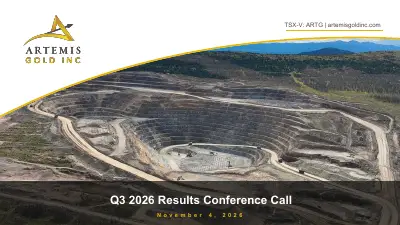
Slide 6 shows a recent drone photo of the open pit, and we recently had a visit with analysts and other investors, and I said at that visit, how it looks is how it operates, and it looks great. Additional mining equipment has arrived and is in service to support higher mining and processing rates, with a new shovel and 5 new haul trucks added during the quarter.
We're also transitioning to self-perform on our production drilling and blasting, and that's in progress and going well. We have worked hard to debottleneck and improve the performance of the existing crushing, grinding, and leach circuits in anticipation of Phase 1A coming on stream, and the results are now showing.
The crushing circuit is proven at the 8-million-tonne-per-annum rate needed for Phase 1A, and we are seeing improved plant availability and reliability as we continue to work through various mechanical and structural and process upgrades. I will now turn the call over to Jeremy to take us through the Phase 1A and EP2 growth project updates.
Over to you, Jeremy.
Jeremy Langford
Thanks, Dale, and good morning, everyone. As we finish the third quarter, Phase 1A was effectively 80% complete and is on schedule for commissioning as planned.
To date, we've completed a number of important construction milestones as we move towards completion. As you can see in the photo, the Vertimill building is nearing completion, the new pre-aeration and leach tanks are complete, and the Shear Reactr pump house and the Shear Reactrs have been installed.
The electrical cabling and piping installation across the 1A expansion scope is very well advanced, and the new cyclone cluster, which ties in the new Vertimill, will be installed during the upcoming Q4 plant shutdown. 33% increase in plant throughput is expected to translate into significantly higher gold production in 2027.
We'll issue guidance in early January on both production and cost for 2027. We can move now to slide 8 and EP2.
EP2 represents a 13-million-tonne-per-year increase over and above the 8-million-tonne-per-year 1A processing plant capacity, and is expected to increase the overall asset throughput to 21 million tonnes per year by the second half of 2028. As a reminder, EP2 increases gold production to north of 500,000 ounces a year, which provides Blackwater with economies of scale that positively benefits unit operating costs.
Clearly, this cements Blackwater and its position as one of the lowest-cost and highest-margin gold operations globally. Key milestones for EP2 development include early works construction, which is complete, and includes the addition of a new 612-bed construction camp, which provides additional accommodation capacity to support the growing construction workforce.
Plant bulk earthworks are well advanced, and the SAG and ball mill raft foundations are complete. Additionally, the first lift of the ball mill pedestals have been poured, and the SAG mill pedestal first lift was ready to pour in the last days of October.
The leach and CIP ring beam civil works are generally progressing well, and all long-lead equipment has been ordered. Importantly, this includes the SAG and the ball mill.
Over to slide 9 now, please, and you'll see via the recent drone shot illustrations, which includes the EP2 footprint on the left and shows the ball and SAG mill foundations underway, and the dark circle-shaped tank ring beams coming out of the ground. On the right of the screen also, a close-up shot of the SAG and ball mill foundations.
As we turn to slide 10, we've provided a couple more photos, including the leach tank ring beam foundations on the left, and another recent drone shot on the right-hand side of the presentation showing outline of a plan view of Blackwater EP2's impressive footprint. One thing I'd like to point out too, for everyone, is that recently we've created an image gallery on our website showing EP2 construction progress.
I encourage you all to have a look and, I guess, share the ride with us as our EP2 project advances. To date, I can say that, although still early on the project timeline, EP2 is progressing very well.
The project remains on budget, an estimated capital cost of $1.44 billion, and our 13-million-tonnes-per-year processing increase is on track for planned completion in H2 2028. Now I'd like to hand over to Erik, who'll take you through our quarterly financials.
Erik, over to you, mate.
Erik Marchand
Thanks, Jeremy. The third quarter delivered another set of strong financial results.
We generated revenue of $357 million, adjusted net income of $158 million, adjusted EBITDA of $222 million, and adjusted EPS of 66 cents per share on a diluted basis. Importantly, we continued to deliver strong cost performance with ASIC of US$1,048 per ounce for the quarter.
Combined with strong production levels and favorable realized gold prices, this resulted in healthy ASIC margins and robust operating cash flows of $183 million in the quarter. We sold just over 67,000 ounces of gold during the quarter with the majority sold into the spot market at an average realized price of Canadian $6,021 per ounce.
The balance was delivered under our mandatory and discretionary hedge programs and gold stream commitments. Notably, we completed the final deliveries under our discretionary hedge program during the quarter.
We currently have 111,000 ounces remaining under our mandatory hedge program with these contracts maturing over the next 8 quarters at a weighted average price of Canadian $2,834 per ounce. As a reminder, a detailed quarterly schedule of the remaining hedge deliveries is included in our MD&A.
Total growth capital was $180 million in the quarter, bringing year-to-date spending to approximately $400 million. As planned, we expect capital spending to increase through the remainder of 2026 as major works on EP2 continues to ramp up.
I'll provide more detail on our capital spending outlook when we discuss our 2026 guidance in a few slides. Turning to the balance sheet, we closed the quarter with significant financial strength and flexibility.
At quarter end, we had total available liquidity of approximately $891 million, including $191 million of cash, and the full $700 million available under a revolving credit facility. We remain in a strong financial position and have taken prudent steps to protect our balance sheet during EP2 construction.
Our gold put option strategy, initially established in Q2, continues to provide downside gold price protection. Since last quarter, we expanded the program with an additional 49,500 ounces, covering the majority of Q3 2027 spot sales at a strike price of $5,500 Canadian per ounce.
As of November 1st, we have put options covering 173,000 ounces of gold with strike prices ranging from $5,300 to $5,500 Canadian per ounce, and expiry dates extending from November 2026 through September 2027. Importantly, this strategy provides a floor on gold prices for the covered ounces while preserving our full exposure to higher gold prices.
Overall, our balance sheet provides financial flexibility to advance our growth initiatives while maintaining substantial liquidity and continuing to return capital to shareholders. Following the payment of our inaugural quarterly dividend of 5 cents per share on September 9th, we announced our second quarterly dividend of 5 cents per share earlier this morning, payable on December 8th to shareholders of record as of November 17th.
This reflects our confidence in the strength and sustainability of our operating cash flows and is consistent with the progressive dividend policy we introduced earlier this year. Looking ahead, we plan to increase our base quarterly dividend to 8 cents per share in 2027, representing an annualized dividend of 32 cents per share.
Turning now to guidance, we are maintaining our previously announced annual production and ASIC guidance at Blackwater. I would also note that we expect full-year ASIC to come in at the very top of our guidance range, reflecting broader inflationary pressures, including higher diesel prices, which we are working to partially offset through improved operating efficiencies and cost management.
Regarding capital expenditures, as previously mentioned, Phase 1A and EP2 spending is expected to be heavily weighted to the back end of the year. We are maintaining our full-year guidance, but we do expect growth capital to be at the low end of the guidance range based upon current timing of expenditures.
With that, I'll turn the call back to Dale.
Dale Andres
Thanks, Erik. Although we've put up this slide a few times now, it's worth showing again to highlight our industry-leading growth profile.
The Phase 1 expansion Phase 1A expansion is now just weeks away from commissioning, and with the much larger EP2 project now less than 2 years away from being in production. Beyond EP2, we believe Blackwater offers tremendous potential, and we continue to advance on all of these fronts.
Finally, the addition of Mount Todd in Australia, which is expected to add a large-scale, long-life gold project in a Tier 1 jurisdiction, and importantly, this provides the pathway to being a 1-million-ounce-per-year producer. On slide 15, we are also working on multiple fronts, as I said, to demonstrate the full potential of Blackwater beyond Phase 1A and EP2.
We are working to extend the mine life and expect to provide an update to our resources and reserves in the first quarter of 2027, together with a new optimized mine plan, and that will use higher metal price assumptions, and will also integrate recent resource expansion drilling data alongside current grade control reconciliation results. During Q3, the regional exploration drill program followed up on anomalies identified in the previous Top Lake program, and an initial pass drilling on targets in the Van Tine and Johnny Lake areas, and we do have follow-up drilling planned in Q4, particularly at Top Lake.
Various studies are progressing on other growth options at Blackwater beyond EP2, and these options include debottlenecking both Phase 1A and EP2 to achieve 25 million tonnes per annum, and that's currently being studied, along with the potential to further expand capacity with a new Phase 3 in the future. While our priority remains the operation of the Blackwater mine and delivery of the Phase 1A and EP2 expansion projects, the acquisition of Mount Todd provides the company with greater optionality for continuing what I believe has been a remarkable growth trajectory, and provides a pathway, as I said, to producing million ounces of gold per year.
Mount Todd is a rare asset, and we see similarities to Blackwater when we acquired it back in 2020. With over 10 million ounces of contained gold in mineral resources, it can be developed at meaningful scale, and we feel we have the ideal team to do it.
It's located in a stable, mining-friendly jurisdiction, and it has been permitted previously for the scale of operation we are considering. The acquisition is expected to close in the first quarter, and post-closing, we intend to provide an update on the proposed development plan for Mount Todd.
To wrap up, I would like to highlight the solid results we achieved during the quarter, driven by strong grades, consistent recoveries, and overall improved plant performance. Our balance sheet is in excellent shape, supported by strong operating cash flow and protected with a prudent put option strategy, which provides downside protection during the high capital spend period and importantly, without giving away any upside.
We are making excellent progress, as you heard from Jeremy, on both Phase 1A and EP2. Lastly, and importantly, we have now graduated to being a dividend-paying company with an announcement earlier this morning, and with plans to progressively increase the return of capital to shareholders in the near term.
This concludes our presentation, and back over to you, operator, for the Q&A.
Operator
Thank you. We will now begin the question-and-answer session.
To join the question queue, you may press star then 1 on your telephone keypad. You will hear a tone acknowledging your request.
If you are using a speakerphone, please pick up your handset before pressing any keys. To withdraw your question, please press star then 2.
The first question comes from Harrison Reynolds with RBC. Please go ahead.
Harrison Reynolds
Hi, good morning, Artemis team, and congratulations on the good quarter, and appreciate the project updates provided. Can you walk through the puts and takes in the cost structure through year-end and heading into 2027?
On the positive side, how meaningful is the throughput uplift from Phase 1A going to be, and what are you seeing from ongoing processing optimization work, and is that enough to offset what we're seeing in terms of inflationary pressure?
Dale Andres
Thanks, Harrison. I would say, we're experiencing general inflationary pressures like everyone else.
I do think we have not just with Phase 1A heading into 2027, obviously, that will help economies of scale, but we have other efficiency projects and optimization projects, as you commented on, including the tank upgrades. We're having a strong start to the fourth quarter, and I think that is expected to continue obviously into 2027 once we tie in and commission Phase 1A.
I would just like to highlight, and we put it in our press release, that the plant will need to be shut down for just over a week in early December. We've currently scheduled that for December 1st, the first week in December.
Then the Vertimill and the new cyclone and tanks will be commissioned, and those are expected to ramp up fairly quickly. The real benefit of Phase 1A is not going to be in the fourth quarter.
Again, with the stability we're seeing in the current operation and the ramp-up in the back half of December, we see a solid quarter in Q4 from a cost perspective, but the real benefit of Phase 1A comes in 2027.
Harrison Reynolds
Got it. Thanks.
Looking at the Phase 2 expansion, good to see the progress and good to see it first hand earlier this year. Can you provide an update on the critical path from here by year-end 2028, and really what are the greatest schedule and cost risks the team sees, and how are those going to be mitigated?
Dale Andres
I'll just say, I'm really happy with the start we've had to date and declaring major works since August. Over to you, Jeremy, on that
Jeremy Langford
one. Thanks, Dale.
Hi, Harrison. Look, the critical path is really been derisked quite some extent because we did procure quite early on in the program, and during the early works phase, the ball and SAG mill have been delivered and all the long-lead life equipments been ordered.
We do have some synergies between part 1, 1A and the EP2 components, I think I feel pretty good with the procurement to date. We continue to manage or monitor, and I think I've mentioned this before, the world drain on electrical infrastructure, switchgear, switch rooms, transformers, which the other industries and the technology sector seem to be getting the lion's share of.
We've ordered our stuff early enough to keep an eye on everything and mitigate accordingly. Cost pressures, like Dale just mentioned before, the oil price going up and the diesel costs do impact the project because we're on the mains power less than everybody else really, and rely on diesel fuel for most of the activities.
We continue to manage that with short-term good control. We're moving towards the winter months now, it's all about just keeping our short-term goals and milestones within reach and just ticking those off as we complete 2026 and move into 2027.
Harrison Reynolds
Great. Thank you.
Appreciate all the detail, Dale and Jeremy, and thanks again and congratulations on the ongoing progress.
Dale Andres
Thanks, Harrison.
Jeremy Langford
Cheers.
Operator
Once again, if you have a question, please press star then 1. The next question comes from Jeremy Hoy with Canaccord Genuity.
Please go ahead.
Jeremy Hoy
Hi, Dale and team. Thanks for taking my question.
First one is a follow-up to Harrison's on 2027 costs. With Phase 1, you mentioned it should be a very quick ramp to the 8-million-tonne-per-annum level.
Do you expect to be at that level sustained at the start of 2027, or should we expect to see a bit of a ramp through Q1?
Dale Andres
Jeremy can speak to this on the Vertimill in particular, but we expect they're fairly simple tie-in. The biggest job we have for commissioning Phase 1A is the changeout of the cyclone pack, and once that's done, the Vertimill should be fairly quick to ramp up.
I do expect us to be at the 8-million-tonne-per-annum rate starting in Q1. Is there going to be some potential commissioning in early January maybe, but it's not going to be material for the year in 2027.
Jeremy, I don't know if you want to add any color to that.
Jeremy Langford
Morning, Jeremy, and thanks, Dale. No, I'm in alignment with Dale here, Jeremy.
It's generally, and I think you've heard me say this before, the Vertimill is pretty much a pump and a tank effectively, and coupling those in with the current milling circuit and the one stage 1 plant is not overly complex. We certainly all understand that we will have to learn how to operate a bigger and a slightly newer plant, if that makes sense.
There's always those challenges that we face, but our training and migration of things such as the control system and the new operating philosophy has been underway for quite some time, we're derisking that as much as possible. We're entering the snowy months of the year and it's a little bit colder now, the behavior of the asset changes a little bit from time to time and season to season.
We're adding a new trick to it this year, I think we're doing the best we can, and we'll keep you updated if we hear otherwise.
Jeremy Hoy
Great. Thanks for the color, both.
Jumping around a little bit, in the past you've discussed potential variable dividends or buybacks as well. Could you talk about what would trigger either, and how you would balance shareholder returns against EP2 and Mount Todd funding?
Dale Andres
Appreciate that, Jeremy. I was really happy to be declaring our second base quarterly.
I think we flagged we intend to, and obviously, this is subject to board approval, but we do intend to raise our base quarterly dividend to 8 cents a share per quarter in 2027, so that would be 32 cents on an annual basis.
Jeremy Hoy
Yep.
Dale Andres
We're just getting really started on the bigger EP2 spend, I don't want to comment on share buybacks, obviously depends on gold price, which has been a bit volatile recently, in 2027. As we head into 2028 and start to ramp up the EP2 project, beyond the increased base dividend of 32 cents per year, I think there's going to be lots of capacity, obviously depending on gold price, but to consider both a variable dividend on top of the base, to consider potential share buybacks, and to advance, I would say not just Mount Todd, but also further expansion projects at Blackwater.
We're going to be a plus-500,000-ounce producer, will have had our hedges cleared by the third quarter of 2028, and we'll be in a strong financial position, obviously depending on gold price. I think we can consider all of the above, Jeremy.
Jeremy Hoy
Great. Thanks, and good to see gold price back above 4,000 today.
The last one for me is on the silver sales. In Q3, all the sales went into the stream with no spot sales.
Is silver being held in inventory, or are the stream deliveries front-loaded? Just wondering if you could provide some clarification on what to expect Q-over-Q in terms of those sales, spot versus stream.
Dale Andres
I'm going to hand that over to Erik to respond.
Erik Marchand
Jeremy, a lot of is a timing difference at this point that we expect to reverse in the future and kind of normalize into more of a 50/50% ratio.
Jeremy Hoy
Great. Thanks for the color.
That's all for me. I'll step back in the queue.
Dale Andres
Thanks, Jeremy.
Operator
This concludes the question-and-answer session. I would like to turn the conference back over to Dale Andres for any closing remarks.
Please go ahead.
Dale Andres
Thanks, operator, and thank you again to everyone who joined the call. Hopefully, we answered all your questions.
We are available for follow-up, and look forward to updating you on our optimization and growth progress over the coming quarters. Thank you.
Operator
This brings to a close today's conference call. You may disconnect your lines.
Thank you for participating, and have a pleasant day.