- President Trump escalates Greenland push with explicit tariff threats against allies opposing U.S. control, according to sources briefed on internal discussions.
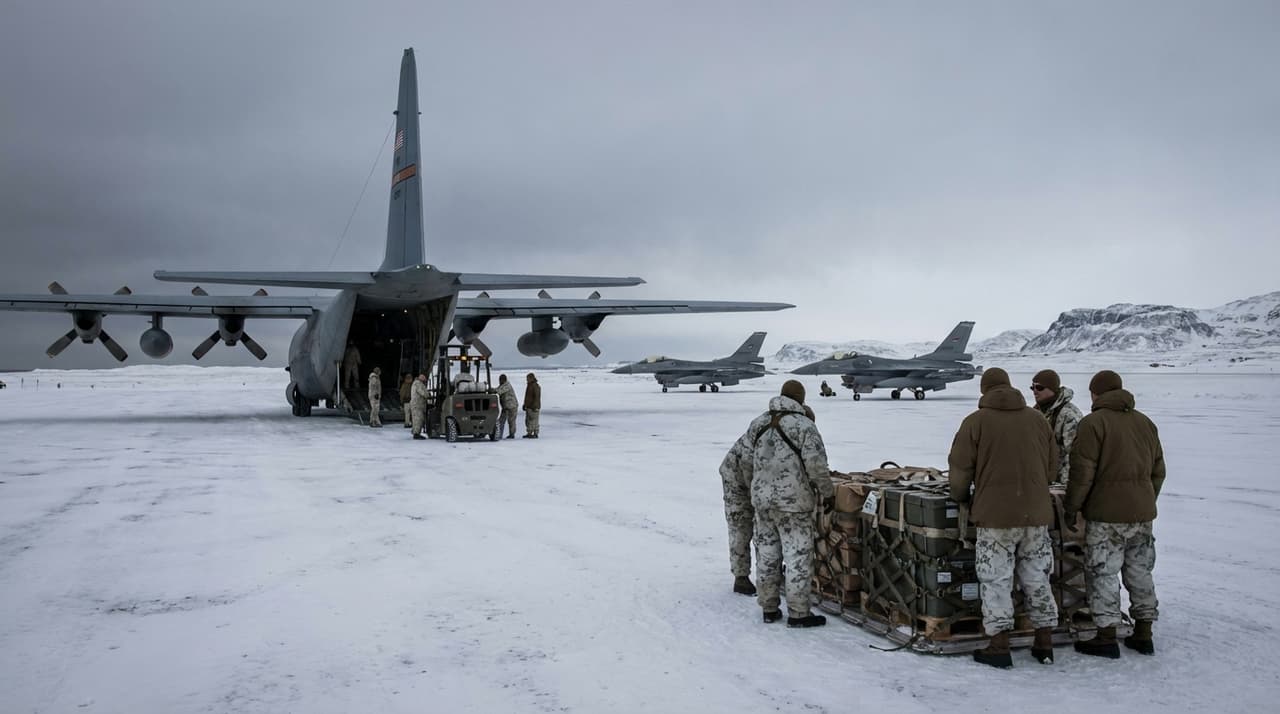
- Six NATO countries, including Germany, France, and the UK, have surged military forces to Greenland in response, signaling alliance tensions.
- DIW's head criticizes Europe's "weakness and inability to act" as bipartisan U.S. delegation attempts de-escalation in Denmark.
President Trump has doubled down on his controversial push to acquire Greenland, this time coupling his demand with explicit threats of punitive tariffs against countries that block U.S. access to the strategically vital Arctic territory. According to people familiar with the matter, the administration has privately warned NATO allies that non-cooperation could trigger immediate trade penalties, a move that has sent shockwaves through European capitals already grappling with the implications of Trump's "one way or another" approach.
"This exposes Europe's weakness and inability to act," the head of Germany's DIW economic institute said in a statement obtained by our newsroom, capturing the growing anxiety among policymakers. The criticism comes as a bipartisan U.S. congressional delegation landed in Copenhagen this morning, aiming to lower temperatures while Denmark and Greenland maintain their firm rejection of any territorial transfer. Efforts to reach the White House for comment were unsuccessful by press time.
In a rapid response that underscores the seriousness of the situation, six NATO members have deployed additional forces to Greenland over the past 48 hours, supporting Denmark's sovereignty claim. Military analysts note the surge mirrors recent Baltic mission patterns, but with higher stakes given Greenland's resource-rich status and melting ice caps opening new shipping lanes. "Without a diplomatic breakthrough, we're looking at unprecedented strain on alliance credibility," one European defense official said, speaking on condition of anonymity due to the sensitivity of ongoing talks.
Trump's tariff threats specifically target countries obstructing U.S. control, potentially reigniting transatlantic trade tensions just as Europe explores economic deterrence options like limited sanctions or activating the EU's anti-coercion tool. However, sources indicate these measures remain unlikely given Europe's heavy reliance on U.S. defense capabilities and fears of retaliatory escalation. Instead, European officials are pursuing what one diplomat called "everything but territory"—offering enhanced NATO deployments and resource investments to address U.S. national security concerns without ceding sovereignty.
The political context has shifted dramatically since Trump's 2019 Greenland proposal, which many initially dismissed as bluster. Recent U.S. actions, including the National Security Strategy framing Europe as a potential adversary and the Venezuela intervention where U.S. forces captured Nicolás Maduro while praising opposition leader Maria Corina Machado, have shattered illusions of stable partnership. VP JD Vance's last-minute cancellation of a Munich Security Conference appearance further signals Washington's disinterest in dialogue, according to European officials briefed on the matter.
Market reaction has been muted so far, with the euro holding steady against the dollar in early trading, but analysts warn prolonged uncertainty could impact Arctic-focused energy and shipping stocks. Behind closed doors, European leaders are debating contingency plans for what one called "unimaginable" scenarios, including potential territorial grabs that would breach international law. French President Emmanuel Macron reportedly warned counterparts of "unprecedented knock-on effects" during emergency consultations yesterday.
Short-term, the focus remains on congressional resistance and whether Trump's attention might shift to other priorities like Iran or domestic politics. CFR analysts suggest delaying tactics could work if the administration gets distracted, but the DIW head's critique highlights deeper structural vulnerabilities. As one senior EU official put it: "We're learning to treat every threat seriously, even those that once seemed unthinkable."
Correction: An earlier version misstated the number of NATO countries deploying forces; it is six, not five.