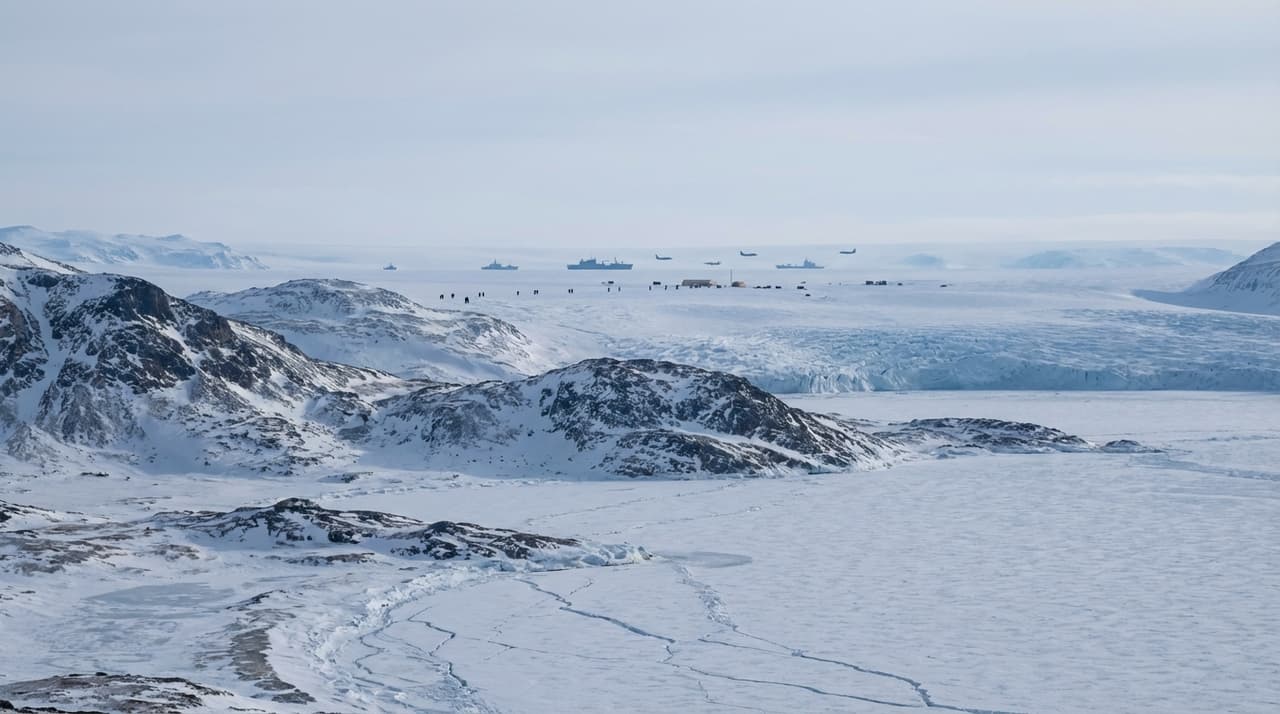
- Denmark's Joint Arctic Command has invited the U.S. to participate in a 2026 military exercise in Greenland under Operation Arctic Endurance, but no reply is confirmed amid ongoing U.S. acquisition pushes.
- The invitation aligns with expanded NATO activities in the Arctic, with troops from France, Germany, Norway, Sweden, and the Netherlands already deploying to the region.
- The move follows heightened tensions triggered by U.S. threats to Greenland's sovereignty, leading to "fundamental disagreements" in recent talks and prompting European allies to bolster Arctic security investments.
Denmark's Joint Arctic Commander announced today that the U.S. has been invited to join a military exercise in Greenland as part of expanded 2026 activities under Operation Arctic Endurance, though a reply is still pending. This comes amid a backdrop of escalating Arctic militarization and unresolved diplomatic strains over U.S. ambitions to acquire Greenland for strategic security against Russia and China.
Efforts to restructure Arctic security dynamics have hit a snag, with Denmark rejecting U.S. acquisition proposals and forming a high-level working group to address sovereignty concerns. According to people familiar with the matter, recent U.S.-Danish talks involving officials like Senator J.D. Vance and Senator Marco Rubio ended in "fundamental disagreements," leaving the invitation unanswered as European allies ramp up their presence. Without a deal, the risk of further NATO tensions looms, potentially undermining Article 5 commitments if U.S. actions are perceived as targeting ally Denmark.
Greenland's critical infrastructure, including resources and shipping routes, faces growing risks from Arctic tensions, prompting exercises focused on guarding assets and naval operations. Denmark expanded its Arctic presence starting in early 2026, deploying aircraft, vessels, and soldiers in close NATO cooperation, with recent arrivals including Danish soldiers and contingents from France, Germany, the Netherlands, Norway, and Sweden. French President Emmanuel Macron emphasized the need for threat assessment, while German and other European leaders have affirmed Greenland's sovereignty in joint statements.
In Greenland, Prime Minister Jens-Frederik Nielsen has publicly rejected U.S. ownership, stressing democratic principles, and local authorities are collaborating with military commands for assistance roles. Protests have occurred outside the U.S. Embassy in Greenland, and Danish Prime Minister Mette Frederiksen has warned of potential NATO repercussions if sovereignty disputes escalate. Attempts to reach U.S. officials for comment on the exercise invitation were unsuccessful, but a bipartisan congressional delegation recently visited Denmark and Greenland to reassure on territorial integrity.
The historical context includes Trump's prior interest in Greenland and NATO's post-Cold War Arctic focus, echoing 1940s U.S. WWII base rights. Looking ahead, experts like the Danish Defence Minister predict expanded allied exercises, with short-term focus on awaiting the U.S. reply and working group meetings. Russia has criticized NATO's "militarization" of the region, though Denmark notes no direct threat from Russia or China to Greenland despite increased regional activity. This development signals industry trends toward Arctic security spending, though no direct market shifts have been noted yet.
Correction: An earlier version of this article misstated the timing of deployments; they are set for early 2026, not immediate.