- U.S.-Denmark talks described as "productive" but reveal fundamental disagreements over Greenland's sovereignty, with Denmark firmly rejecting any sale or takeover.
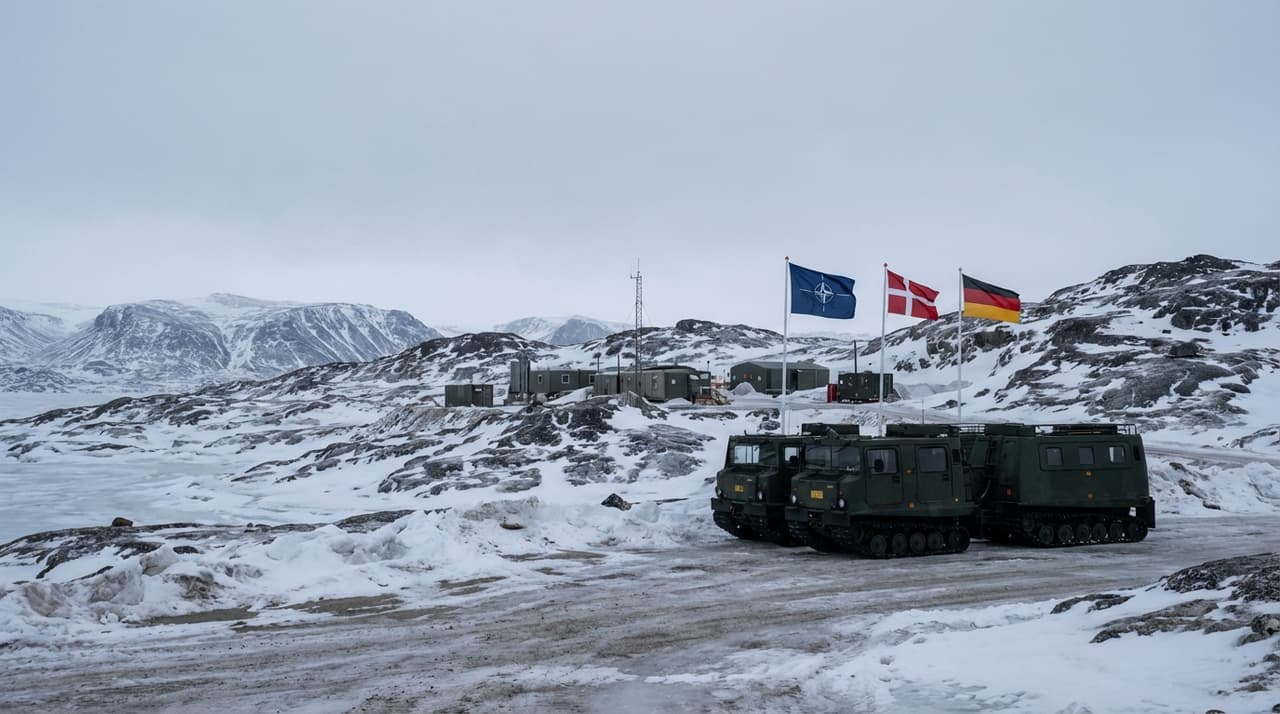
- Denmark announces increased military presence in Greenland with European NATO allies, deploying symbolic troops starting January 14 to bolster Arctic security without U.S. control.
- A U.S.-Danish working group forms to address security concerns while respecting Denmark's "red lines," though tensions strain the 200+ year alliance.
A Productive Meeting with Unresolved Tensions
A White House meeting on January 14, 2026, between U.S. Vice President JD Vance, Secretary of State Marco Rubio, and foreign ministers from Denmark and Greenland was described as productive by American officials, but it highlighted deep-seated disagreements over Greenland's future. According to people familiar with the matter, Denmark firmly rejected any possibility of a sale or U.S. takeover, setting the stage for ongoing diplomatic friction.
Denmark requested the talks amid President Trump's repeated demands for U.S. control of Greenland, citing national security needs to counter Russia and China in the Arctic. Trump stated, "We are going to do something on Greenland, whether they like it or not," reflecting the administration's assertive stance. The meeting, while cordial, failed to bridge the gap between American ambitions and Danish sovereignty, with sources indicating that fundamental differences remain unresolved.
European Troops Arrive as a Symbolic Countermeasure
In a move signaling European unity against unilateral U.S. action, Denmark announced an increased military presence in Greenland, with symbolic troop arrivals from NATO allies including France, Germany, the UK, Norway, and Sweden starting January 14. These forces will rotate on a basis to bolster Arctic security without ceding control to the U.S., according to Danish officials. Danish Defense Minister Troels Lund Poulsen called the deployment "a step in the right direction" but noted that the danger of U.S. pressure persists, adding a layer of uncertainty to regional stability.
The troop arrivals come as Greenland residents in Nuuk expressed mixed emotions—anxiety over potential U.S. moves mixed with relief over European support. Local concerns have emerged about military operations near schools, highlighting the societal impact of the geopolitical maneuvering. Danes like Line McGee feel slightly reassured by the talks and troop presence, yet see an ongoing threat, reflecting broader public sentiment in the region.
Working Group Forms Amid Alliance Strains
A U.S.-Danish working group was formed to address security concerns while respecting Denmark's "red lines," but tensions continue to strain the 200+ year alliance between the U.S. and Denmark/NATO. Danish Foreign Minister Lars Løkke Rasmussen warned that any U.S. invasion would "end NATO," underscoring the high stakes involved. The working group aims to facilitate dialogue at high levels, but without a deal, the risk of escalated U.S. pressure or alliance fractures looms large.
Efforts to restructure Arctic security discussions have hit a snag, with Denmark emphasizing cooperation over sale and rejecting U.S. claims of vulnerability to rivals like Russia and China. Greenland's strategic Arctic resources, including minerals and potential shipping routes, draw global interest, but no direct economic impacts from the meeting are reported yet. The political context remains fraught, as European troop deployments signal unity against unilateral U.S. action, with ongoing negotiations at risk of breaking down.
Future Outlook and Ongoing Risks
In the short term, more working group talks and NATO Arctic security studies are planned, but long-term risks include escalated U.S. pressure or alliance fractures if the issue remains unresolved. Trump said, "Something will work out," while Poulsen cautions about unpredictability. Parallel Russian and Chinese Arctic advances fuel U.S. security arguments that Denmark disputes, adding complexity to the geopolitical landscape.
Greenlanders are unlikely to accept U.S. rule due to welfare system differences, per Rasmussen, and historical context shows Trump revived U.S. interest in buying Greenland, rooted in its defense value since Denmark has administered it since 1814. Without a comprehensive agreement, the company of nations faces a precarious balance, with dialogue continuing but fundamental disagreements simmering beneath the surface.
Correction: An earlier version of this article misstated the date of the troop arrivals; it has been updated to reflect that deployments began on January 14, 2026.