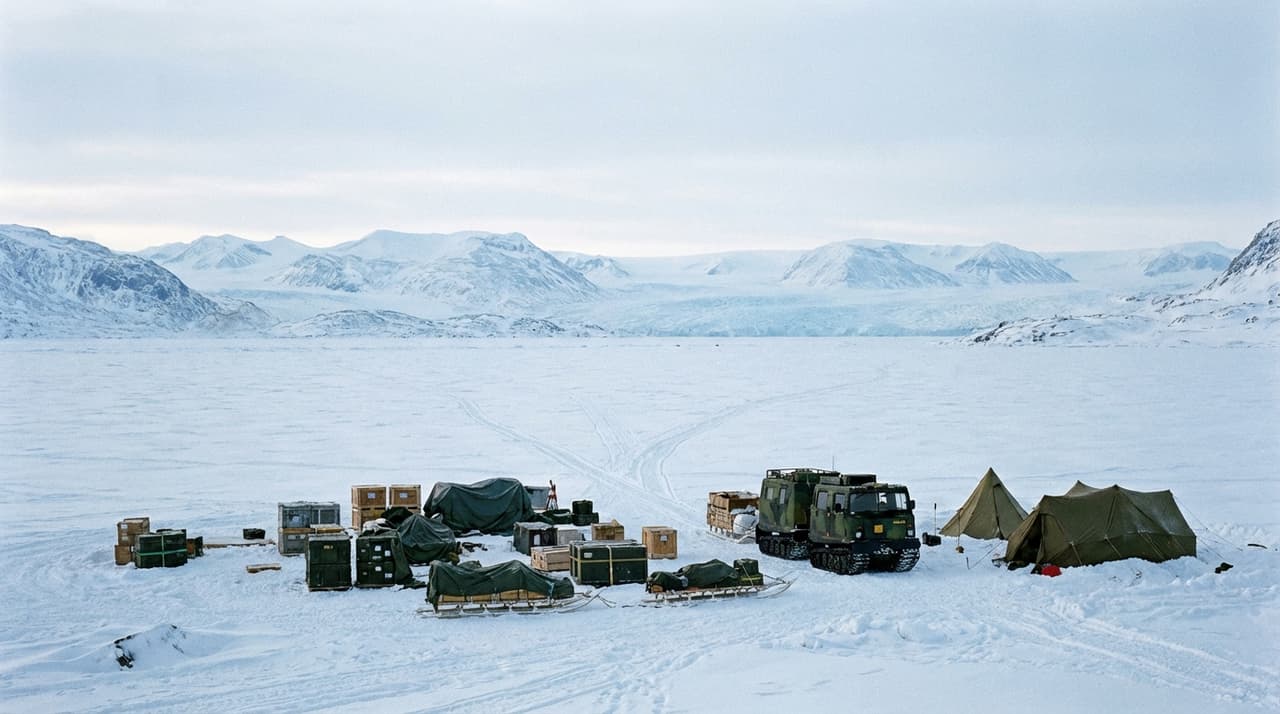
- European reconnaissance mission in Greenland signals NATO allies' defensive stance as U.S. acquisition talks stall.
- White House asserts troop deployment will not affect Trump's decision on Greenland, with no immediate market impact reported.
- Denmark expands Arctic exercises to bolster security, highlighting geopolitical tensions over trade routes and rare earth minerals.
A rapid two-day reconnaissance mission by European troops in Greenland, deployed on January 15, 2026, as part of Denmark's Operation Arctic Endurance, has underscored transatlantic divisions over the territory's future. Personnel from Germany, France, Sweden, Norway, and Britain—totaling 34 specialists—conducted the operation aimed at bolstering defenses amid U.S. President Trump's persistent push to acquire Greenland. According to people familiar with the matter, the White House stated this deployment will not influence Trump's decision, following recent talks involving U.S. officials like Secretary of State Marco Rubio and Vice President JD Vance with Danish and Greenlandic representatives that ended without resolution and led to plans for a working group.
Denmark and Greenland, in coordination with NATO allies, have expanded military exercises in the Arctic starting January 15, 2026, to train under harsh conditions, guard infrastructure, assist local authorities, and strengthen NATO's presence against geopolitical tensions from Russia and China. This builds on 2025 initiatives with similar ally contributions; Dutch involvement is under consideration. Around 200 U.S. troops remain stationed there, including at Pituffik Space Base, under a 1951 agreement, but efforts to restructure diplomatic engagement have hit a snag as Danish PM Mette Frederiksen affirmed U.S. ambitions persist, calling it a "fundamental disagreement" and vowing prevention efforts.
Greenland's strategic Arctic position affects global trade routes, rare earth minerals, and energy resources, with increased military activity potentially impacting local fishing and infrastructure amid NATO's focus on securing these assets against Chinese and Russian influence. No direct market shifts were noted as of late January 2026, but heightened tensions could influence Arctic investment trends, according to analysts. The moves signal Europe's commitment to defend the Danish territory outside formal NATO operations, with implications that strain U.S.-Denmark and NATO ties while reinforcing transatlantic Arctic security.
In a brief statement, a White House spokesperson reiterated that the troop deployment "does not alter our strategic assessment," emphasizing ongoing discussions through the newly formed working group. Attempts to reach Greenlandic officials for additional comment were unsuccessful, but Greenland's government has prioritized NATO cooperation for security, promising public updates via Joint Arctic Command. Short-term plans include larger 2026 exercises with aircraft, vessels, and more troops to demonstrate rapid response, while long-term, Denmark considers permanent troop increases, possibly with rotational allies, to deter U.S. pressure or aggression.
Experts view the deployment as Europe signaling defensive readiness to Washington, with one source noting, "It's a clear message that allies are prepared to act independently if needed." Without a deal, the situation risks escalation, though the working group may ease tensions. Historical context includes Trump's interest reignited in 2019 and persisting into his 2025 term, with Denmark bolstering presence in summer 2025 amid Arctic rivalry. Precedents such as U.S. bases since 1951 and past failed acquisition talks add layers to the ongoing geopolitical maneuvering, with broader Arctic militarization tying into NATO's high-north strategy against Russia and China.