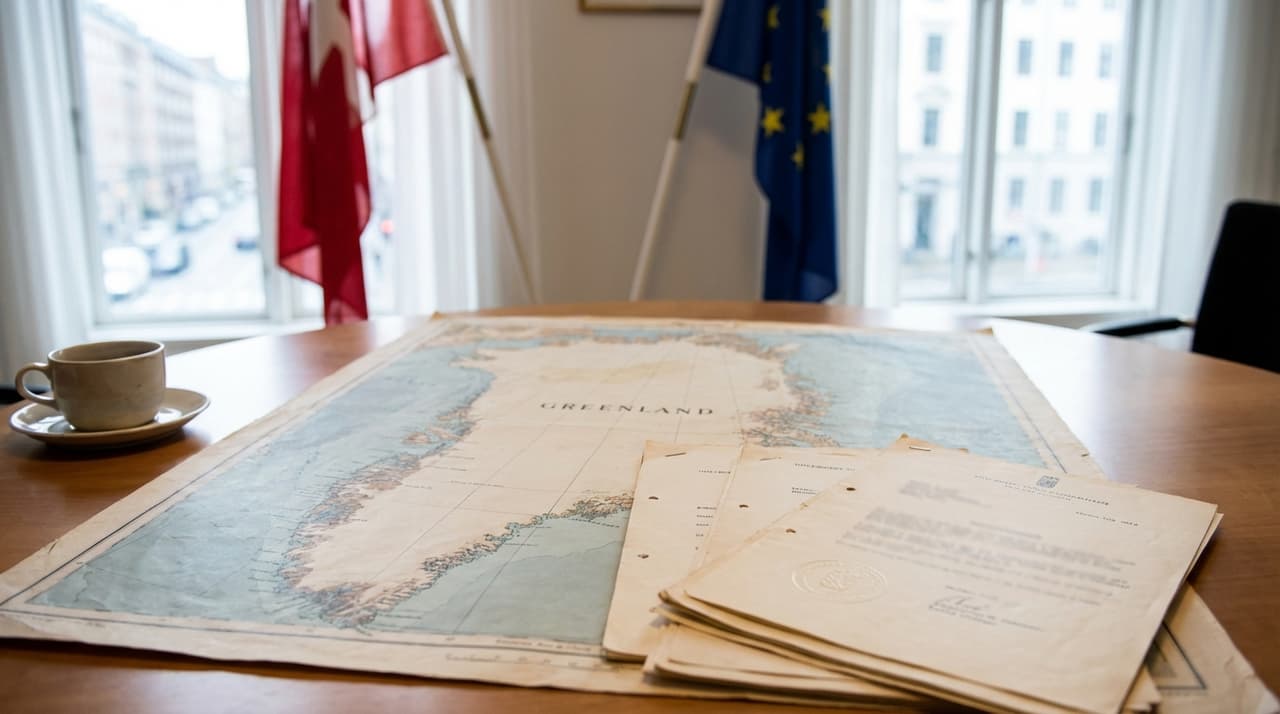
- Finland's President Alexander Stubb states he does not believe the U.S. will militarily seize Greenland, despite escalating rhetoric from former President Trump.
- NATO allies, including the U.K., Denmark, and eight European nations, reject Trump's demands in a joint statement, emphasizing shared Arctic security and Greenland's sovereignty.
- Trump's tariff threats against Denmark and allies risk disrupting transatlantic trade, as Greenland's strategic value grows amid Arctic competition with Russia and China.
Finland's President Alexander Stubb has publicly dismissed the possibility of a U.S. military takeover of Greenland, according to people familiar with the matter, even as former U.S. President Donald Trump renews calls for "complete and total control" of the Danish territory. Stubb's comments come amid heightened tensions, with Trump linking his Greenland push to a perceived Nobel Peace Prize snub in messages to NATO allies, including Norway's Prime Minister Jonas Gahr Støre.
"I don't believe the U.S. will take control of Greenland militarily," Stubb said, reflecting a broader European stance that views Trump's demands as destabilizing. Efforts to de-escalate the situation have included a proposed call between Støre and Stubb, following their joint opposition to Trump's threatened tariffs on Norway, Finland, and other allies. The standoff underscores growing fissures within NATO, with real-time diplomatic maneuvers playing out against a backdrop of Arctic resource competition.
In a sharp rebuke, NATO allies issued a joint statement rejecting Trump's demands, stressing that Arctic security should remain a shared responsibility under the alliance and highlighting Greenland's right to self-determination. Denmark and Greenland's leaders, Mette Frederiksen and Jens-Frederik Nielsen, have firmly opposed U.S. claims, with sources indicating they are coordinating closely with European partners to reinforce sovereignty. Without a diplomatic resolution, analysts warn that tariff escalations could strain transatlantic trade, though military action is seen as unlikely given existing U.S. bases in Greenland under the 1951 agreement.
Greenland's strategic importance has surged due to melting ice opening Arctic shipping lanes and access to raw materials, drawing attention from Russia and China. Trump's rhetoric, which ties the Greenland issue to broader NATO frictions, has prompted European leaders like the U.K.'s Keir Starmer and France's Emmanuel Macron to affirm support for Denmark, with calls for enhanced EU military cooperation to deter aggression. U.S. Democrats, including Sen. Mark Warner, have dismissed Trump's security threat assessments as fictitious, adding to the political complexity.
As negotiations continue behind the scenes, stakeholders from Arctic indigenous groups to European defense officials are monitoring developments, with Greenland's 60,000 residents overwhelmingly opposed to U.S. control. The situation remains fluid, with short-term risks focused on economic measures rather than military confrontation, according to experts who urge Europe to act decisively to maintain unity and empower local self-determination.