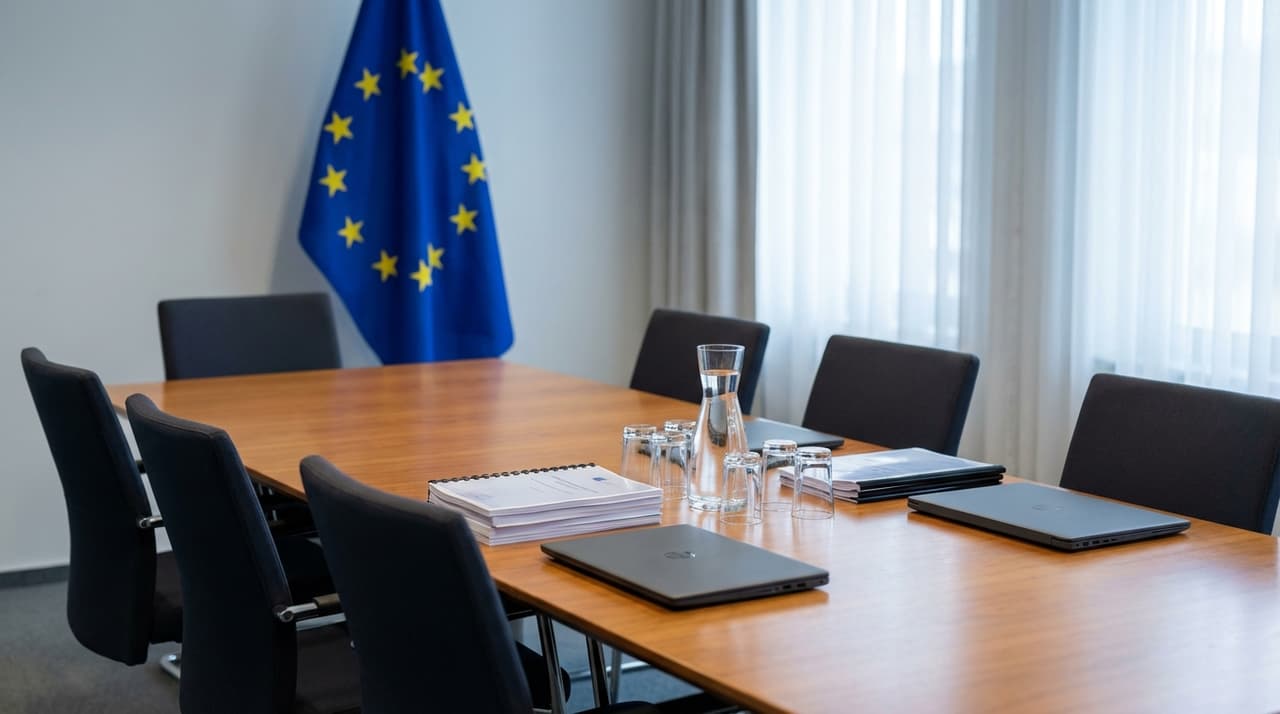
- European leaders coordinate a unified stance against U.S. tariff threats over Greenland acquisition opposition.
- French Finance Minister Lescure emphasizes showing EU readiness to react strongly as key deterrent.
- Escalating tariffs set to begin February 1, targeting eight NATO allies including France and Germany.
A Coordinated European Front
France and Germany have agreed on acting decisively in response to President Trump's announced tariffs targeting European allies over their opposition to U.S. acquisition of Greenland, according to French Finance Minister Lescure. The best way to prevent these threats from materializing, Lescure indicated, is demonstrating the European Union's readiness to react strongly—a position that reflects the prevailing consensus among European capitals as they face what one diplomat described as "an unprecedented challenge to transatlantic relations."
Trump's tariff announcement calls for 10% duties to take effect on February 1 against Denmark, Norway, Sweden, France, Germany, the U.K., and Finland, with plans to increase to 25% on June 1 and maintain them until the U.S. is permitted to purchase Greenland. The move comes after European countries, including those targeted, deployed troops to Greenland at Denmark's request for Arctic security purposes—a development that appears to have prompted the tariff threats, according to people familiar with the matter.
The EU's Trade "Bazooka"
In response, President Emmanuel Macron has requested that the European Union activate its anti-coercion instrument—what officials privately refer to as the EU's trade "bazooka"—which has never been deployed before and allows for restrictions on imports of goods and services. European Commission President Ursula von der Leyen stated that "Europe will remain united, coordinated and committed to upholding its sovereignty," while European Council President Antonio Costa has convened an extraordinary meeting of the European Council to address what one participant called "the most serious trade crisis with Washington in decades."
Efforts to coordinate a response have intensified in recent days, with eight NATO member countries—all targeted by the tariffs—issuing a joint statement expressing "full solidarity with the Kingdom of Denmark and the people of Greenland." The statement emphasized that tariffs "undermine transatlantic relations and carry the risk of a dangerous downward spiral," a concern echoed by British Prime Minister Keir Starmer, who stated that "applying tariffs on allies for pursuing the collective security of NATO allies is completely wrong."
Diplomatic Maneuvering and Market Reactions
Italian Prime Minister Giorgia Meloni, who sources say has been particularly active in behind-the-scenes diplomacy, called the tariffs "a mistake" and spoke directly with Trump to express her opposition. She emphasized the importance of dialogue to "avoid an escalation," suggesting concerns among some European leaders about further deterioration of U.S.-European relations. Meanwhile, Canadian Prime Minister Mark Carney affirmed support for Greenlandic and Danish sovereignty, though Canada was notably absent from the tariff list.
Market participants are watching developments closely, with European equities showing volatility in early trading. The threat of escalating tariffs poses significant risks to transatlantic trade relationships, and European leaders have warned that "tariffs risk making Europe and the United States poorer and undermine our shared prosperity." U.S. Senate Minority Leader Chuck Schumer announced that Democrats will introduce legislation to block tariffs against countries opposing a Greenland takeover, though the prospects for such legislation remain uncertain given the current political climate in Washington.
Attempts to reach the French finance ministry for additional comment were unsuccessful by publication time. The situation remains fluid, with negotiations ongoing between European capitals and Washington, though sources indicate little progress has been made in resolving the underlying dispute over Greenland's status as a self-governing territory of the Kingdom of Denmark.
Correction: An earlier version of this article misstated the timing of the tariff increases. The 25% tariff is scheduled to take effect June 1, not immediately after the initial 10% tariff.