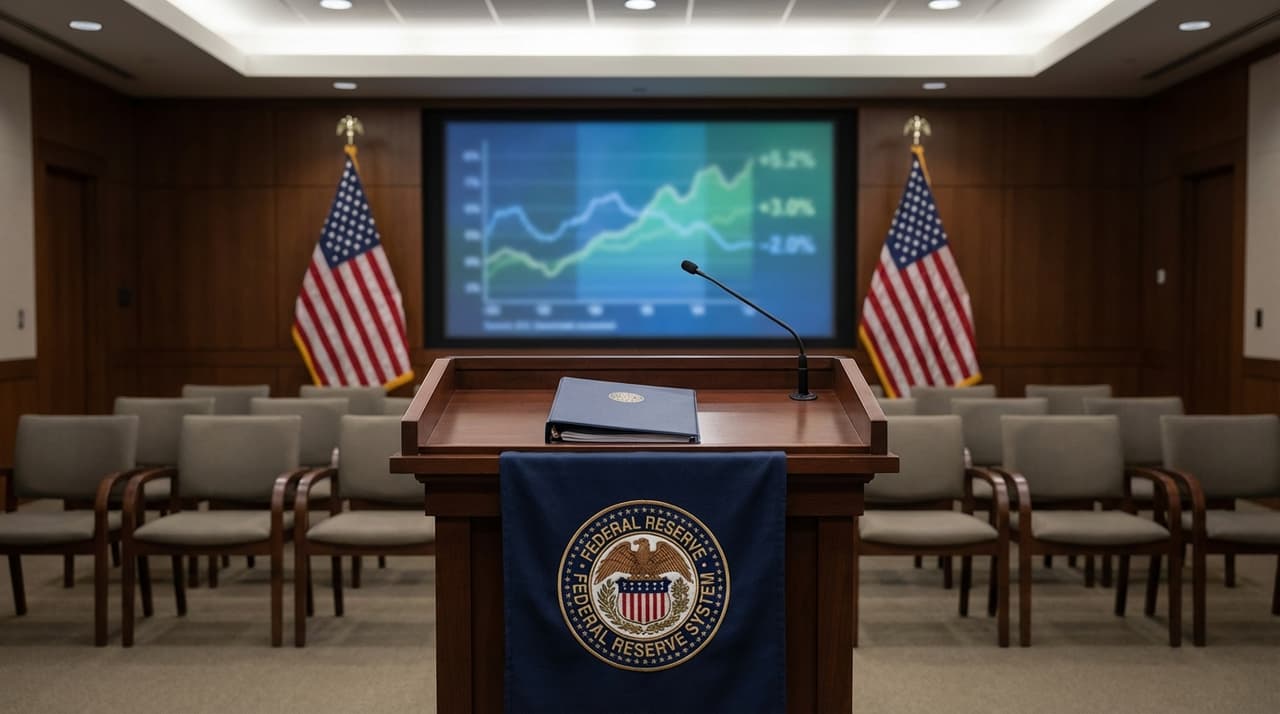
- The Federal Reserve held the federal funds rate steady at 3.5%-3.75% in its January 28, 2026, meeting, pausing after three cuts late 2025.
- Chair Jerome Powell's statement "HAVE MOVED A GOOD WAY ON RATES" reflects progress in easing, as the Fed reviews economic data including inflation above 2% and labor market weakness.
- The decision comes amid political pressure from the White House for deeper cuts and ongoing probes into Fed independence, with markets pricing in one potential 25 basis-point cut by June 2026.
In a move that underscores the delicate balancing act facing monetary policymakers, the Federal Open Market Committee announced no change to interest rates at 2 p.m. ET on Wednesday, followed by a press conference where Chair Jerome Powell emphasized data-driven decisions over political influence. This pause in easing, after three consecutive cuts in late 2025, signals the Fed's cautious approach as inflation remains stubbornly above its 2% target and job growth shows signs of slowing.
Powell, speaking at 2:30 p.m., highlighted the progress made, noting that rates have "moved a good way" from their peak, but stressed that future moves will hinge on incoming economic indicators. According to people familiar with the matter, internal discussions at the Fed have centered on balancing inflation control with support for a labor market where unemployment has stabilized around 4.4%-4.5%. The Personal Consumption Expenditures price index, a key inflation gauge, stood at 2.9% for 2025 and is projected at 2.4% for 2026, complicating the path to further cuts.
Market reactions were muted initially, with stocks hovering near record highs and the dollar facing pressure, reflecting investor expectations for eventual easing. Borrowing costs have eased since the late 2025 cuts, providing some relief for mortgages, auto loans, and credit cards, though affordability strains persist for many consumers. One analyst, paraphrasing Bankrate's Stephen Kates, described the current phase as "sleepy" but potentially legacy-defining for Powell, whose term ends in May 2026.
Political tensions loom large, with President Trump publicly calling for deeper rate cuts to boost economic affordability and proposing policies like a 10% cap on credit card rates. Efforts to restructure the Fed's independence have hit a snag, as a Department of Justice probe into Powell over Fed headquarters renovations has escalated, with subpoenas issued recently. Powell has dismissed the investigation as a pretext for attacking the central bank's autonomy, according to sources close to the matter. Meanwhile, the Supreme Court is reviewing Trump's attempt to fire Governor Lisa Cook, adding to the institutional scrutiny.
Without a clear signal for imminent cuts, businesses and consumers face stable but elevated borrowing costs, limiting relief amid ongoing inflation pressures. The Fed's extended pause is likely to persist into the coming months, with economists eyeing June as a potential window for the next move if data softens further. In a brief statement, a Fed spokesperson declined to comment on the political probes but reiterated the committee's commitment to its dual mandate.
Correction: An earlier version of this article misstated the timing of the next Fed meeting; it is scheduled for March, not February.