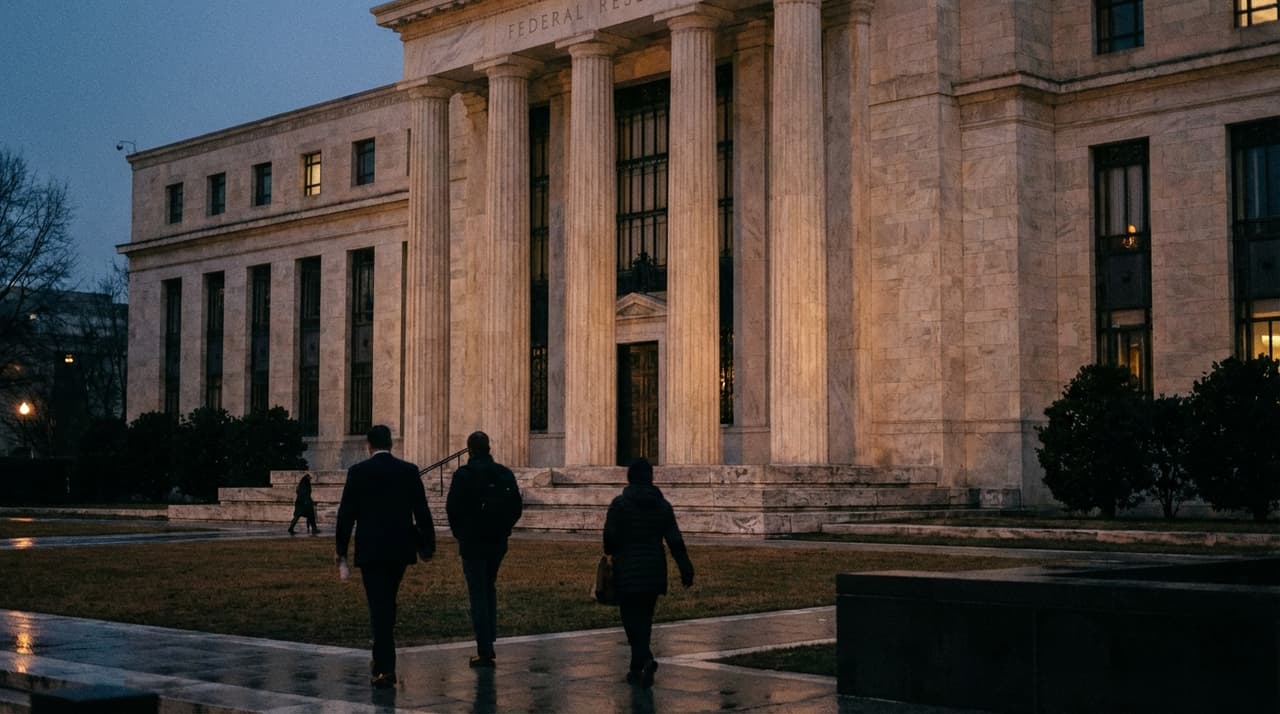
- The Federal Reserve held interest rates steady at 3.5%-3.75% for the first time since July, with a 10-2 vote and no clear timeline for resuming cuts.
- Officials remain divided, balancing a slowing labor market against persistent inflation above the 2% target, suggesting rates could stay on hold for an extended period.
- The pause follows three consecutive 25 basis-point reductions in late 2025 and comes amid political pressures, including a DOJ probe into Chair Jerome Powell and Trump administration calls for deeper cuts.
A Data-Driven Pause with Political Overtones
The Federal Open Market Committee concluded its January 27-28 meeting by maintaining the federal funds rate unchanged, as widely anticipated by markets. Economists had priced in a 97.2% probability of a hold, according to CME FedWatch data, reflecting consensus around the Fed's cautious stance. In a 2:30 p.m. ET press conference, Chair Jerome Powell emphasized that policy would remain "data-driven," though he acknowledged the political backdrop without delving into specifics.
Efforts to navigate slowing job growth against stubborn inflation have hit a snag, with no firm guidance on when cuts might resume. "We're seeing steady inflation and resilient GDP growth from consumer spending, which reduces the urgency for immediate action," said one official familiar with the discussions, who spoke on condition of anonymity. The decision marks a shift from the "cut at every meeting" streak that ran from September through December 2025, driven by cooling inflation post-rate hikes.
Market Reactions and Economic Implications
Without a deal to lower rates soon, businesses and households face unchanged borrowing costs for credit cards, auto loans, and financing. Last year's cuts have already pushed some rates to multi-year lows, easing affordability strains, but this pause offers stability rather than relief. Real-time market data showed muted movements in Treasury yields and equity indices following the announcement, suggesting investors had largely priced in the outcome.
A strengthening economy with upward GDP forecasts for 2026 and larger tax refunds supports the Fed's wait-and-see approach. However, labor market slowdown and sticky inflation continue to weigh against further easing. "We're balancing multiple factors here," Powell noted in his remarks, adding that the committee would monitor incoming data closely. Attempts to reach other FOMC members for additional comment were unsuccessful by press time.
Political Pressures and Future Outlook
President Trump's administration has pressured the Fed for deeper cuts to address affordability concerns, including plans to cap credit card rates at 10% and restrict institutional homebuying. Tensions have escalated with a DOJ probe into Powell over Fed building renovations—viewed by some as undermining central bank independence—and a Supreme Court case on firing Governor Lisa Cook. Trump is expected to name Powell's successor by May 2026 when his term expires, with potential candidates like Rick Rieder favoring cuts but facing the FOMC's majority-vote structure.
In the short term, rates are likely to hold through mid-2026 unless the labor market weakens sharply. The FOMC projects at least one more cut this year, with forecasts pointing to two quarter-point reductions—possibly in June and September, targeting 3.0%-3.25%—assuming inflation nears 2%. Experts like Goldman Sachs' David Mericle see downside risks that could favor extra cuts, though hikes are considered unlikely. As one industry insider put it, "This pause isn't the end of the easing cycle, but it signals a more measured pace ahead."
Correction: An earlier version misstated the timing of the Fed's last rate cut; it occurred in December 2025, not January 2026.