- France aligns with major EU groups to block the Turnberry trade agreement, citing U.S. tariff threats over Greenland.
- U.S. President Donald Trump announces tariffs on eight EU countries, escalating transatlantic trade tensions.
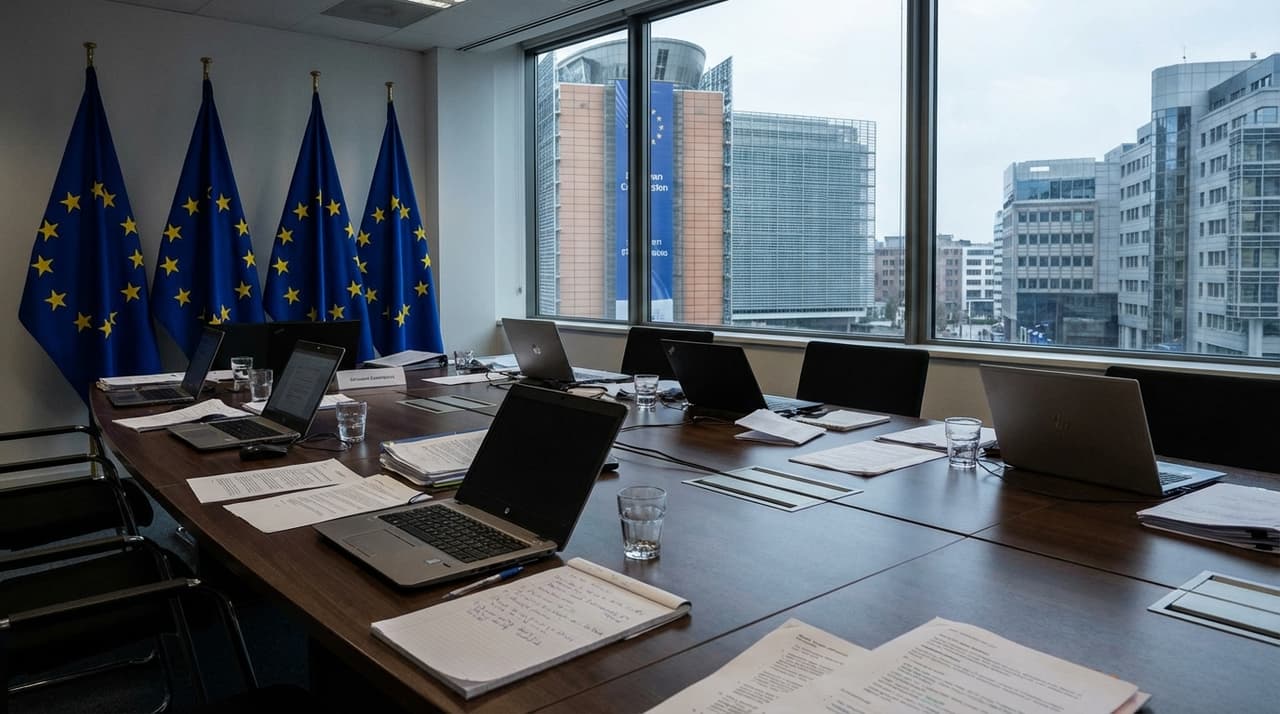
- EU diplomats convene in Brussels to assess the crisis, with potential responses including retaliatory measures or activating the Anti-Coercion Instrument.
France's Foreign Minister has thrown support behind the European Parliament's push to suspend the EU-U.S. Turnberry trade agreement, as U.S. President Donald Trump's tariff threats over opposition to annexing Greenland roil transatlantic relations. On January 19, 2026, leaders from the European People's Party, Socialists & Democrats, and Renew Europe announced they would block ratification of the July 2025 deal, which envisioned zero EU tariffs on U.S. products and 15% U.S. tariffs on EU goods. They cited Trump's "unacceptable" tariff announcements as retaliation for European support of Denmark on Greenland, according to people familiar with the matter.
Trump's tariffs target eight countries—Denmark, Norway, Sweden, France, Germany, UK, Netherlands, Finland—with 10% duties set to take effect from February 1, 2026, escalating to 25% from June 1, until a Greenland purchase deal is reached. EU ambassadors convened an extraordinary Brussels meeting to assess the crisis, with market watchers noting potential disruptions to sectors like steel, autos, and agriculture. "We are facing imperialist pressure that we cannot accept," said one European official, who spoke on condition of anonymity due to the sensitivity of the talks.
Efforts to de-escalate the situation have hit a snag, as Trump justifies the tariffs as security measures against China and Russia threats via Greenland control. EU Commission President Ursula von der Leyen deemed the tariffs a "mistake between allies," vowing a "unflinching, united, proportional" response while questioning Trump's reliability. French President Emmanuel Macron endorsed deploying the Anti-Coercion Instrument if needed, warning against "endless accumulation of new tariffs" during remarks in Davos. U.S. Treasury Secretary Scott Bessent urged restraint, claiming strong transatlantic ties, but sources indicate the EU is prioritizing diplomacy to avoid escalation.
Without a deal, the trade agreement would be effectively suspended, undermining U.S.-EU trade stability and potentially boosting EU protectionism. European stakeholders face higher costs and supply chain disruptions, with public outrage focusing on U.S. "bullying," though no widespread protests have been reported yet. The EU is holding back on immediate use of the Anti-Coercion Instrument for now, seeking diplomatic solutions, but the situation remains fluid as Davos talks loom. Attempts to reach the French Foreign Ministry for additional comment were not immediately successful.
Correction: An earlier version misstated the tariff escalation timeline; it is from 10% to 25%, not 15% as initially reported.