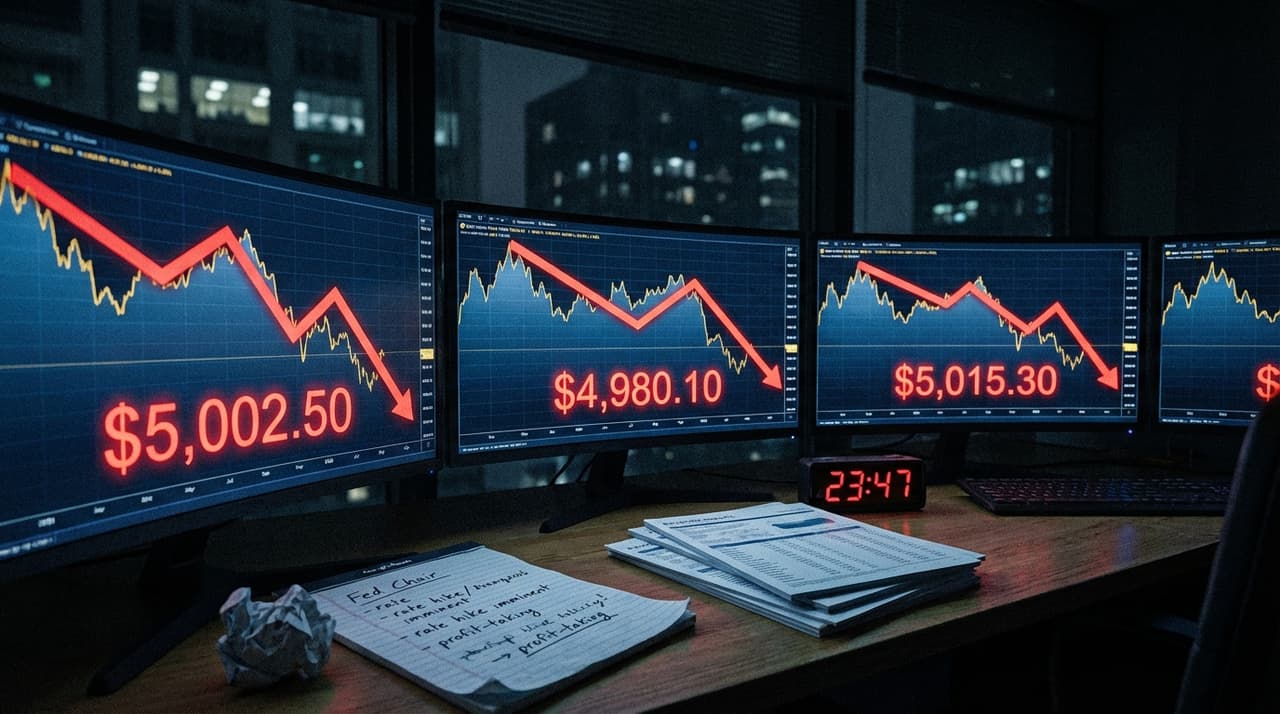
- Spot gold prices fell sharply by around 12% on January 29, 2026, marking the worst daily decline since 1983, after hitting record highs above $5,000 per ounce earlier in the week.
- The plunge followed a monthly gain exceeding 20%, gold's strongest since the 1980s, driven by profit-taking amid a rebounding U.S. dollar and uncertainty over a new Federal Reserve Chair announcement.
- Silver sank 12% from peaks above $121/oz, with ETFs dropping up to 14%, as volatility hit "2008-crisis levels" linked to fears of an AI bubble bursting.
Gold fell below $5,000 per ounce due to a stronger dollar, which reversed from a four-year low, reducing demand from overseas buyers using other currencies. This was compounded by aggressive profit-booking after the rapid rally, according to market analysts. The U.S. dollar index rose from lows around 96, unsettling bets on looser monetary policy that had fueled gold's earlier surge.
President Trump's announcement of a new Fed Chair pick, likely Kevin Warsh, who favors balance sheet reduction and tighter policy, added to the selling pressure. "The market is recalibrating expectations around monetary policy," said one trader familiar with the matter, who spoke on condition of anonymity. Efforts to reach the White House for comment on the timing of the announcement were unsuccessful. This move contrasts with Trump's past preference for loose policy, creating uncertainty that rattled investors.
Despite the sharp correction, gold is still on track for its sixth straight monthly gain, with central bank buying slowing in the fourth quarter of 2025 but investor demand persisting amid ongoing economic uncertainty. Silver, which benefits from AI and green energy demand alongside supply shortages, saw its record monthly streak continue with a ninth gain, though it dipped from highs. Platinum and palladium also declined post-rally.
Volatility spiked to levels reminiscent of the 2008 financial crisis, partly driven by a tech selloff that amplified the metals crash. Stocks like Nvidia (NVDA) fell 2.7% and Oracle (ORCL) dropped 5.4%, as fears of an AI bubble bursting contributed to market-wide caution. "We're seeing a classic profit-taking scenario after an extreme run-up," noted a portfolio manager, who declined to be named due to company policy. The correction has sparked debates among investors about whether this is a buying opportunity or the end of the rally, affecting ETF holders and industries reliant on silver.
Geopolitical tensions persist, with Trump urging Iran nuclear talks amid retaliation warnings, which could support long-term safe-haven demand for gold. In the short term, more volatility and dips are expected from Fed news and upcoming PPI data, with possible further consolidation. Over the long term, bullish sentiment remains due to global uncertainty and central bank demand; UBS (UBS) forecasts $6,200 per ounce by mid-2026 and $5,900 by year-end, while some predict $6,000 amid inflation and stock market concerns. J.P. Morgan (JPM) analysts point to ideal conditions from trade worries and dollar weakness, suggesting the dip may be temporary.
Correction: An earlier version of this article misstated the timing of the Fed Chair announcement; it was made on January 29, 2026, not earlier in the week.