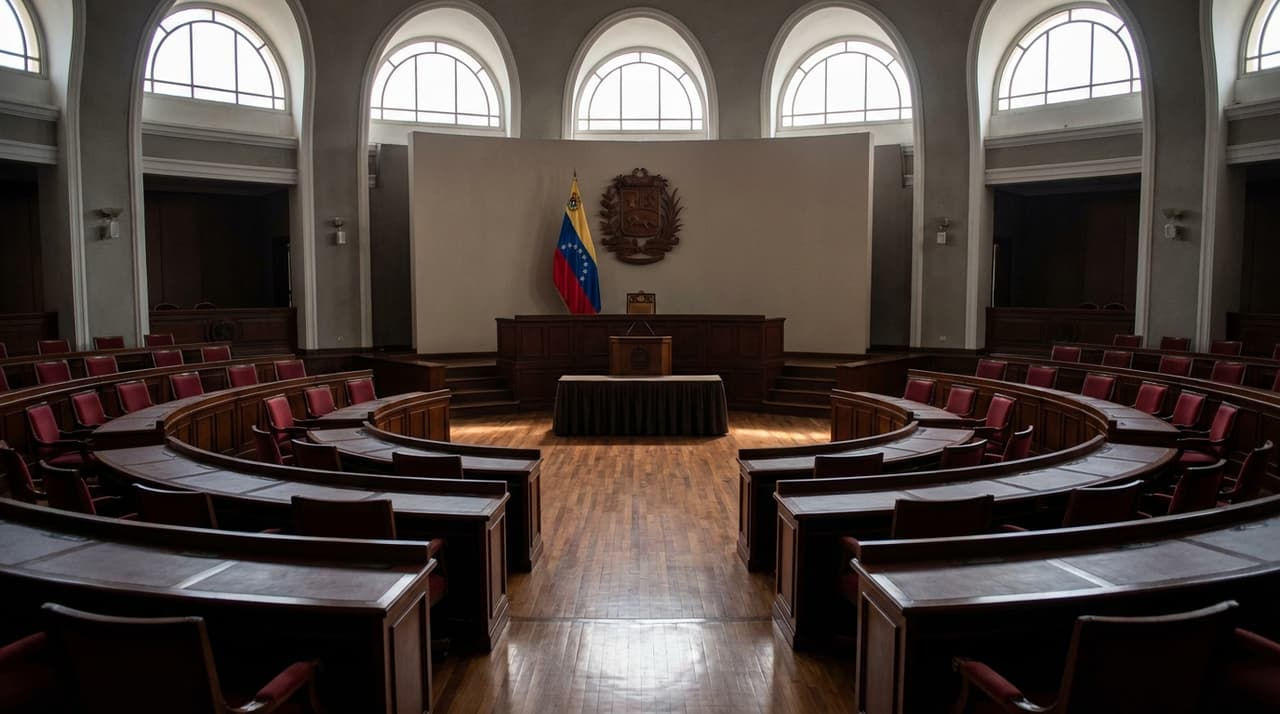
- Rodríguez secures another term as Assembly president with strong pro-government support, countering speculation of his absence from Caracas.
- The re-election underscores continuity in Maduro's regime ahead of his 2026 swearing-in, amid ongoing disputes over the 2024 election results.
- Rodríguez vows to enforce laws against opposition figures, threatening arrest for treason, while emphasizing dialogue and legislative reforms.
Jorge Rodríguez, the head of Venezuela's National Assembly, has been re-elected to lead the body for the 2025-2026 legislative term, according to sources familiar with the matter. His presence in Caracas was confirmed in early January 2026, dispelling rumors of his flight or absence as political tensions simmer following the disputed 2024 presidential elections.
Rodríguez's re-election came with overwhelming backing from the pro-government Great Patriotic Pole, solidifying his role in a session that also saw the re-elections of first vice president Pedro Infante, second vice president América Pérez, secretary María Alejandra Hernández, and deputy secretary José Omar Molina. The assembly emphasized the continuity of the "Bolivarian Revolution," expressing gratitude to supporters and preparing for Nicolás Maduro's swearing-in on January 10, 2026, despite challenges from opposition groups. Efforts to reach Rodríguez for additional comments were unsuccessful, but sources indicate he has been actively involved in legislative programs, including 22 bills and constitutional reforms aligned with Maduro's "Plan of the Seven Transformations."
In a move that highlights the deepening political divides, Rodríguez has vowed to enforce laws against opposition figure Edmundo González, threatening arrest for treason if he returns to Venezuela. This stance comes as the National Assembly remains dominated by Maduro loyalists after the 2020 elections, which were boycotted by much of the opposition, allowing control over key institutions. Rodríguez, a psychiatrist-turned-propagandist and brother of Vice President Delcy Rodríguez, has held the presidency since 2021 and previously led the National Electoral Council, positioning him as a central figure in pro-government messaging.
The re-election occurs against a backdrop of international disputes, with Maduro claiming victory in the 2024 elections while opposition leaders like María Corina Machado and González assert fraud, prompting U.S. sanctions and recognition of González by some nations. Rodríguez has also used his platform to condemn Israeli actions in Gaza and U.S. influence, aligning Venezuela with anti-imperialist alliances. Market observers note that the confirmation of Rodríguez's presence in Caracas reassures Maduro allies amid rumors of elite defections, stabilizing government messaging but potentially escalating tensions with opposition factions.
Looking ahead, the Assembly is set to oversee Maduro's inauguration and advance constitutional reforms, which could tighten electoral rules in preparation for 2026 regional votes. Without a deal to address opposition grievances, experts warn that the political crisis may deepen, with risks of further sanctions or internal unrest. Rodríguez's role will be crucial in any Chavista transitions, as he balances threats against opponents with calls for dialogue and peace. In related developments, the National Assembly approved its 2025-2026 legislative agenda in late 2025, focusing on economic and sovereignty bills, with special sessions in December addressing key legislation under Rodríguez's leadership.