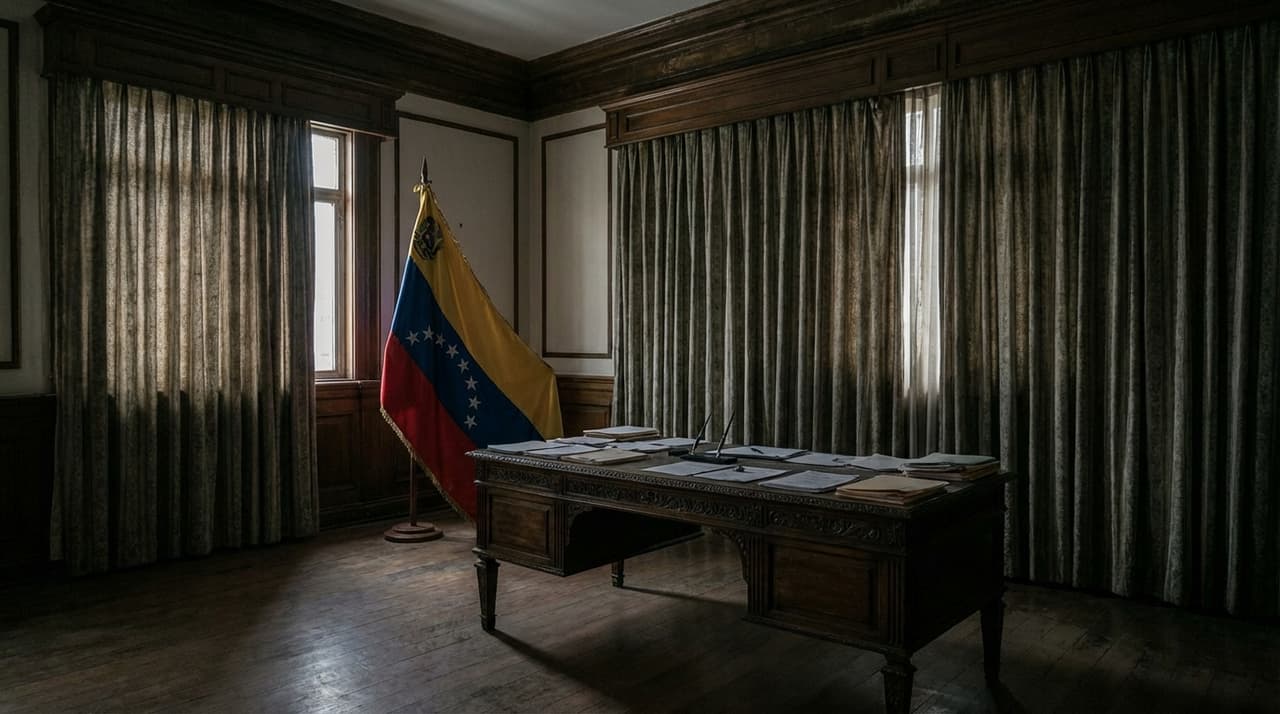
- The White House has not provided an update on when Venezuela's next presidential elections will occur, following the capture of Nicolás Maduro by U.S. forces on January 3, 2026.
- Interim President Delcy Rodríguez, installed by the Supreme Tribunal of Justice citing Maduro's "temporary absence," has initiated a 90-day interim period extendable by the pro-regime National Assembly, delaying elections required within 30 days of an "absolute absence" under Article 233 of the constitution.
- Rodríguez's administration has signaled cooperation with Washington, announcing a "new political era" that includes prisoner releases and power consolidation with regime strongmen, while the U.S. does not recognize her as democratically elected and demands "free and fair elections."
In a move that underscores the ongoing constitutional crisis in Venezuela, the White House has remained tight-lipped on the timing of the country's next presidential elections, according to people familiar with the matter. This silence comes after U.S. forces captured President Nicolás Maduro earlier this month, plunging the nation into a political vacuum that has seen Vice President Delcy Rodríguez installed as interim president by the Supreme Tribunal of Justice (TSJ). The TSJ described Maduro's absence as "temporary," a classification that allows Rodríguez to govern under a 90-day interim period, extendable another 90 days by the National Assembly, which is dominated by Maduro allies holding 222 of 277 seats.
Rodríguez has wasted no time in consolidating her position, announcing a "new political era" of tolerance and initiating prisoner releases since January 8. Sources vary on the numbers, with reports ranging from 70 to 406 detainees freed, addressing some of the over 2,000 individuals detained after the disputed July 28, 2024, election. That election saw official results declare Maduro re-elected with 51.95% of votes, but opposition tallies from over 80% of polling stations showed Edmundo González Urrutia winning by a landslide, sparking international criticism and protests. Rodríguez's efforts to align with regime strongmen and signal cooperation with Washington suggest a strategic pivot, yet the U.S., under President Trump, has dismissed her as undemocratically elected and insists on "free and fair elections."
"We are running Venezuela," a U.S. official stated recently, highlighting the administration's assertive stance, even as it has sidelined opposition leader María Corina Machado, who backs González and is scheduled for a White House meeting. Despite this, recent polls indicate many Venezuelans are grateful to Trump for Maduro's removal, though pre-strike surveys showed 55% opposed foreign military intervention despite widespread anti-Maduro sentiment. The societal impact is profound, with millions having fled amid hyperinflation and crisis, and a polarized populace now facing uncertainty under Rodríguez's interim rule.
Looking ahead, Rodríguez is likely to use emergency powers and U.S. cooperation on unspecified needs to maintain stability, with no immediate rush from Washington to push for elections. The armed forces, unified in backing Rodríguez, reduce the risk of unrest, but long-term challenges loom, including economic recovery and potential reforms. Experts note that while the U.S. is reasserting influence in Latin America, regime continuity persists, with recent polls showing 30-31% of voters undecided amid the turmoil. As Maduro faces charges in New York and the opposition's 2024 parallel tally fuels transition demands, the future remains fluid, with stakeholders navigating a complex landscape of power shifts and diplomatic maneuvers.