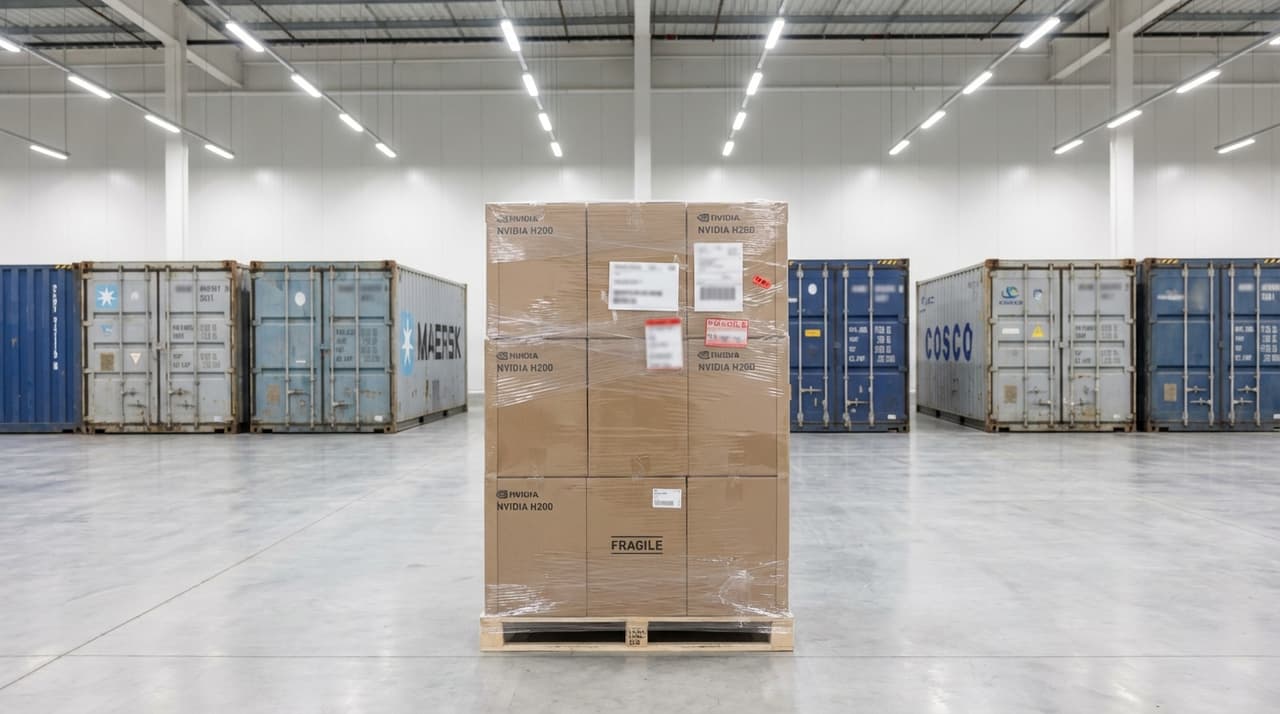
- NVIDIA (NVDA) is preparing to ship 40,000 to 80,000 H200 AI chips to China before mid-February 2025, pending U.S. government review.
- The shipments align with President Trump's pledge to allow these sales with a 25% U.S. fee, aimed at maintaining American tech dominance while generating revenue.
- This marks a policy shift from previous bans, potentially easing restrictions but facing scrutiny from critics concerned about national security risks.
Initial Shipments and Regulatory Hurdles
NVIDIA is gearing up to start its first shipments of H200 AI chips to China, with initial volumes expected to range between 40,000 and 80,000 units, according to people familiar with the matter. The timeline targets delivery before mid-February 2025, but it hinges on an ongoing inter-agency review by the U.S. Departments of Commerce, State, Energy, and Defense. This review could enable the first-ever exports of these high-performance chips, which were previously restricted from China under earlier regulations.
Efforts to navigate the regulatory landscape have hit a snag in recent weeks, as agencies weigh the implications of allowing such sales. Without approval, NVIDIA would be forced to delay or cancel the shipments, impacting its revenue projections for the first quarter of 2026. The company, a market leader in the semiconductor industry with a focus on GPUs and AI chips, reported record Q3 FY2026 revenue of $35 billion in November 2025, driven by robust AI chip demand. However, export curbs to China have shifted sales toward other regions, making this potential deal a significant opportunity.
Economic and Political Context
The planned shipments follow President Trump's December pledge to permit these sales with a 25% U.S. government fee, a move designed to boost federal revenue while countering Chinese chip development and sustaining U.S. export dominance. This fee could generate billions for the U.S. treasury, but it has sparked bipartisan criticism from "China hawks" who fear it might erode American technological superiority. The global AI market is projected to grow at a 37% compound annual growth rate through 2030, adding urgency to these discussions.
Industry trends show escalating U.S.-China tech decoupling, with China investing heavily in domestic AI alternatives despite performance gaps. In a related development, China has imposed its own limits on H200 purchases, prioritizing independence over immediate performance, according to sources. This creates a complex backdrop for NVIDIA's shipments, as Chinese firms may hesitate to buy amid these import curbs. Attempts to reach NVIDIA for comment were unsuccessful, but analysts note that the company's leadership, including CEO Jensen Huang, continues to steer operations amid steady market conditions.
Implications and Future Outlook
Short-term, if reviews approve, the shipments could bolster NVIDIA's financial results but risk delays from inter-agency hurdles or Chinese hesitance. Long-term, this move may slow China's AI self-reliance efforts but reinforce U.S. revenue streams; experts predict sustained restrictions on superior chips like the Blackwell series. The societal impact spans stakeholders including NVIDIA, the U.S. government, Chinese firms, and global AI users, with debates highlighting national security versus economic benefits.
Historically, U.S. bans on advanced NVIDIA chips to China began in 2022 under Biden-era rules to curb AI weapons development. Trump initially considered Blackwell sales but pivoted to the H200, marking a policy shift toward licensed exports with fees. As negotiations continue, the focus remains on current developments, with real-time market data indicating cautious optimism among investors. The outcome could set a precedent for similar U.S. reviews of other AI exports, paralleling past cases like Huawei's sanctions and AMD (AMD)'s compliant China-specific chips.
Correction: An earlier version of this article misstated the timeline for shipments; it has been updated to reflect the target of before mid-February 2025.