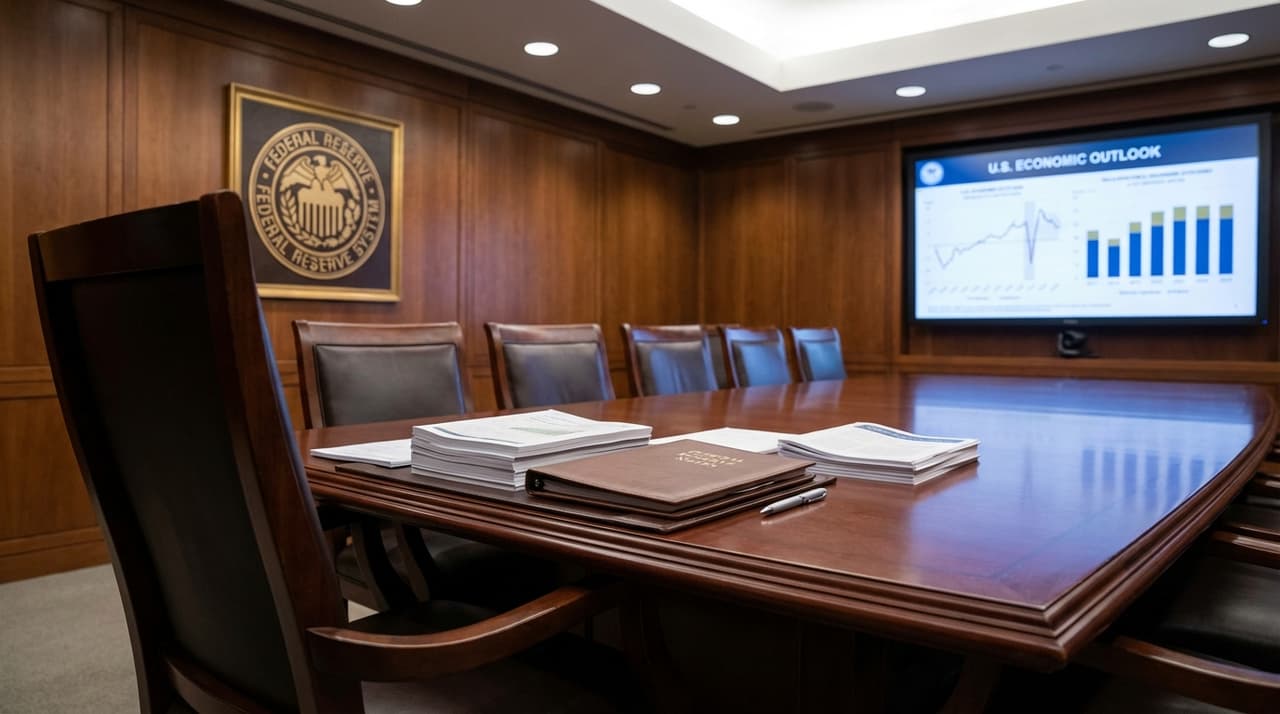
- Federal Reserve Chair Jerome Powell urges his successor to maintain central bank independence amid intense political pressure from President Trump.
- Powell's term ends in May 2026, with Trump planning a near-term announcement of a replacement favoring aggressive rate cuts.
- The Fed holds rates steady at 3.6% after three cuts in 2025, as economists predict two more reductions in 2026 to support weak job growth.
Powell's Parting Guidance
In remarks tied to the Federal Reserve's January 27-28, 2026, meeting, where interest rates were held steady at 3.6%, Chair Jerome Powell offered blunt advice for his successor: "stay out of politics." This guidance, delivered as Powell's term as chair concludes in May 2026, underscores his emphasis on central bank independence amid what sources describe as unprecedented pressure from President Trump to cut rates aggressively.
"What institutional investors like us are really focused on is regulatory stability," said one market participant, who requested anonymity due to the sensitivity of the topic. "The Fed in this regard has been on a very steady trajectory, but political interference could disrupt that." Powell, who was appointed by Trump in 2017 and reappointed in 2022, has faced mounting scrutiny, with the Department of Justice issuing subpoenas over $2.5 billion in headquarters renovations—a move Powell has called retaliation for the Fed's slow pace of rate cuts.
Political Crosscurrents and Market Implications
Trump plans to announce a new Fed chair soon, with frontrunners including Christopher Waller, Kevin Warsh, and Rick Rieder, according to people familiar with the matter. The president seeks a loyalist for the role and up to three board seats, potentially replacing Stephen Miran or targeting Lisa Cook via a Supreme Court case on mortgage fraud allegations. If Powell exits the chair role early, it could accelerate a dovish shift, with economists predicting two rate cuts in 2026, likely post-June, to bolster hiring despite economic expansion and large tax refunds boosting consumer spending.
Lower rates would reduce costs for mortgages, autos, and credit cards, benefiting borrowers but squeezing savers. Businesses could gain from cheaper capital, though aggressive easing risks reigniting inflation. Trump's policies, such as mortgage-backed securities purchases—which slightly lower rates—and Europe tariffs—which raise them—add volatility, with a more dovish Fed board potentially including six voters inclined toward cuts.
A Test of Institutional Resilience
No president has fired a governor in the Fed's 112-year history, making the Cook case unprecedented and raising stakes for central bank autonomy. Powell, in a January 11 video, defended independence amid the DOJ probe, while experts like David Wessel warn of loyalty tests for appointees. Steven Kamin has urged Powell to stay on as a governor after May 2026 to block a Trump majority on the board, though Powell's governor term extends until 2028.
Recent financial performance shows the Fed returned $79 billion in excess earnings to the U.S. Treasury in 2025 during its rate-cutting cycle, highlighting its non-profit role in managing the $28 trillion U.S. economy. As Trump pledged at Davos for a quick chair pick, shifting from earlier frontrunner Kevin Hassett, the Fed's split FOMC—doves versus inflation hawks—adds uncertainty to the outlook. Without a deal to preserve independence, the central bank could face eroded credibility, with long-term risks of politicized policy leading to excessive cuts, according to analysts.
Correction: An earlier version misstated the timing of Powell's remarks; they were tied to the January 2026 meeting, not delivered at it.