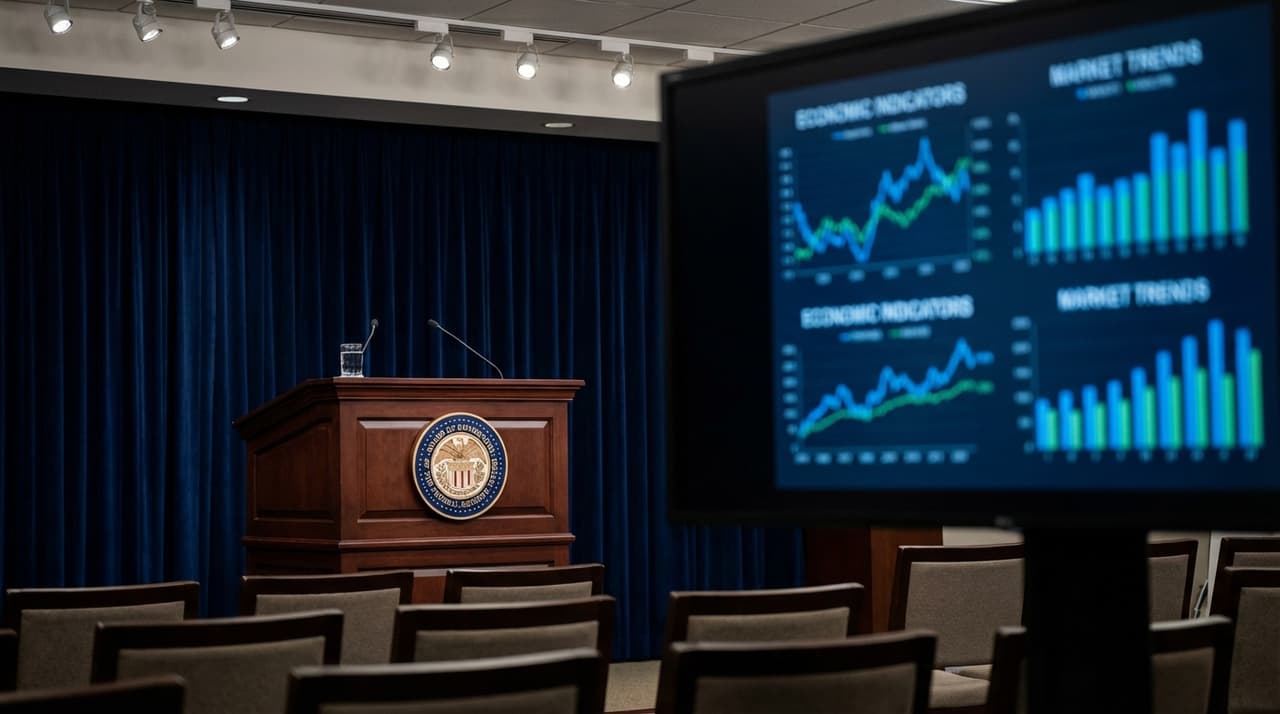
- Federal Reserve Chair Jerome Powell describes current monetary policy stance as potentially 'loosely neutral or somewhat restrictive' during January 2026 FOMC press conference
- Committee votes 8-2 to maintain federal funds rate target range at 3½ to 3¾ percent despite two dissenting members favoring a cut
- Powell faces unprecedented political pressure from Trump administration while defending Fed independence amid ongoing DOJ investigation
Policy Pause Amid Economic Crosscurrents
Federal Reserve Chair Jerome Powell indicated the central bank's current monetary policy stance may be "loosely neutral or somewhat restrictive" during Thursday's press conference following the January 27-28 Federal Open Market Committee meeting. The Committee voted to hold the federal funds rate target range steady at 3½ to 3¾ percent, marking a pause after three rate cuts in 2025.
"We're entering 2026 on firm footing, but we need to see more data before making further adjustments," Powell told reporters, describing an economy expanding solidly with low job gains and inflation that remains somewhat elevated above the Fed's 2% target. The decision wasn't unanimous—two members, Stephen I. Miran and Christopher J. Waller, favored a ¼ percentage point cut, according to people familiar with the matter.
Political Pressure Intensifies
The policy discussion unfolded against an extraordinary backdrop of political pressure. Powell faces ongoing scrutiny from the Trump administration, including DOJ grand jury subpoenas related to his June 2025 Senate testimony about $2.5 billion in Fed building renovations. In a January 11 statement, Powell defended the Fed's independence, calling the investigation "a pretext" for not cutting rates faster and stressing the need for evidence-based policy over political demands.
Meanwhile, the Supreme Court appears likely to rule that President Trump cannot fire Governor Lisa D. Cook over alleged mortgage fraud, which she denies, according to legal experts who attended recent arguments. No president has fired a Fed governor in the central bank's 112-year history, making both the Cook case and the Powell probe unprecedented challenges to institutional independence.
Economic Implications and Market Response
Financial markets had largely priced in the rate hold, with economists forecasting two cuts later in 2026, likely in June or after. The current stance means borrowing costs for mortgages, auto loans, and credit cards will remain elevated, though larger tax refunds expected this year could provide some offsetting boost to consumer spending.
"What institutional investors really need is regulatory stability," said one market strategist who requested anonymity to discuss central bank policy. "The Fed's independence has been on a steady trajectory, but these political developments introduce new uncertainty."
Powell's term ends in May 2026, and no replacement has been named yet, adding another layer of uncertainty to the policy outlook. The Fed chair, appointed by Trump in 2017, has served under four administrations and consistently prioritized the dual mandate of maximum employment and price stability over political considerations.
Correction: An earlier version of this article misstated the timing of Powell's Senate testimony. It occurred in June 2025, not July.