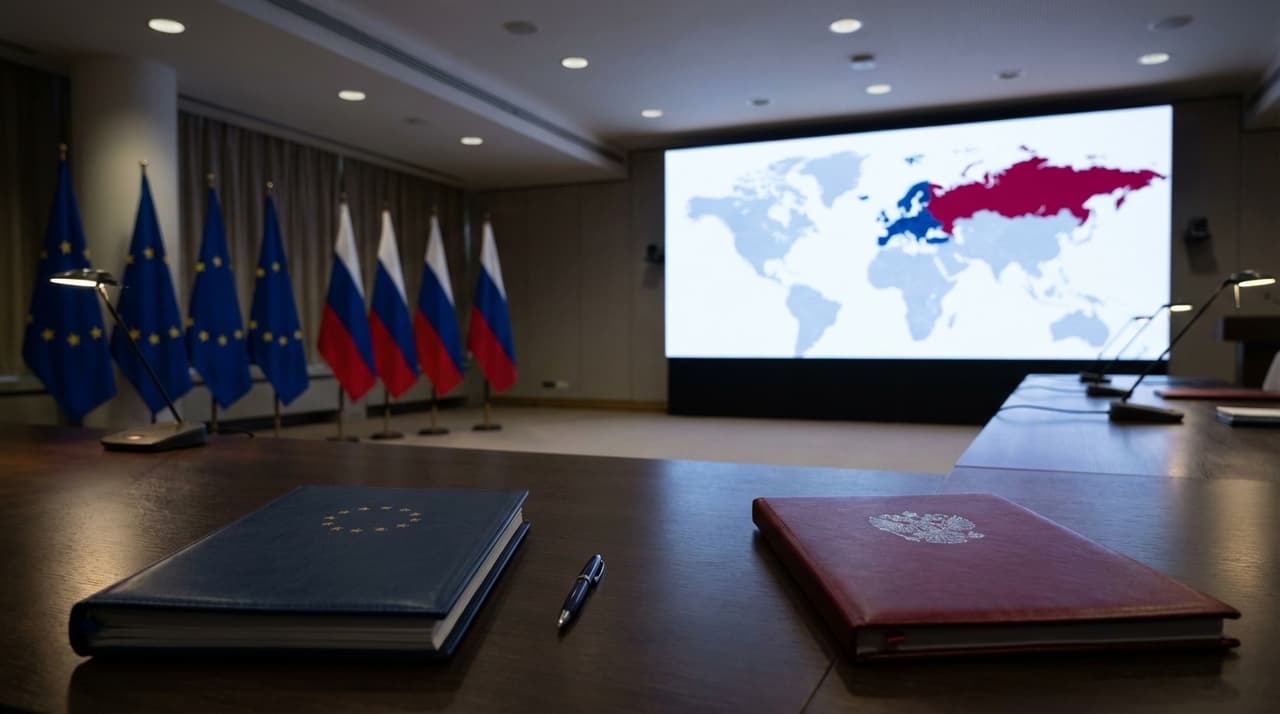
- Russia will integrate Europe's militarization into its military planning, including weapons modernization, in response to perceived threats.
- The EU's ReArm Europe initiative plans €800 billion in rearming by 2030, while Russia's 2026 defense spending hits 16.84 trillion rubles ($217.2 billion).
- Hybrid threats and political shifts, including far-right gains in 2026 elections, complicate the security landscape amid ongoing Ukraine negotiations.
Russia is closely monitoring Europe's militarization, including NATO buildup, strike systems, and arms support for Ukraine, and will factor it into military planning, Russian Foreign Ministry spokeswoman Maria Zakharova said on January 15, 2026. Moscow plans to modernize its weapons and equipment in response to perceived threats to its security, according to people familiar with the matter.
Efforts to address the escalating tensions have hit a snag, with Foreign Minister Sergei Lavrov urging European leaders on January 14 for concrete dialogue on Ukraine, emphasizing Moscow's readiness for serious talks to address crisis roots. Analysts note growing European support for direct Kremlin talks amid stalled negotiations, but without a deal, the region risks further instability. "We are seeing a transformation of the EU into a military bloc, which we view as a serious security threat," Zakharova stated, referencing steps like increased military spending and calls for a "European army."
Concurrently, Europe's ReArm Europe initiative aims to deploy €800 billion in rearming by 2030, according to sources close to the planning. This comes amid slow growth, inflation, and energy uncertainties straining budgets, while Russia's 2026 defense spending reaches 16.84 trillion rubles ($217.2 billion), with tripled weapons production since 2022 bolstering reserves. The Financial Times reports that European leaders are seeking negotiation seats, with Putin signaling readiness but warning of no partners left if talks fail.
Hybrid threats add to the complexity, with recent incidents like sabotage on defense factories in Romania and Germany raising security costs and diverting Ukraine aid. Far-right, pro-Russian parties are gaining in 2026 elections, exploiting economic woes, and publics face debates on deterrence gaps. NATO's Mark Rutte warned that Russia targets the alliance within five years, while Germany's Boris Pistorius cited "last summer of peace," according to anonymous officials.
In the Arctic, Russia opposes NATO militarization, favoring peace and cooperation, but debates on targeting Russian cargo ships risk escalation. The situation remains fluid, with Russia potentially boosting western battlegroups and hybrid sabotage on supply chains in the short term. Attempts to reach EU spokespeople for comment were unsuccessful at press time, but stakeholders include Ukraine facing delayed arms and EU citizens grappling with infrastructure risks.
Correction: An earlier version misstated the timeline for EU rearming; it is planned by 2030, not 2025.