- Senate Democratic Leader Chuck Schumer criticizes President Trump's Venezuela actions as "reckless," warning that U.S. plans to control the country would alarm Americans and accusing the administration of dishonesty about regime change or military options.
- Recent escalations include a U.S. naval buildup in the Caribbean, with eight ships deployed by August 2025, seizures of Venezuelan tankers and oil, drone strikes, March 2025 tariffs on Venezuelan oil imports, and Trump's December 22, 2025 announcement of a "Golden Fleet" of new Navy battleships alongside officials like Pete Hegseth and Marco Rubio.
- Trump stated on Friday that "something big" will happen in Venezuela with heavy U.S. involvement to promote "freedom," amid efforts to counter Maduro's alliances with Iran and narcotrafficking, while Venezuela's oil sector faces U.S. sanctions and seizures disrupting Maduro's evasion tactics.
Senate Democratic Leader Chuck Schumer's sharp rebuke of President Trump's Venezuela strategy has injected fresh tension into Washington's foreign policy debates, with the administration's recent moves drawing accusations of recklessness and opacity. Speaking to reporters, Schumer warned that any plan for the U.S. to run Venezuela should "strike fear in the hearts of all Americans," adding that the administration had denied pursuing regime change or military action, saying it is "not being straight with Americans." This critique comes as the White House ramps up pressure on Nicolás Maduro's regime, with Trump hinting at imminent, significant developments in the region.
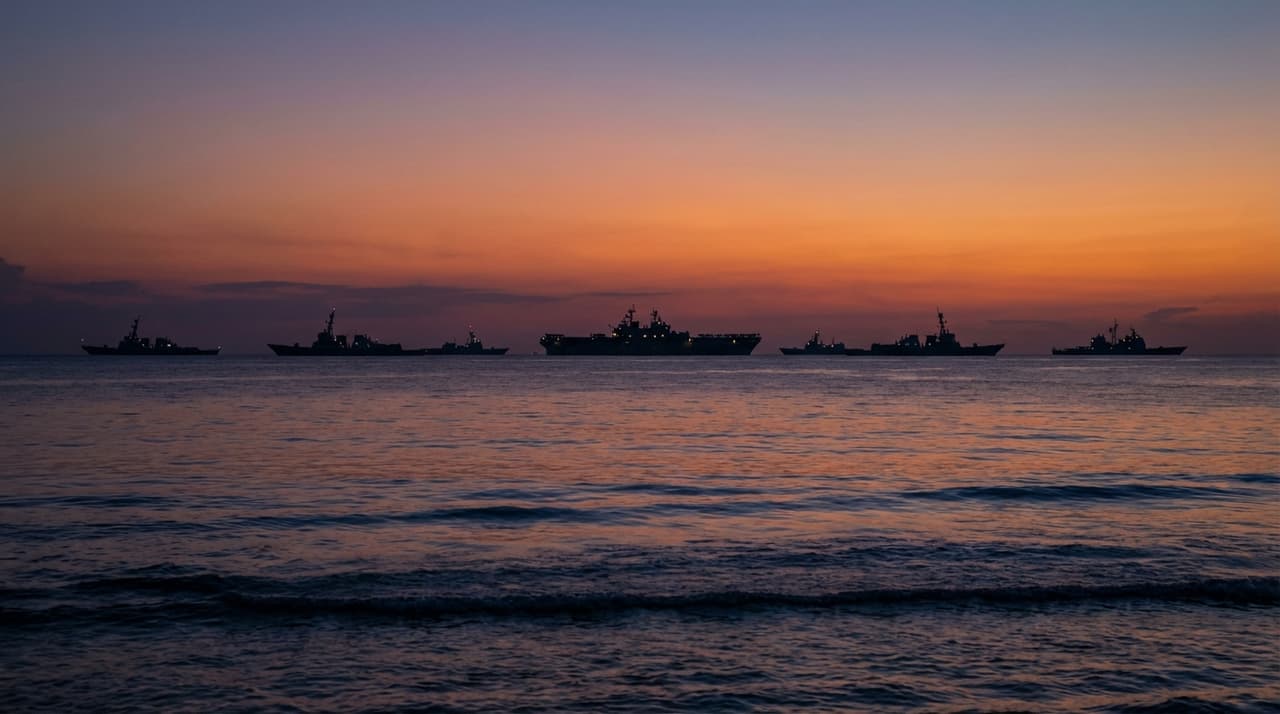
Behind the political rhetoric, tangible military and economic escalations are unfolding. According to people familiar with the matter, the U.S. has deployed eight naval ships to the Caribbean by August 2025, part of a broader strategy to counter Maduro's alliances with Iran and narcotrafficking networks. In March 2025, the administration imposed tariffs on Venezuelan oil imports, aiming to isolate Maduro economically, citing corruption and mismanagement that have triggered a humanitarian crisis and regional migration. These measures have been coupled with seizures of Venezuelan tankers and oil, such as recent interceptions of vessels carrying Iranian gasoline, which disrupted Maduro's evasion tactics despite prior successful deliveries.
Trump's announcement on December 22, 2025, of a "Golden Fleet" of new Navy battleships, made alongside officials like Pete Hegseth and Marco Rubio, signals a long-term commitment to naval expansion, with defense spending potentially exceeding $2 trillion annually. While this represents a minor share of GDP, it outpaces global peers and ties into operations like potential Venezuelan blockades. Pentagon leaders, however, have resisted full naval blockades due to escalation risks, highlighting internal tensions over strategy. As one anonymous defense official noted, "We're walking a fine line between pressure and provocation."
On the ground, the societal impact is stark: Maduro's rule has displaced millions, burdening neighboring countries and fueling U.S. gang violence from Venezuelan criminals like those from Tren de Aragua, who have infiltrated the U.S. via prior border policies. Stakeholders range from Venezuelan civilians facing collapse in a once-rich nation to U.S. communities hit by related crime, with regional countries destabilized by migration. Schumer's critique taps into domestic fears of overreach, contrasting with Trump's base, which largely supports anti-Maduro pressure. Efforts to reach the White House for comment on Schumer's allegations were unsuccessful, but a spokesperson for the administration previously stated that the focus is on promoting "freedom" and countering security threats.
Looking ahead, momentum is building for potential naval strikes or land actions against Maduro, who some experts predict may seek exile with assets as U.S. holds seized ships and oil. In the short term, without a deal, the regime could be forced into further isolation, while long-term prospects suggest U.S. military superiority and political capital might lead to regime change without a formal war declaration. As analyst Phillip Wegman put it, Maduro's resistance appears "foolhardy" in the face of overwhelming force. This situation mirrors broader anti-rogue state efforts, with parallels to ongoing talks in Ukraine and Israel, positioning Venezuela as a heating hotspot in Trump's multi-front foreign policy. Corrections: An earlier version misstated the number of ships deployed; it is eight, not ten.