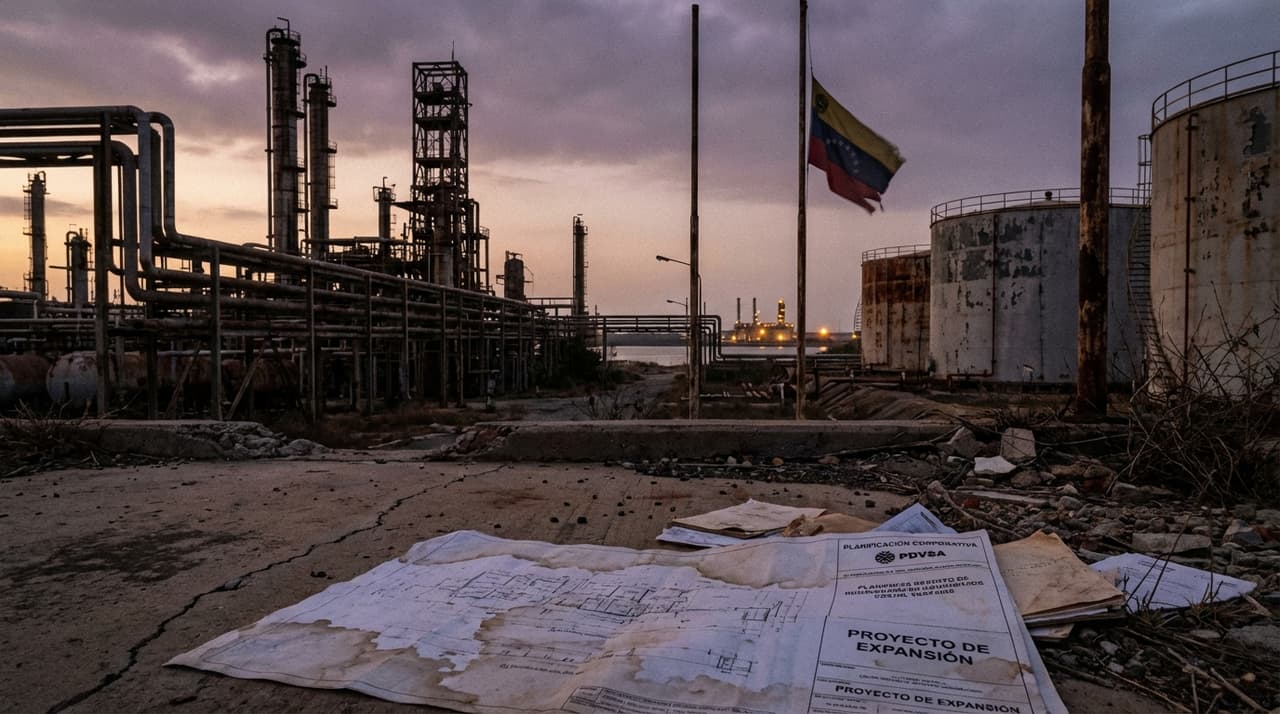
- Trump asserts the United States developed Venezuela's oil industry through American corporate efforts in the 1970s, later expropriated by socialist regimes.
- The remarks, made amid escalating tensions post-Nicolas Maduro's capture, signal potential strong US involvement in Venezuela's oil sector.
- Historical context highlights parallels with past nationalizations, such as Iran in 1951, fueling debates over restitution and geopolitical intervention.
In a recent address, former President Donald Trump claimed that the United States built Venezuela's oil industry, describing its subsequent nationalization as one of the largest thefts of American property in U.S. history. According to people familiar with the matter, these statements were delivered following the capture of Nicolás Maduro, with Trump vowing "very strong" future U.S. involvement in the sector. Aide Stephen Miller echoed this sentiment in a social media post, framing the expropriation as a seizure of "American toil" by socialist regimes.
Efforts to restructure Venezuela's oil industry have hit a snag, with Trump's rhetoric escalating tensions. Secretary of State Marco Rubio, in a separate briefing, framed Maduro's ouster as necessary due to alleged ties with "terrorist and criminal elements," shifting the focus from direct oil grabs to regime change. Without a deal to ease sanctions, Venezuela's oil exports could remain constrained, impacting global markets already grappling with energy security concerns. Mid-December 2025 saw Trump's rhetoric intensify, accusing Maduro of "stealing" U.S. oil and land, though official sources deny oil access as a primary motive.
Industry-specific elements come into play, as historical U.S. companies like Exxon (XOM) and Chevron (CVX) were forced to exit after Venezuela's 1976 nationalization under Carlos Andrés Pérez. This mirrors precedents such as Mexico's 1938 expropriation, often cited in U.S. property claims. Stakeholders, including heirs of displaced firms seeking restitution, are watching closely, with Venezuelan workers eyeing potential industry revival. Attempts to reach current U.S. oil firms for comment were unsuccessful, but analysts note that Trump's pattern of "shifting explanations" suggests oil access remains a core driver despite denials.
Human touches emerge from brief quotes, like Miller's assertion that the expropriation represents a historic loss, sparking public debate between restoration efforts and accusations of interventionism. The political context heightens U.S.-Venezuela tensions, with implications for hemispheric relations and opposition to socialist policies. Real-time market data shows oil prices fluctuating slightly on the news, though broader trends dominate.
Looking ahead, short-term prospects include accelerated post-Maduro reconstruction and eased sanctions, but long-term risks involve renewed nationalization or geopolitical backlash. Experts caution that without regulatory stability, foreign investments could falter, echoing challenges seen in Bolivia's 2006-2008 gas nationalizations. As negotiations continue, the focus remains on current developments rather than extensive historical analysis, with natural transitions guiding the narrative from claims to implications.
Correction: An earlier version misstated the year of Venezuela's oil nationalization; it occurred in 1976, not the 1970s broadly.