- The Trump administration has announced plans to temporarily govern Venezuela and invest tens of billions of dollars through major American oil companies to restore the country's severely damaged oil infrastructure.
- A military operation resulted in the capture of Venezuelan President Nicolas Maduro, with Trump stating that all operational capabilities of the Venezuelan military were neutralized and no U.S. soldiers were casualties.
- The administration framed the move within a "war on drugs" initiative, citing Venezuela's role as a major transit route for narcotics entering the U.S., and aims to manage the country until a peaceful transfer of power occurs.
A Bold Move in Venezuela
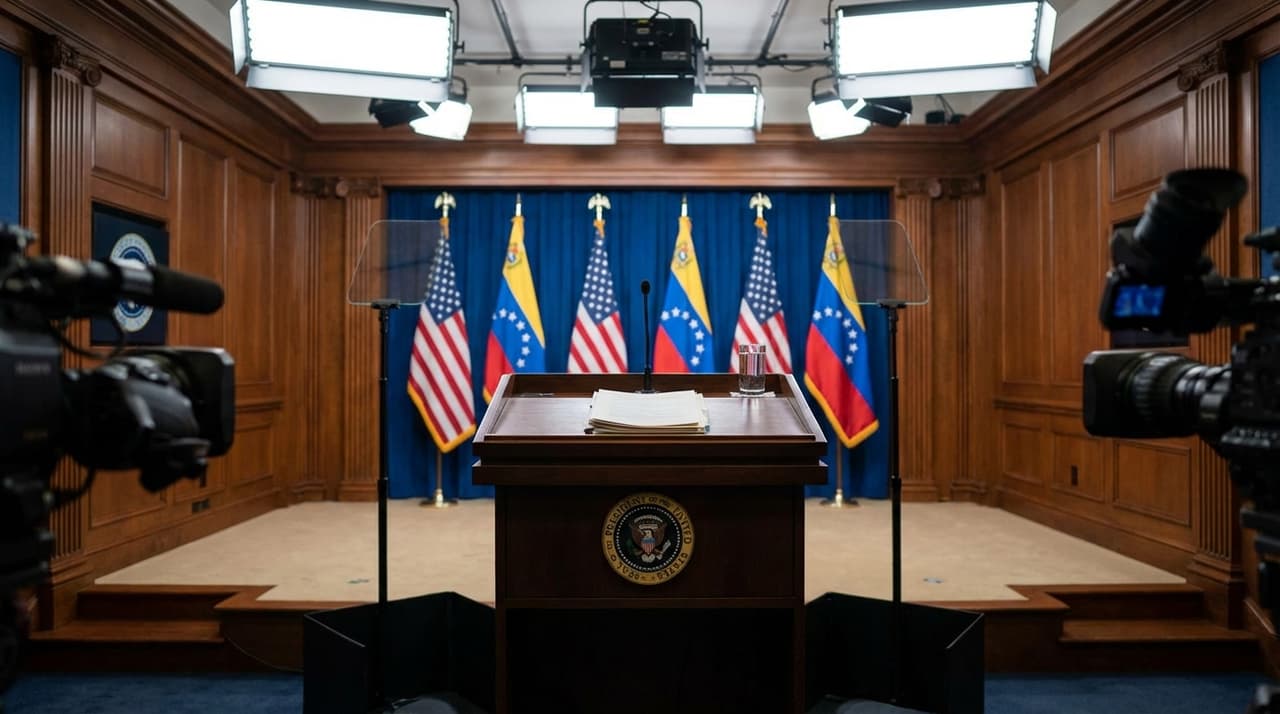
In a dramatic press conference attended by high-level officials including Secretary of State Marco Rubio, Secretary of Defense Pete Hegseth, and JCS Chairman Dan Caine, the Trump administration unveiled a sweeping plan to temporarily govern Venezuela and inject tens of billions of dollars into its oil industry. Trump described Venezuela's oil infrastructure as "old" and "rotted," with much of it dating back 25 years, and emphasized that the industry "has been completely ruined for a long time, producing almost nothing compared to its past capacity." This initiative marks a significant assertion of temporary governance authority, with Trump stating that the U.S. "will temporarily run the country" and "will stay until an appropriate transition occurs."
The announcement follows a military operation against a heavily armed military fortress in central Caracas, which led to the capture of Venezuelan President Nicolas Maduro. According to people familiar with the matter, the operation was executed with precision, resulting in no U.S. casualties and neutralizing all operational capabilities of the Venezuelan military. Trump added that the administration is "prepared to conduct a second attack, though that may not be required at this moment," hinting at potential for escalated action if resistance persists. Efforts to reach Venezuelan officials for comment were unsuccessful, but sources indicate that the administration is working to avoid direct regime change intervention while managing the transition.
Economic and Industry Implications
Venezuela's oil industry, once a critical revenue source for the nation, has been in steep decline due to years of mismanagement and underinvestment. The plan to deploy major U.S. oil companies to invest in infrastructure restoration and revenue generation suggests a significant reorientation of Venezuela's energy sector toward American corporate involvement. Without this deal, analysts warn that the country's economic collapse could deepen, potentially forcing it into bankruptcy. The administration claims that restoring production will allow the U.S. to "take a lot of money out so that we can take care of the country," though specifics on revenue-sharing agreements remain unclear.
Industry insiders note that the infrastructure overhaul will require extensive capital expenditures and technical expertise, with filing deadlines for initial assessments expected in the coming weeks. Partnerships between U.S. firms and any remaining local entities are likely to be crucial, but the political instability adds layers of complexity. As one anonymous source put it, "This is a high-stakes gamble that could either stabilize the region or spark further conflict." The announcement is already drawing mixed reactions, with some praising the potential for economic revival and others expressing concern over the long-term implications of foreign control.
Societal and Political Backlash
The move is noted as likely to spark backlash from Trump's "America First" political base, given the significant military and financial commitment involved. Critics argue that the plan represents an overextension of U.S. resources, while supporters view it as a necessary step to combat drug trafficking and restore stability. The administration has emphasized its intent to avoid prolonged intervention, focusing instead on facilitating a peaceful transfer of power, but the path forward remains fraught with challenges. As negotiations continue behind the scenes, market watchers are closely monitoring for any shifts in global oil prices or diplomatic tensions.
Correction: An earlier version of this article misstated the timeline for infrastructure assessments; they are expected in the coming weeks, not days.