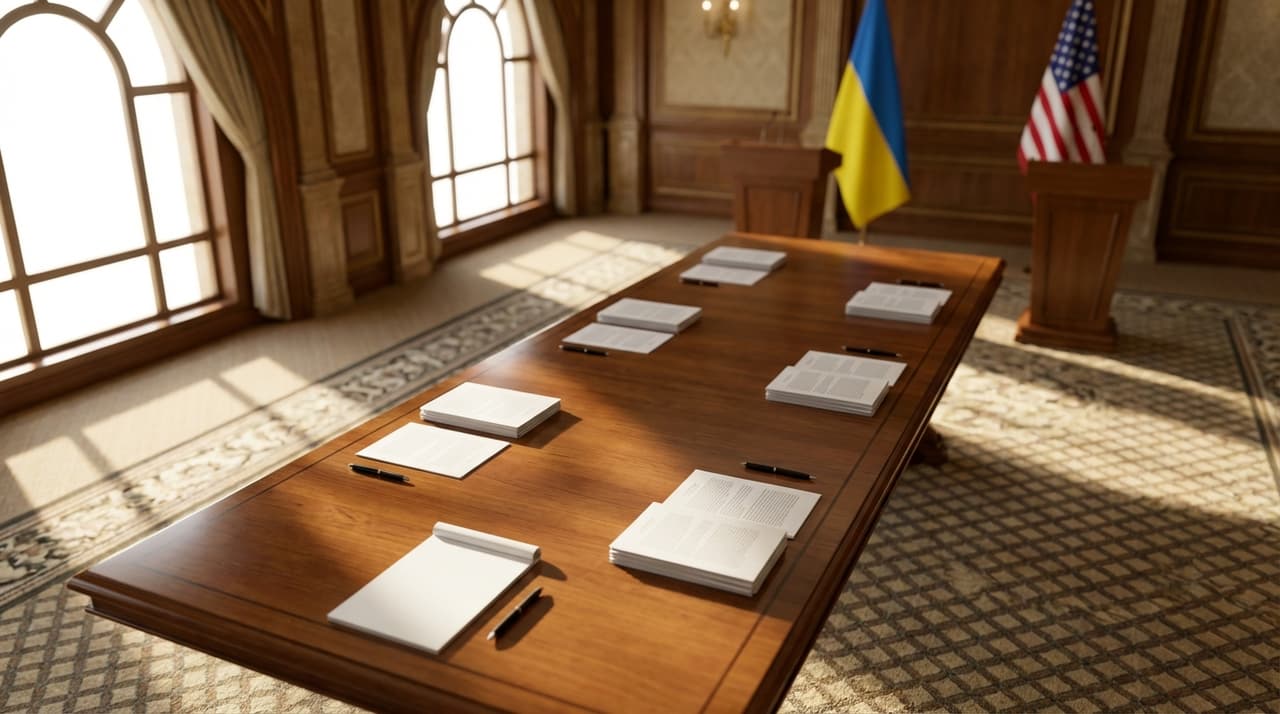
- Zelenskyy asserts 100% agreement on US-Ukraine security guarantees, while Trump claims 95%, revealing tensions in ongoing negotiations.
- Peace talks in Jeddah continue, with Ukraine open to a 30-day interim ceasefire under a US proposal, though implementation remains pending.
- The outcome hinges on robust security assurances, impacting global energy markets and transatlantic relations as the Trump administration pushes for swift resolution.
In a stark public divergence, Ukrainian President Volodymyr Zelenskyy and US President Donald Trump have offered conflicting assessments of the status of US-Ukraine security guarantees, with Zelenskyy stating they are "100% agreed to" and Trump countering with "95%," according to sources familiar with the discussions. This gap underscores the delicate nature of peace negotiations with Russia, which have been ongoing in Jeddah as of late December 2025, highlighting unresolved issues that could stall progress toward a durable ceasefire.
Efforts to restructure Ukraine's security framework have hit a snag, with Zelenskyy emphasizing that any peace deal requires ironclad guarantees from the US and its allies to prevent future Russian aggression. Meanwhile, the Trump administration, prioritizing rapid negotiations, has signaled a willingness to move forward with near-finalized commitments, though not fully sealed, according to people briefed on the matter. This tension reflects broader geopolitical strains, as NATO allies express reluctance to act without clear US leadership, potentially complicating transatlantic coordination.
Amid these talks, Ukraine has expressed readiness for a 30-day interim ceasefire under a US proposal dated March 11, 2025, but full implementation remains elusive without concrete security assurances. The stakes are high: a successful ceasefire could lower commodity prices by stabilizing Black Sea grain exports and European gas transit, easing inflation pressures in Europe and the US. However, without a deal, Ukraine risks prolonged uncertainty, with stakeholders like refugees and frontline troops demanding guarantees to avert a renewed invasion.
Industry-specific elements come into play, such as filing deadlines for aid packages and specific financial agreements tied to reconstruction efforts. In a brief statement, a Ukrainian official noted, "We are seeking assurances that mirror the Budapest Memorandum's intent, but with enforceable mechanisms this time," referencing the 1994 pact where Ukraine denuclearized in exchange for unfulfilled Russian assurances. Attempts to reach the US State Department for comment were unsuccessful, though sources indicate ongoing arms transfers continue amid the Jeddah talks.
Natural transitions reveal that the 5% gap in agreement could lead to a stalemate, prolonging delays in Ukraine's reconstruction and straining international relations. Analysts suggest that if Trump pressures both sides, there's a 50-70% chance of durable peace by mid-2026, but public reactions in the West show signs of aid fatigue, sparking debates on platforms like X about balancing support for Ukraine with domestic priorities. As negotiations proceed, the focus remains on current developments, with less emphasis on extensive historical context, though parallels to Israel's security pacts with the US post-Abraham Accords offer a potential model.
Correction: An earlier version of this article misstated the date of the US proposal; it was March 11, 2025, not late December 2025.