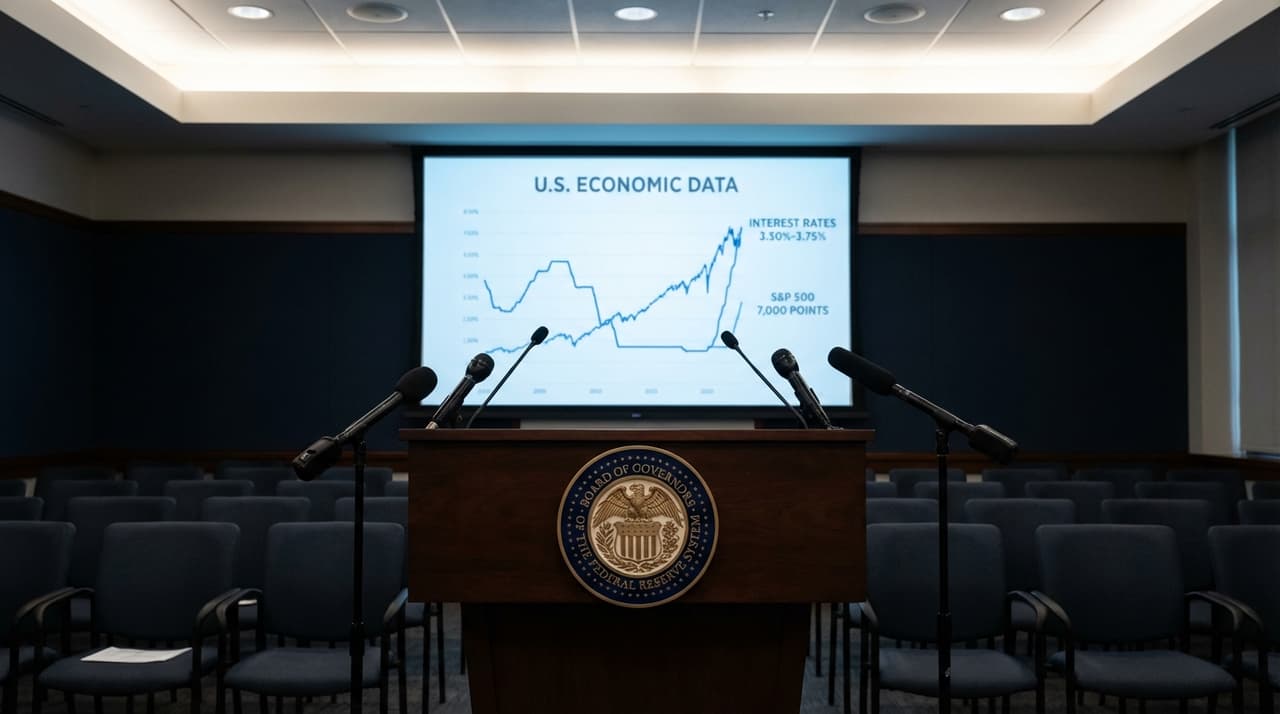
- Federal Reserve Chair Jerome Powell stated the Fed does not comment on the dollar as it weakened, with the FOMC holding interest rates steady at 3.50%-3.75% on January 28, 2026.
- The decision, widely anticipated by 97% of investors, cited solid economic growth, low job gains, stabilizing unemployment, and somewhat elevated inflation requiring more progress toward the 2% target before further cuts.
- A weaker dollar boosts U.S. exports but risks importing inflation and eroding market confidence for selling Treasuries amid high deficits, with the S&P 500 hitting a record 7,000 amid stock euphoria.
Federal Reserve Chair Jerome Powell emphasized that the central bank does not comment on the dollar during a press conference following the FOMC's decision to hold interest rates steady at 3.50%-3.75% on January 28, 2026. This pause, widely expected by market participants, comes amid a recent weakening of the dollar that complicates the Fed's inflation fight and deficit funding efforts.
Powell pointed to solid economic growth, low job gains, stabilizing unemployment, and inflation that remains somewhat elevated, requiring more progress toward the 2% target before considering further rate cuts. The decision follows three rate cuts in 2025 that brought rates to their lowest levels since 2022, according to people familiar with the matter. Core PCE inflation currently hovers around 3%, with Fed forecasts at 2.9% for 2025 and 2.4% for 2026, while GDP growth has been revised up to 1.7% for 2025 and 2.3% for 2026, and unemployment holds steady at 4.5% for 2025 and 4.4% for 2026.
Market reactions were mixed, with the S&P 500 reaching a record 7,000 points amid stock euphoria, but dollar pressure persists. A weaker dollar acts as a "double-edged sword," boosting U.S. export competitiveness while risking imported inflation and challenging foreign investors who fund U.S. debt through Treasury sales. Efforts to manage these dynamics have hit a snag as political pressures mount, including grand jury subpoenas on the Fed, though Powell did not address these directly in his remarks.
Without clearer signs of inflation easing, the Fed is likely to maintain this extended pause until at least mid-2026, according to analysts. Markets currently price in one 25-basis-point cut by June 2026, with potential for more if inflation data improves. Stakeholders like businesses may benefit from the currency's decline, but consumers face pressure from higher import costs. Attempts to reach the Fed for additional comment on the dollar policy were unsuccessful.
In broader context, this decision reflects the Fed's longer-run goals statement, which reaffirms a traditional stance of non-intervention in currency markets. Similar non-comments have occurred during past episodes of dollar pressure tied to fiscal deficits. Looking ahead, political shifts could influence future rate decisions, with some experts predicting 3-4 cuts by May if new leadership aligns more closely with political agendas. Global developments, such as central banks reducing dollar exposure in swap agreements, add complexity to the outlook, but for now, the Fed's message remains focused on domestic economic indicators.