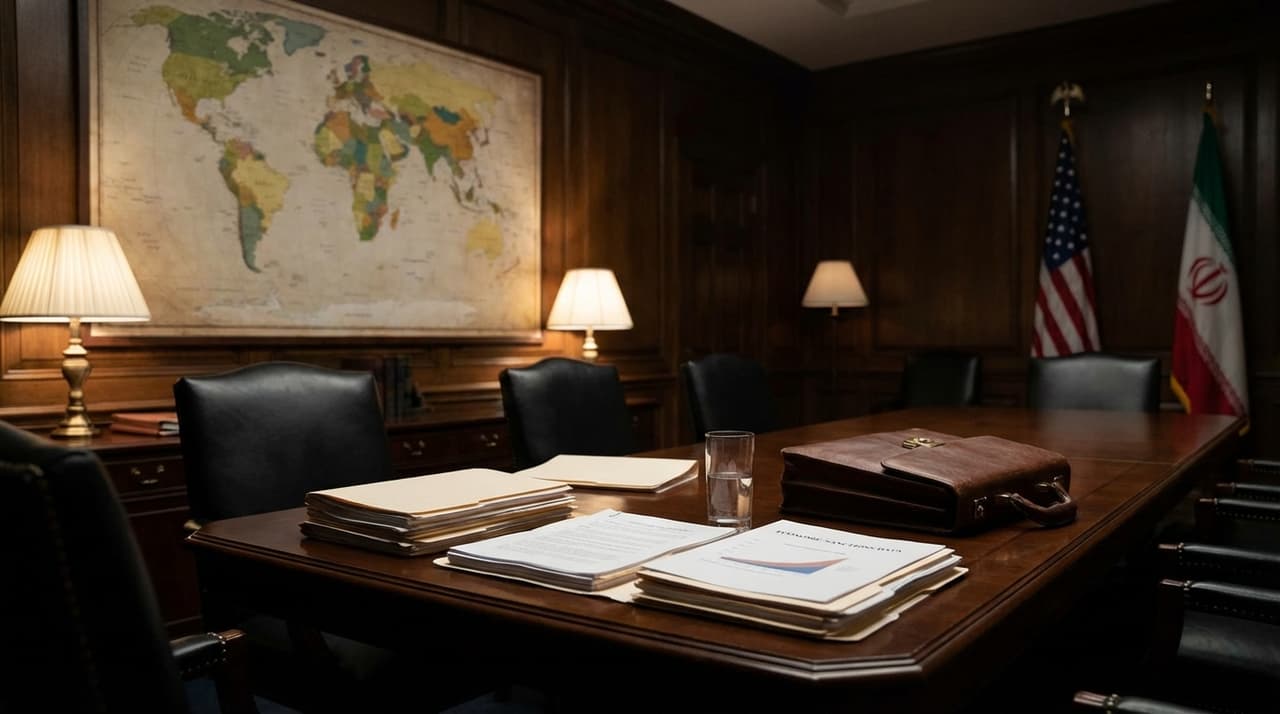
- President Trump threatens military action against Iran's regime over violent crackdowns on protests, but U.S. officials indicate no immediate troop movements.
- Protests in Iran, fueled by staggering inflation and government policies, have led to up to 2,000 deaths, prompting international condemnation and economic concerns.
- Experts suggest non-kinetic measures like sanctions or cyberattacks are more likely, as Congress shows reluctance for boots-on-ground involvement, echoing past pushbacks on intervention.
President Trump's recent declaration on Truth Social that "all options, including military action, remain on the table" against Iran's regime has reignited tensions in the Middle East, coming amid a violent crackdown on nationwide protests over inflation and policies. According to people familiar with the matter, U.S. officials have clarified that no major troop movements are planned, with carriers like the USS Vinson and Nimitz already departed from the region and Patriot systems returned, signaling a cautious approach despite the fiery rhetoric.
Protests erupted in Iran in December 2025, driven by economic woes including staggering inflation that has exacerbated prior sanctions impacts, and have spread rapidly, with security forces reportedly killing up to 2,000 demonstrators, per rights groups. In his Tuesday post, Trump threatened a "big price" for regime "killers and abusers" and canceled meetings until the killings stop, declaring "HELP IS ON THE WAY." However, a White House official confirmed that no significant U.S. troop or asset shifts are underway, highlighting a gap between words and actions that analysts say could aim to pressure Tehran without escalating into full-scale conflict.
Efforts to address the crisis have hit a snag as Trump's rhetoric echoes his June 2025 order for bombers to strike Iran's nuclear facilities, signaling readiness for airstrikes on regime "centers of gravity" like command bunkers or cyberattacks, according to retired Adm. John Miller. The Pentagon affirms support for presidential orders, but Congress shows reluctance, with Republicans like Sens. Mullin, Cramer, Thune, and Wicker opposing boots-on-ground invasion in favor of sanctions; recent bipartisan votes have limited Trump's actions in Venezuela, invoking constitutional war powers, suggesting a similar dynamic could unfold here.
Without a deal to de-escalate, the situation risks further destabilizing global oil markets, as disruptions in Iran historically spike prices, though experts note potential for coordinated sanctions to pressure Tehran's economy without kinetic action. Attempts to reach Iranian officials for comment were unsuccessful, but stakeholders include protesters seeking reform, regime loyalists, and U.S. allies wary of escalation, with Trump positioning the U.S. as protector of "the Iranian people," potentially boosting domestic hawks but sparking debates on intervention limits.
This builds on Trump's prior Middle East moves, including the June 2025 nuclear strikes and 2025 carrier deployments later withdrawn, with protests mirroring 2019-2020 unrest over fuel prices and COVID policies, now deadlier. In the short term, likely options involve non-kinetic measures like sanctions or precision global strikes from U.S. bases, avoiding Gulf buildup, while long-term risks include congressional blocks akin to Venezuela, with experts predicting focus on regime weak points if diplomacy fails, but no invasion consensus.
Correction: An earlier version misstated the number of protest deaths; it is up to 2,000, not exactly 2,000, based on rights group estimates.