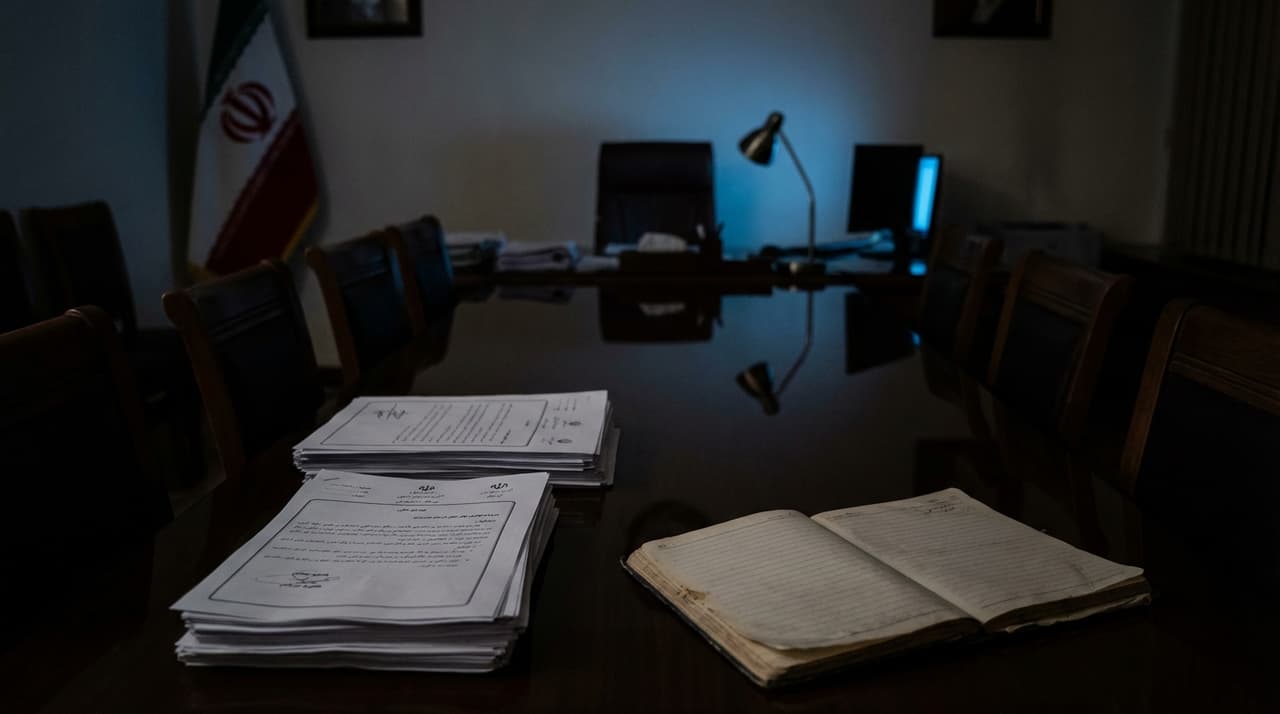
- President Masoud Pezeshkian issues stark warning that any attack on Supreme Leader Ayatollah Ali Khamenei would trigger all-out war, signaling regime unity amid escalating US-Iran tensions.
- Deadly anti-regime protests over economic woes have killed thousands and caused hundreds of millions in damage, with Khamenei recently conceding "several thousand" fatalities while blaming the US and Israel.
- Former US President Donald Trump's direct encouragement of protesters via social media and halted meetings with Iranian officials have heightened fears of military intervention, though airspace closures last week didn't lead to strikes.
A Regime on Edge
Iran's President Masoud Pezeshkian delivered a forceful statement on Saturday, declaring that any attack on Supreme Leader Ayatollah Ali Khamenei would result in all-out war, according to people familiar with the matter. This warning comes amid the most severe domestic unrest in years, with anti-government protests erupting late last month over dire economic conditions including record rial depreciation and fragile banking systems eroding public confidence.
Khamenei himself acknowledged on January 17, 2026, that "several thousand" have died in the protests—a figure that aligns with human rights estimates of approximately 3,500 fatalities and 22,000 detentions. In a rare concession, he admitted some were killed "brutally" while simultaneously accusing the United States and Israel of training and aiding rioters. The protests have spread nationwide, with attacks on government buildings, banks, mosques, and police stations causing hundreds of millions in damage.
Economic Strain and Digital Control
The regime has imposed its longest-ever internet blackout to curb the unrest, surpassing even the 2019 protest shutdowns, though restrictions are now partially lifting with tight controls. This sustained digital securitization diverts users to a controlled domestic network, imposing significant economic costs on the regime while isolating most of Iran's 92 million citizens from global platforms like Telegram and X. Meanwhile, IRGC-linked officials reportedly transferred $328 million to Dubai in the past 48 hours, according to sources with knowledge of the matter, signaling elite doubts about the country's stability.
"What we're seeing is livelihoods truly under strain," said one analyst who requested anonymity due to the sensitivity of the situation. "The economic factors driving these protests—the rial's collapse, banking fragility—aren't going away anytime soon."
Trump's Provocations and Regime Response
Former President Donald Trump has directly engaged with the crisis, posting on Truth Social to urge protesters to "take over institutions" and claiming his threats stopped over 800 executions. He has halted meetings with Iranian officials and called for new leadership, deeming Khamenei responsible for the destruction. In response, Khamenei labeled Trump the "main culprit" for deaths and damage, vowing no war but punishment for "domestic and international criminals."
This personalization of tensions traces back to post-1979 US efforts to restore dominance in the region, now manifesting through Trump's direct encouragement of what the regime calls "seditionists" via social media. The situation builds on the June 2025 12-day Israel-Iran war, where Trump claimed he recalled Israeli jets targeting Tehran, sparing Khamenei—a parallel that hasn't gone unnoticed in diplomatic circles.
Looking Ahead
Short-term, the regime is weighing its coercive capacity against growing discontent, sustaining internet shutdowns despite the economic costs. Trump may flip-flop again, as he did in June, potentially delaying military action. Long-term, 2026 tests Tehran's endurance amid worsening economic conditions, loyalty erosion within security forces, and increasing regime change talk in Washington.
Without a stabilization of the economic situation, experts note Iran's options are narrowing. The IRGC money flights to Dubai and sustained blackouts suggest the regime recognizes the severity of the challenge. As one European diplomat put it: "They're trying to project strength with Pezeshkian's warning, but the underlying vulnerabilities are becoming harder to mask."
Correction: An earlier version of this article misstated the timing of internet restrictions; they are partially lifting with controls, not completely restored.