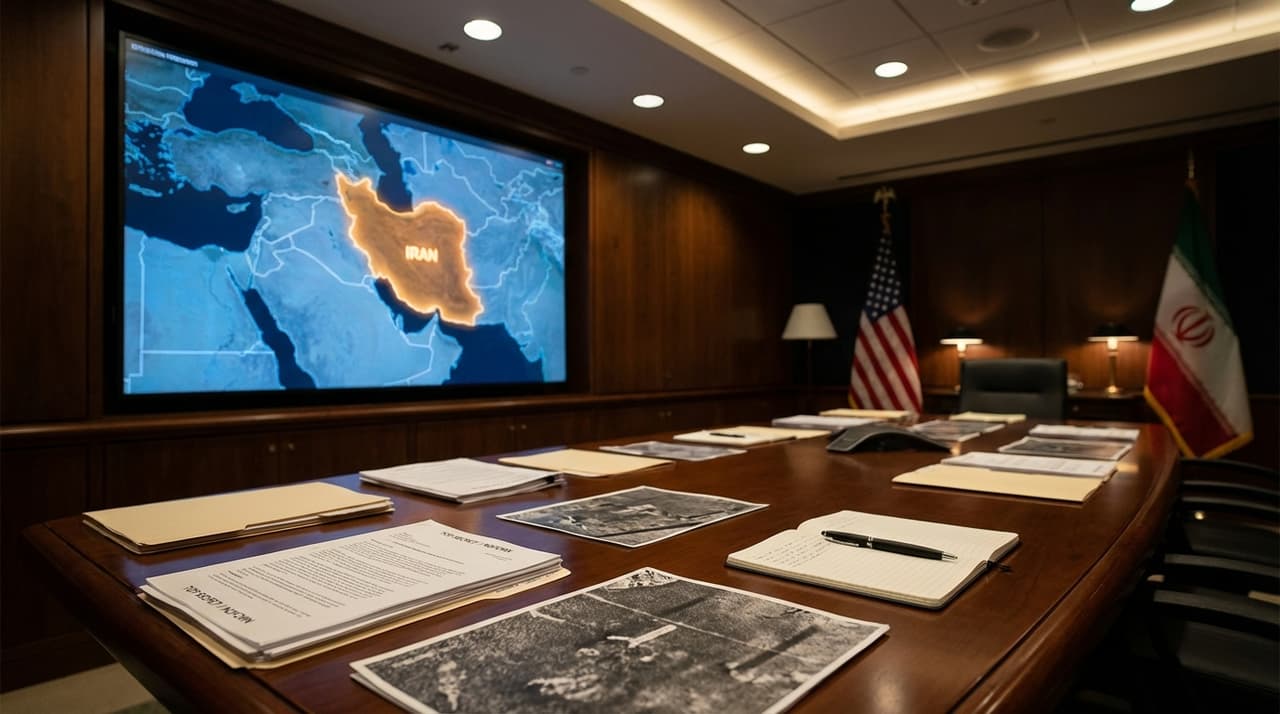
- US officials informed President Trump that military strikes on Iran would not ensure the regime's collapse, as nationwide protests escalate into a major security crisis.
- The Iranian government has reclassified protesters as "terrorists," with at least 217 deaths reported from lethal force, while security forces show signs of strain and potential defections.
- The Trump administration held initial discussions on potential airstrikes but emphasized no imminent attack plans, with President Trump warning of intervention if Iran fires on protesters.
A Delicate Calculus in Tehran and Washington
As protests in Iran intensified into a full-blown security crisis by January 10, 2026, US officials conveyed to President Trump that launching airstrikes against Iranian military sites would not guarantee the collapse of the regime, according to people familiar with the matter. This assessment came amid internal discussions within the administration, which have ruled out imminent military action despite the escalating violence. The Iranian government, facing what it describes as "urban semi-terrorists," has deployed lethal force, resulting in at least 217 protester deaths and overwhelming hospitals with gunshot injuries in Tehran and northwestern regions.
Medical staff have faced threats to suppress information, while security forces show signs of strain—dozens were arrested in Kermanshah for refusing to shoot protesters, and the IRGC has issued warnings against "abandonment," potentially signaling defections. On January 9, President Trump warned that the US would intervene if Iran fires on protesters, reaffirming support for those seeking freedom, but no military preparations have been observed. Iranian officials, including Ali Larijani, have framed the protests as plots by the US and Israel, with the Artesh military pledging to protect national interests, marking a shift toward militarization beyond law enforcement.
Shifting Tactics and Uncertain Outcomes
The regime's reclassification of protesters from "rioters" to "terrorists," likened to ISIS, has justified escalated repression, echoing historical networks from the Iran-Iraq War era. Short-term risks include broader defections in less ideological forces like the Artesh and potential Kurdish militant escalation, such as unverified attacks on IRGC bases. Without a deal to address grievances, the regime could face further unrest, though experts note no consensus on long-term outcomes. Regime allies are urging Basij mobilization, risking more violence against civilians voicing economic complaints.
In related developments, CTP-ISW has resumed daily Iran protest updates, focusing on demonstrations over weekends, while Iranian media reported killing PJAK fighters crossing from Iraq. Efforts to restructure the political landscape have hit a snag, with the US emphasizing diplomatic channels over military action for now. Attempts to reach Iranian officials for comment were unsuccessful, but sources indicate that without a resolution, the crisis could deepen, challenging regime stability without external guarantees of collapse.