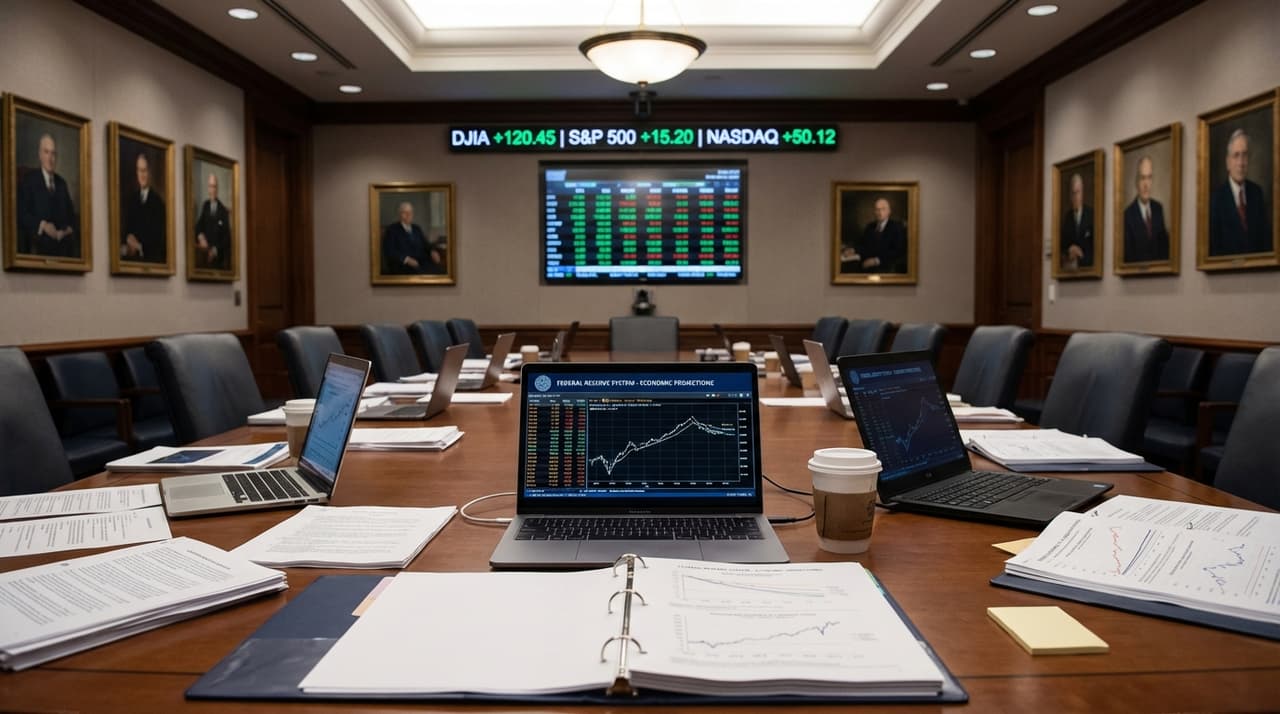
- Federal Reserve Chair Jerome Powell states that no one's base case anticipates the next policy move to be a rate hike, with rates held steady at about 3.6%.
- The Fed faces internal divisions on further cuts amid weak hiring and inflation above the 2% target, with political pressure escalating from the Trump administration.
- Rate stability offers short-term relief to borrowers but delays broader cost reductions, as economists forecast potential cuts starting in June 2026 or later.
Federal Reserve Chair Jerome Powell delivered a clear message during the January 27-28, 2026, FOMC meeting press conference: the central bank's next policy move is not expected to be a rate hike. With rates held steady at about 3.6%, this decision marks the Fed's first of the year, following three cuts in 2025, as the economy enters 2026 on firm footing. Powell emphasized that the Fed remains focused on its dual mandate of stable prices and maximum employment, but the committee is split on the path forward for further easing.
Efforts to navigate economic headwinds have hit a snag, with most economists forecasting two cuts in 2026, likely starting in June or later. According to people familiar with the matter, the internal divide stems from inflation lingering above the 2% target for some policymakers, even as weak hiring persists despite economic expansion. Lower rates could reduce borrowing costs for mortgages, auto loans, and credit cards, and larger-than-usual tax refunds are expected to boost consumer spending and growth, but the timing remains contentious.
Without a deal on the policy direction, the Fed risks prolonged uncertainty for markets and households. Powell's term as chair ends in May 2026, with no replacement named yet, adding to the volatility. In a blunt response to recent probes, Powell called Department of Justice subpoenas and threats of criminal indictment over his testimony on $2.5 billion in headquarters renovations a pretext for the bank's independent stance. The Trump administration is exerting significant pressure to lower rates aggressively, sparking debates on political interference in monetary policy.
A Supreme Court case looms on Trump's attempt to fire Governor Lisa Cook over denied mortgage fraud allegations—no president has fired a Fed governor in its 112-year history, and justices appeared inclined to let her stay. This historical context echoes past pressures during Trump's first term, but recent escalations have intensified, with experts predicting that ongoing political probes could erode Fed credibility and increase volatility in borrowing costs and growth.
Rate stability provides short-term relief to borrowers but delays broader cost reductions, affecting households with debt and businesses reliant on credit amid sluggish hiring. Market updates note steady rates amid political heat, with economists tracking for June shifts. As one analyst put it, 'The Fed's balancing act is getting trickier with every meeting.' Attempts to reach the White House for comment were unsuccessful, but sources indicate the administration remains focused on aggressive rate cuts to spur economic activity.
Looking ahead, expect pauses until mid-2026, with cuts possible if inflation eases; a new chair post-May could shift policy. In the meantime, the Fed holds eight meetings annually to navigate these challenges, with all eyes on the next gathering for clues on whether the internal split will resolve or deepen.