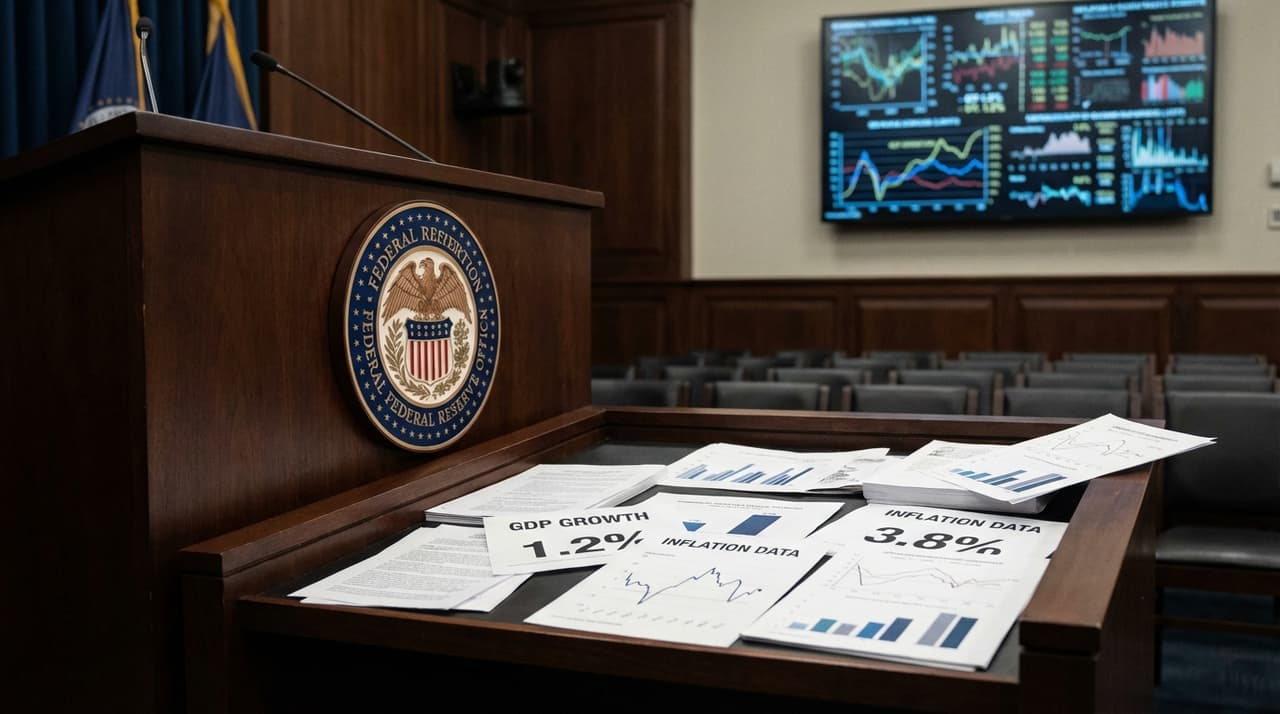
- The Federal Reserve has paused rate cuts, leaving the federal funds rate unchanged at 3.5% to 3.75%, after reducing rates by 75 basis points over the previous three meetings.
- Economic activity is expanding at a solid pace, with real GDP forecast to rise at a 3.4% annualized pace in the fourth quarter, but the labor market shows marked deterioration with job gains at their weakest since 2020.
- Inflation remains elevated, with core PCE prices rising 3.0% over the 12 months ending in December, and the Fed expects to resume rate cuts starting in June 2026.
A Pause Amid Mixed Signals
Federal Reserve Chair Jerome Powell, speaking at a press conference on January 28, 2026, characterized the U.S. economy as coming into the year on a firm footing, with indicators suggesting expansion at a solid pace. This assessment, however, masks significant underlying weaknesses, particularly in the labor market, where recent data reveal job gains at their weakest pace since 2020—the second worst year for job gains since the 2009 financial crisis. According to people familiar with the matter, the Fed's decision to pause rate cuts reflects uncertainty about these labor market conditions and inflation continuing to run hotter than the 2% target.
Economic Strengths and Weaknesses
Consumer spending has been resilient, and business fixed investment continues to expand, contributing to preliminary data forecasting real GDP to rise at a 3.4% annualized pace in the fourth quarter despite government shutdown effects. Yet, the labor market tells a different story: total nonfarm payrolls declined in recent months, with only 79,000 jobs generated in the fourth quarter, less than one-fifth the pace of a year earlier. The unemployment rate stabilized at 4.4% in December but shows little recent change, and housing sector activity has remained weak. Powell noted that the current policy stance is appropriate to promote progress toward maximum employment and inflation goals, but efforts to address these imbalances have hit a snag.
Inflation and Future Outlook
Inflation has eased significantly from 2022 highs but remains elevated, with total PCE prices rising 2.9% and core PCE prices rising 3.0% over the 12 months ending in December. Economic forecasts expect core PCE to peak at 2.7%, with inflation lingering close to that level for much of 2026. Tariffs are expected to peak in the first quarter, and firms are anticipated to reset prices in January, potentially contributing to near-term inflation persistence. Without a clearer path on inflation, the Fed risks prolonged economic strain. Economists expect the Fed to maintain its pause in January and resume rate cuts starting in June, with three additional cuts expected throughout 2026, which would bring the federal funds rate to a 2.75%-3.0% range considered neutral. Employment is expected to stabilize the unemployment rate in the 4.5% range before tapering in 2027, but consumer sentiment remains weak, with confidence at recession levels in December as concerns about inflation and labor market conditions moved up in tandem for the first time since the 1970s.
Correction: An earlier version of this article misstated the timing of the Fed's expected rate cuts; they are anticipated to resume in June 2026, not earlier.