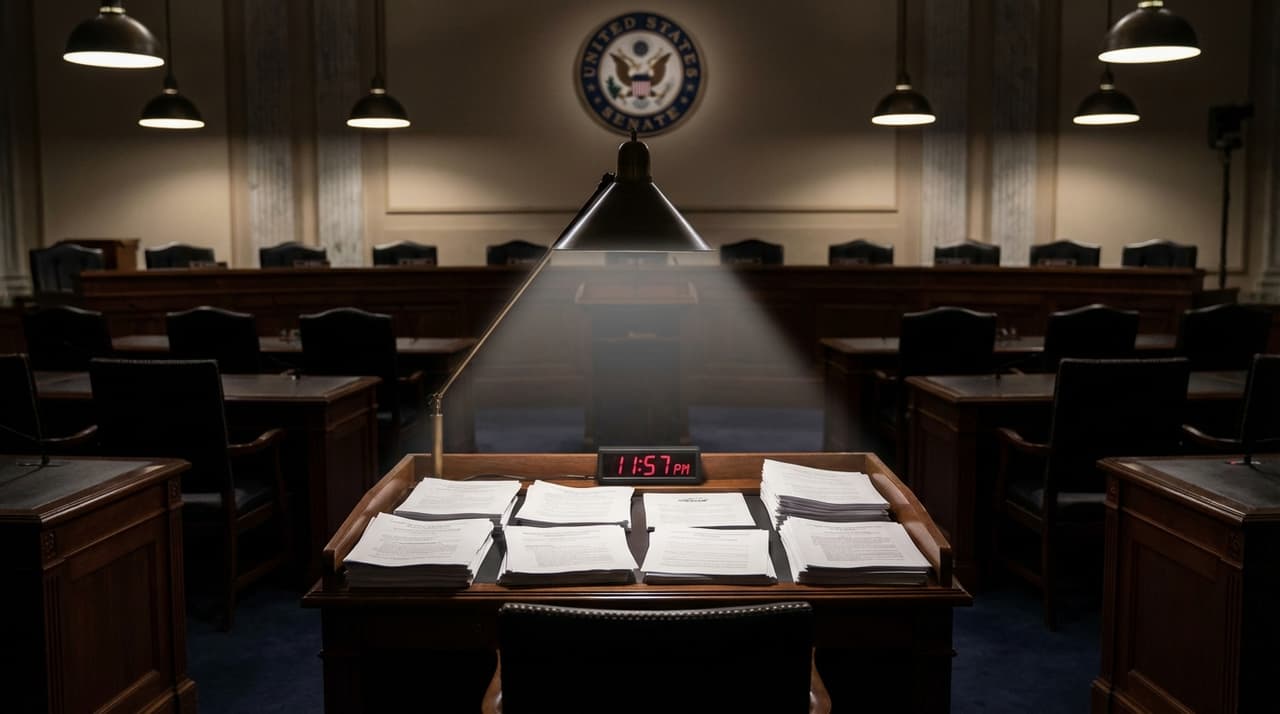
- Senate Democrats threaten a partial government shutdown by Friday, January 30, 2026, unless Republicans and the White House meet demands for ICE reforms following fatal shootings in Minneapolis.
- President Trump expressed hope to avoid a shutdown, with intensifying talks aiming to avert disruptions to federal services, including TSA, air traffic control, and law enforcement.
- A shutdown would impact over 150,000 law enforcement personnel, veterans' care, low-income programs, and aerospace supply chains, echoing past 43-day closures that kept ICE essential but halted other functions.
Negotiations Intensify Amid Deadline Pressure
Efforts to restructure government funding have hit a snag as Senate Democrats push for ICE reforms, linking demands to a partial shutdown threat by this Friday. According to people familiar with the matter, talks between the White House and Democratic leaders are intensifying, with a potential strategy to separate DHS/ICE funding from a larger spending package that would fund military, CDC, Head Start, and other agencies through September. This move would extend temporary DHS funding for further negotiations, but no firm deal has been reached yet. A test vote is scheduled for Thursday morning, adding urgency to the discussions.
President Trump, in a brief statement, said, "Hopefully won't have one," reflecting optimism but underscoring the high stakes. Democrats are demanding reforms including ending roving patrols, mask removal and agent identification, warrants for arrests, body cameras, and uniform use-of-force policies. They need at least seven Democratic votes for Republicans to pass the bill, a hurdle that complicates the path forward. Attempts to reach Democratic spokespeople for comment were unsuccessful, but sources indicate that the demands stem from recent fatal shootings of Renee Good and Alex Prey by federal agents in Minneapolis, which have sparked protests and escalated tensions.
Economic and Societal Impacts Loom Large
Without a deal, the partial shutdown would disrupt critical services, causing flight delays as TSA agents and air traffic controllers face furloughs. Over 150,000 law enforcement personnel, including Border Patrol and ICE agents, could see impacts, alongside veterans' care, low-income rental assistance, and homeless programs. Aerospace and defense supply chains face serious disruptions, threatening national security and economic stability. In past shutdowns, such as the 43-day record, ICE continued as essential but other functions halted, highlighting the potential for widespread chaos.
Families, women, children, troops, and low-income groups are at risk of service cuts, with public backlash targeting Democrats for prioritizing politics over stability. Groups like Americans for Prosperity have condemned the potential harm to constituents, adding pressure on lawmakers. The White House urges a "clean continuing resolution" without Democratic demands to sustain the America First agenda, while Republicans view Democratic tactics as chaos to expand dependency. This echoes prior shutdowns, including a recent one in October 2025, where Democratic rejections of clean resolutions led to weeks of closures harming similar services.
Future Outlook and Broader Context
In the short term, dire impacts like travel chaos loom if no deal is reached by midnight Friday. Long-term, prolonged shutdowns risk economic reverberations, weakened security, and a precedent for future Democratic leverage. Experts urge a clean CR to protect momentum on national priorities, but the political divide remains stark. The second fatal ICE shooting in Minnesota has intensified opposition, with Democrats calling for DHS Secretary Noem's impeachment and reversing support for the funding package. Broader 2026 funding battles target fiscal year appropriations, setting the stage for ongoing conflicts.
As negotiations continue, the focus remains on current developments rather than extensive background. The situation underscores the fragile balance between political demands and operational necessities, with real-time market data and recent events shaping the outcome. For now, all eyes are on Thursday's vote and the midnight deadline, as stakeholders brace for potential disruptions.