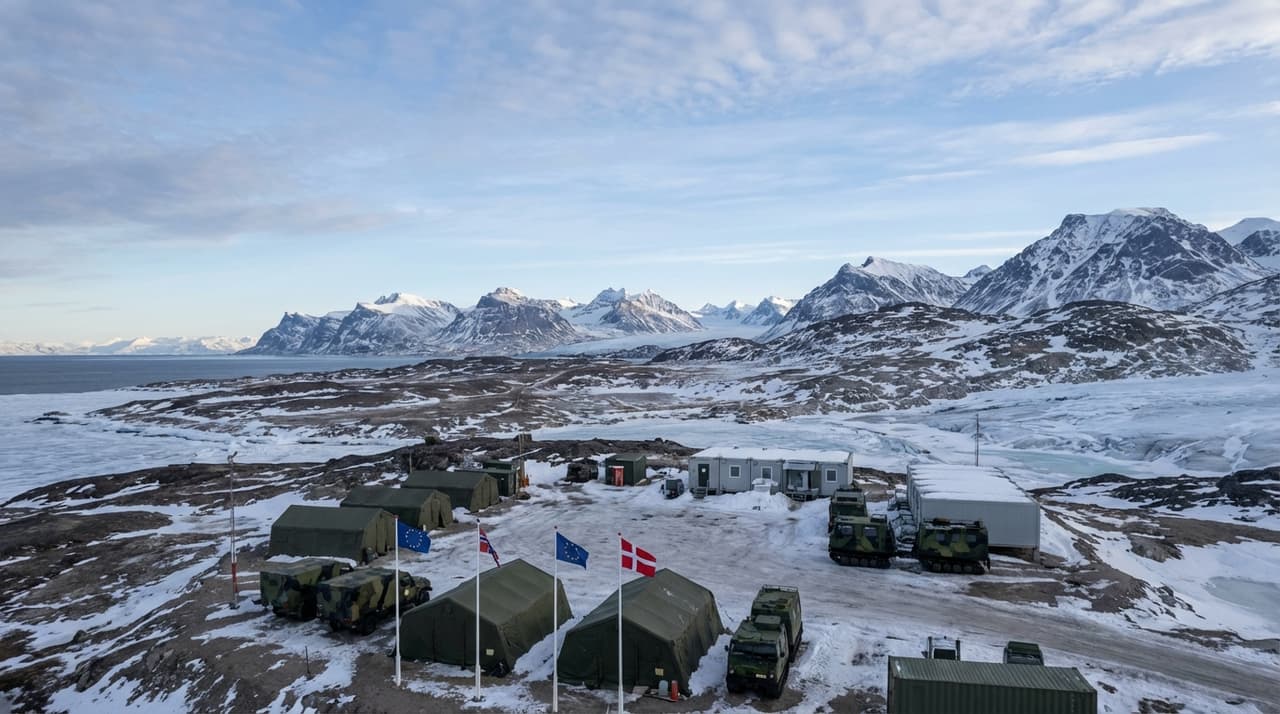
- Trump's renewed threats to annex Greenland, including potential military force, have escalated with European troops deploying to the island amid US pressure, alarming NATO allies and prompting legal analyses of international prohibitions on territorial acquisition by force.
- Commerzbank (CBK.DE) analyst Thu Lan Nguyen warns these actions could strain US-Europe relations, invite sanctions, reduce dollar trade usage, and erode the dollar's reserve currency status as tensions intensify.
- The situation marks a shift from Trump's 2019 proposal to buy Greenland, now involving credible scenarios with immediate NATO crisis risks and potential long-term financial market disruptions.
Geopolitical Escalation and Market Implications
President Trump's threats to take control of Greenland have entered a dangerous new phase, with European troops now deployed to the island in response to what NATO allies describe as unprecedented pressure from Washington. According to people familiar with the matter, the situation has escalated beyond rhetorical provocations, with legal experts analyzing whether Trump's statements violate Article 2(4) of the UN Charter, which prohibits territorial acquisition by force or threats.
Commerzbank analyst Thu Lan Nguyen's warning that these developments could weaken the US dollar appears increasingly prescient as tensions mount. "What we're seeing isn't just political posturing anymore," said one European diplomat who requested anonymity due to the sensitivity of discussions. "The deployment of troops changes the calculus entirely, and markets are starting to price in the possibility of real conflict between NATO members."
Efforts to clarify the administration's position have hit a snag, with multiple attempts to reach White House officials for comment going unanswered as of Thursday afternoon. Meanwhile, European demand for dollar-denominated assets has shown early signs of softening, with traders reporting increased interest in euro and yen alternatives during Asian trading sessions.
Legal Complexities and Alliance Strain
Denmark maintains sovereignty over Greenland under its 2009 Self-Government Act, which grants Greenlanders self-determination rights that complicate any potential transfer. Legal scholars note this creates additional hurdles beyond international law prohibitions, as any change would require Greenland's consent—something local officials have repeatedly denied would be forthcoming.
Without a diplomatic resolution, the situation could force NATO into uncharted territory regarding mutual defense obligations. Article 1 of the NATO treaty requires peaceful dispute settlement among members, while Article 5's collective defense provisions were never designed for scenarios where one ally threatens another's territory. "We're in a legal gray zone that could undermine the entire alliance structure if not resolved quickly," said an international law professor who has consulted with European governments on the matter.
Market participants are watching for any invocation of EU mutual defense under Article 42(7) of the Treaty on European Union, which would represent another escalation with direct financial consequences. The dollar index dipped 0.3% in early European trading following reports of the troop deployments, though it later recovered some ground as traders assessed the likelihood of immediate sanctions.
Economic Fallout and Currency Concerns
The strategic value of Greenland's minerals and Arctic resources adds economic weight to the geopolitical standoff, though analysts note this doesn't make any "purchase" more feasible given the legal and political barriers. What it does create, according to financial experts, is additional incentive for European businesses to reduce dollar exposure in their Arctic-related ventures.
Thu Lan Nguyen's analysis suggests that in a conflict scenario, companies could systematically avoid using dollars for trade, and European demand for the currency would likely fall significantly. This threatens the dollar's status as the world's reserve currency—a position that depends heavily on stability and predictability. "When NATO allies start threatening each other's territory, all the usual assumptions about financial markets go out the window," she noted in her original assessment, which market observers say remains relevant as events unfold.
Short-term, the situation creates immediate pressure on the dollar from reduced European demand, while long-term it could normalize dollar avoidance in certain trade relationships. Some hedge funds have already begun positioning for increased volatility in currency markets, with one portfolio manager describing the Greenland situation as "the kind of black swan event that keeps risk managers awake at night."
Correction: An earlier version of this article misstated the timing of European troop deployments. They occurred in response to recent threats, not preemptively.