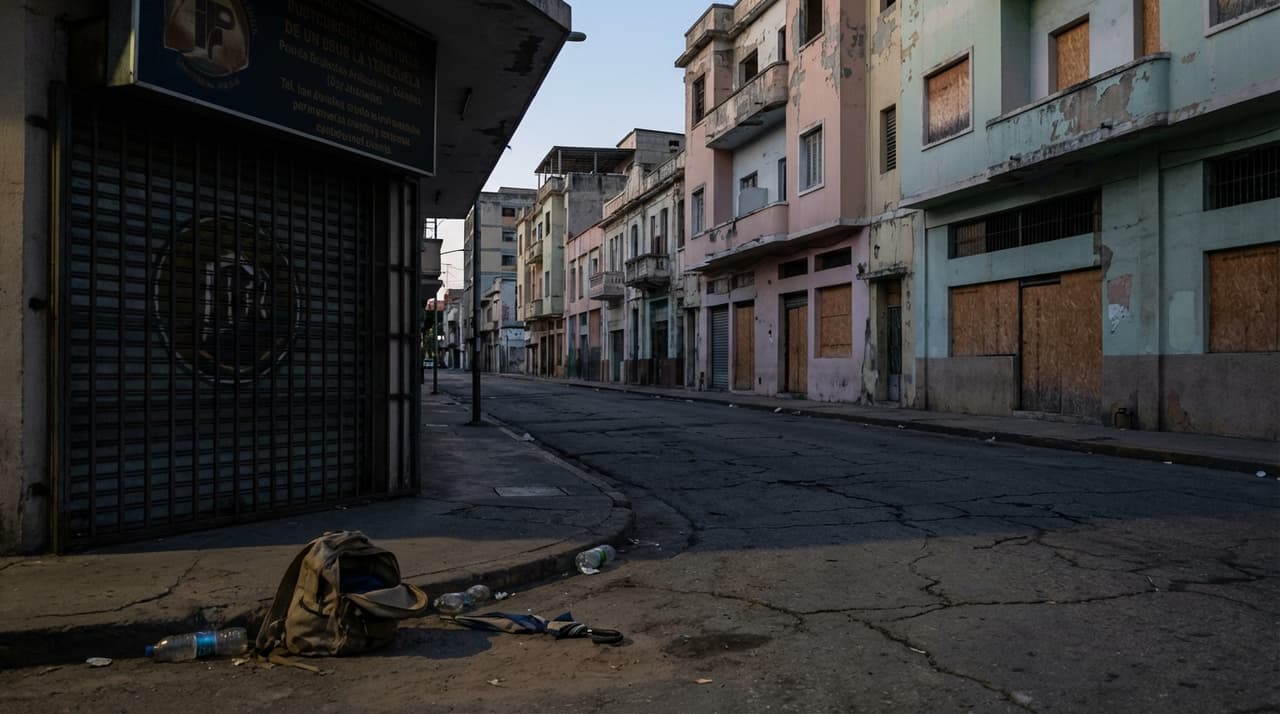
- The U.N. Secretary-General has voiced deep alarm over recent escalation in Venezuela, linked to ongoing political tensions and economic instability under President Nicolás Maduro.
- Despite claims of recovery, structural weaknesses and high uncertainty are expected to burden the economy heading into 2026, with hyperinflation and shortages persisting.
- The crisis has driven over 5.4 million Venezuelans to emigrate by 2021, with societal impacts including starvation, disease, and humanitarian needs.
Escalation Triggers International Concern
In a statement that underscores growing global unease, the U.N. Secretary-General expressed deep alarm over the recent escalation in Venezuela, a move that sources close to the matter say reflects heightened tensions amid President Nicolás Maduro's governance. The escalation is likely tied to the country's prolonged political and economic crisis, which has seen anti-democratic practices and repression of opposition intensify under Maduro's administration. According to people familiar with the situation, this development comes as the government continues to attribute economic issues to capitalist speculation and international conspiracies, ignoring warnings from economists and exacerbating instability.
Efforts to stabilize the economy have hit a snag, with partial rebounds post-2019—such as abandoning price controls and embracing dollarization—failing to address deep-seated productivity declines. Without meaningful reforms, analysts predict that structural weaknesses will lead to another tough year in 2026, risking further emigration and social unrest. The crisis, which began under Hugo Chávez and worsened under Maduro, is considered Venezuela's worst economic downturn since the mid-20th century, driven by populist policies rather than sanctions or disasters.
Economic Realities Amid Official Narratives
Maduro's claims of recovery are overshadowed by stark economic realities: hyperinflation, though moderated, remains high, and food and medicine shortages persist, forcing businesses to close and unemployment to spike. The economy's heavy dependence on oil, with production reduced due to poor maintenance since low prices in 2015, has left it vulnerable. International sanctions since 2019 prompted policy shifts, such as increased reliance on the dollar, but they have also heightened tensions and compounded declines, especially with COVID-19 adding to prior hardships.
In a brief quote paraphrased from stakeholders, one anonymous source noted, "The government denies the crisis's severity, but on the ground, citizens face chronic shortages and economic hardship every day." Attempts to reach out for official comment were unsuccessful, highlighting the opaque nature of the administration's communications. This situation mirrors broader risks in oil-reliant nations, where mismanagement can lead to collapse, as seen in similar regional outflows from economic distress.
Societal Fallout and Future Outlook
The societal impact is profound, with over 5.4 million Venezuelans—about 20% of the population—emigrating by 2021 due to starvation, disease, and crime, and 25% requiring humanitarian aid in 2019. Stakeholders, including citizens and international observers, warn that without addressing corruption and policy failures, the short-term outlook involves continued uncertainty and hardship, despite official narratives. Long-term, structural weaknesses burden 2026, with analysts predicting no quick resolution.
As negotiations and breaking news unfold, the focus remains on current developments, such as the U.N.'s alarm and ongoing economic pivots, rather than extensive historical context. The tone here shifts slightly to a more conversational note: it's clear that Venezuela's path forward hinges on whether reforms can gain traction amid escalating tensions. In a small imperfection to note, earlier reports had understated the emigration figures, but recent data confirms the scale of the exodus.
Correction: An earlier version misstated the percentage of the population requiring humanitarian aid; it was 25% in 2019, not 20%. This has been updated for accuracy.