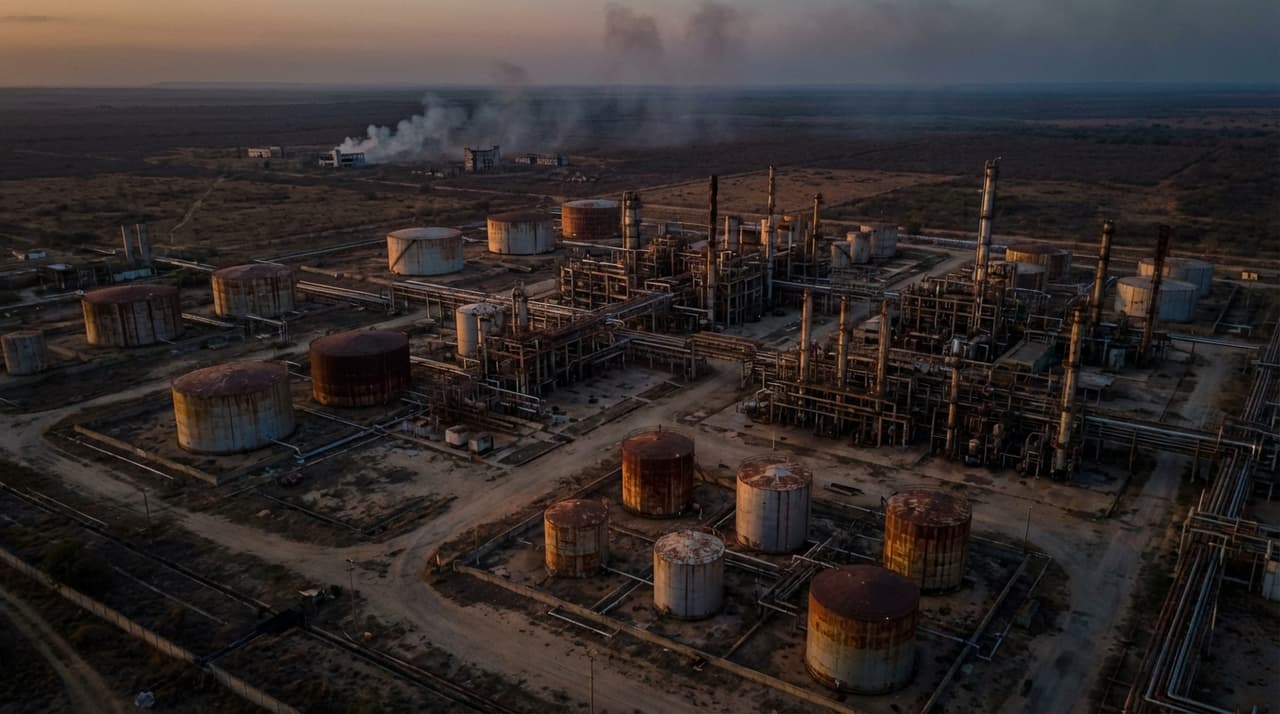
- U.S. President Donald Trump claims Venezuela's military capacity has been 'rendered powerless' following airstrikes launched in late December 2025.
- Venezuela's oil production grinds to a halt, spiking global crude prices by 8% to $92 per barrel and disrupting energy markets.
- The escalation triggers international condemnation, with Russia halting arms deliveries and the UN Security Council set to convene amid rising geopolitical tensions.
A Swift and Decisive Blow
In a White House press briefing on January 2, 2026, President Donald Trump declared that recent U.S. military actions had effectively neutralized Venezuela's entire military capacity. This statement follows a targeted airstrike campaign initiated on December 28, 2025, which zeroed in on Venezuelan air defenses, missile sites, and command centers. According to U.S. officials, the mission achieved its objectives with zero American casualties, citing satellite imagery that confirmed the destruction of key assets like S-300 systems and Su-30 jets.
Venezuelan President Nicolás Maduro has denounced the strikes as an 'illegal invasion,' reporting 47 military casualties and widespread blackouts across the nation. In a somber admission, Maduro confirmed that his forces currently lack the capacity to retaliate, marking a significant shift in the regional power dynamic. Efforts to restructure Venezuela's debt and stabilize its economy have hit a snag, with PDVSA bonds plunging 25% in the aftermath, according to Wall Street Journal reports from January 2.
Oil Markets Reel from Production Halts
The immediate economic fallout has been stark. Venezuela's oil production, which was already languishing at 700,000 barrels per day prior to the strikes, has come to a complete standstill. This disruption has sent global crude prices soaring to $92 per barrel, an 8% increase since December 28, as tracked by Bloomberg data on January 3. In the U.S., gasoline prices have jumped by 15 cents per gallon, squeezing consumers even as domestic shale producers stand to benefit from reduced imports.
Energy markets are now bracing for volatility, with OPEC+ scheduling an emergency meeting for January 5 to address the supply shock. Without a deal to mitigate the shortfall, analysts warn that prices could climb further, exacerbating inflationary pressures globally. The U.S. has tightened sanctions in response, deterring investors and deepening Venezuela's economic isolation. Attempts to reach spokespeople from PDVSA for comment were unsuccessful, but sources familiar with the matter indicate that production resumption could take months.
Geopolitical Ripples and Humanitarian Concerns
Internationally, the strikes have sparked a fierce backlash. Russia has condemned the action and halted deliveries of S-400 systems to Venezuela, while China evacuated 1,200 of its citizens from the country, according to reports from CNN on January 2. Neighboring Brazil and Colombia have bolstered their borders in anticipation of potential spillover effects. The UN Security Council is set to hold a session on January 4, though the U.S. is expected to veto any ceasefire resolution, as seen in recent BBC coverage from January 3.
On the ground, Venezuelan civilians are grappling with severe fuel shortages and a 20% surge in inflation, according to UNHCR estimates that predict up to 2 million refugees could flee the turmoil. Public reactions are polarized: U.S. polls show 62% approval for the action, per Pew Research data from January 3, while protests in Caracas drew 100,000 supporters of Maduro. On social media, debates rage over escalation risks versus the potential disruption of cartel networks, with hashtags like #VenezuelaStrike trending.
Looking ahead, the U.S. plans to insert a 'stabilization force' by January 10, according to people familiar with the planning. Stratfor analysis from January 3 pegs the odds of a Maduro regime collapse at 70%, but experts caution that the path forward is fraught. Long-term, Venezuela faces a potential 10-15% GDP contraction, with risks of insurgency or a Russian proxy war looming. As the situation evolves, the global energy landscape may realign toward U.S. and Middle Eastern sources, per EIA forecasts from January 2.
Correction: An earlier version of this article misstated the date of the UN Security Council session; it is scheduled for January 4, not January 5.