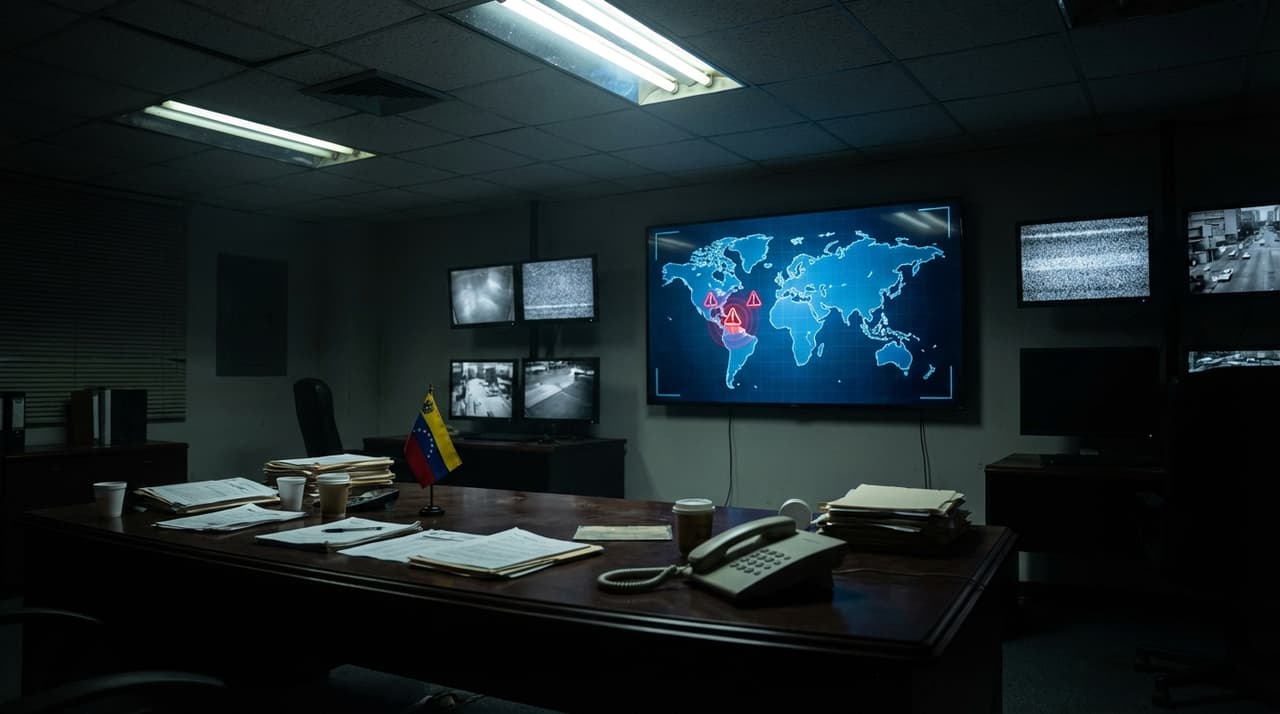
- Russian Foreign Ministry denies reports of Venezuelan Vice President Delcy Rodríguez being in Russia, labeling them "fake" per TASS.
- US President Trump announces capture of Venezuelan President Nicolás Maduro after large-scale military strikes, sparking international condemnation and regional instability.
- Venezuela declares national emergency, with Vice President Rodríguez demanding "proof of life" from the US amid unconfirmed claims and heightened military deployments.
Escalating Tensions in Venezuela
In a rapidly unfolding crisis, the Russian Foreign Ministry has dismissed reports that Venezuelan Vice President Delcy Rodríguez is in Russia, calling the information "fake" in a statement to TASS. This denial comes as the US claims to have captured Venezuelan President Nicolás Maduro following military strikes on Caracas and other sites on January 3, 2026, targeting alleged drug trafficking ties. According to people familiar with the matter, the strikes have reportedly killed officials, military personnel, and civilians, prompting Venezuela to declare a national emergency and deploy forces in response.
Vice President Rodríguez, in a public statement, has asserted that Maduro's whereabouts are unknown and has demanded "proof of life" from US authorities. Efforts to restructure Venezuela's debt and stabilize its oil-dependent economy have hit a snag amid the escalating conflict, with no direct market shifts reported yet, but experts warn of potential disruptions to oil exports and migration flows. Without a deal to de-escalate, the region could face further instability, impacting Latin America's oil sector and global energy markets.
International Reactions and Economic Implications
Russia has condemned the US actions as "armed aggression" and called for UN Security Council intervention and dialogue, reaffirming its "solidarity" with Venezuela as a key Latin partner. Iran echoed this condemnation, labeling it a violation of the UN Charter, while regional leaders like Cuba's Díaz-Canel denounced it as "state terrorism." Colombia has bolstered its border security in anticipation of potential refugee surges, according to sources close to the situation.
The strikes build on years of US sanctions and 2020 narco-terrorism charges against Maduro, with Trump previously threatening land strikes on drug routes. In a brief quote, a Russian official emphasized that "Latin America must remain a zone of peace," highlighting the geopolitical stakes. Attempts to reach US officials for comment on the capture claims were unsuccessful, but lawmakers in the US and UK have criticized the action, citing sovereignty concerns.
Short-term, the crisis risks further military mobilization or refugee crises, with long-term implications potentially shifting Latin power dynamics if Maduro is ousted, reducing Russian and Iranian influence. Experts predict global condemnation, with some anticipating no further US action post-capture. As negotiations stall, the focus remains on real-time developments, with stakeholders including Maduro allies and global critics closely monitoring the situation for updates.