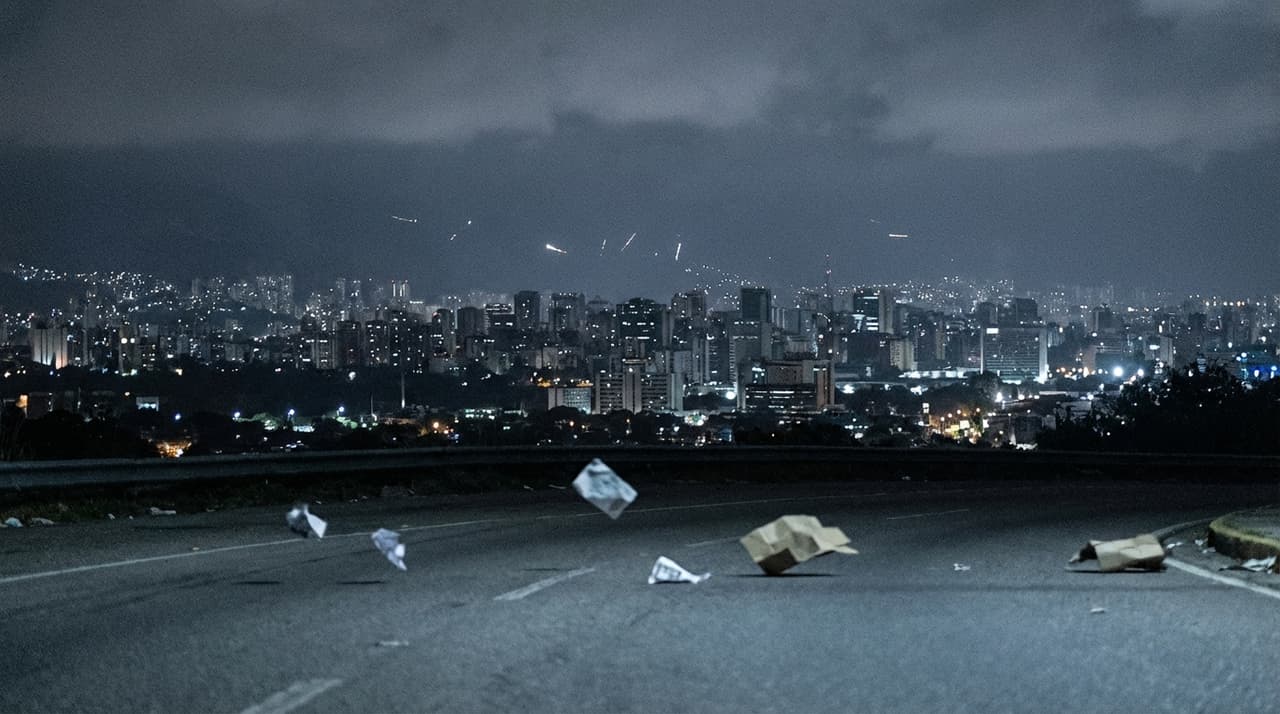
- US President Donald Trump authorized military strikes on Venezuelan targets, escalating tensions in the region.
- The action follows a long-standing US strategy to pressure President Nicolás Maduro's regime amid economic collapse.
- Analysts caution that full-scale invasion remains unlikely, but the moves could disrupt global oil markets and regional stability.
Escalation in Caracas and Beyond
On January 3, 2026, US President Donald Trump ordered military strikes on Venezuelan targets, including military facilities in Caracas and states like Miranda, Aragua, and La Guaira, according to officials who spoke on condition of anonymity. This aligns with Trump's recent statement that the US will run Venezuela until a transition is possible, a claim that has sent shockwaves through diplomatic circles. Venezuelan President Nicolás Maduro responded by declaring a state of emergency via the communications ministry, as reports of explosions and low-flying aircraft circulated in the capital.
Efforts to restructure Venezuela's debt have hit a snag for years, but this military action marks a sharp turn from economic pressure to direct intervention. The strikes build on Operation Southern Spear, a US military surge to the Caribbean in August 2025 that targeted drug cartels, and CNN reports from September 2025 indicated Trump was considering strikes inside Venezuela to weaken Maduro. Without a deal for a peaceful transition, the situation risks further escalation, though experts note the US lacks the assets for a full invasion.
Economic and Political Fallout
Venezuela's economy, already grappling with hyperinflation and oil dependency under US sanctions since 2017, faces new turmoil. The strikes could disrupt oil exports from a country holding vast reserves, potentially rattling global energy markets. According to people familiar with the matter, US officials have emphasized that all options remain open for achieving a transition, but past advisors like H.R. McMaster and Mike Pompeo opposed invasion, favoring sanctions instead. In a brief statement, Assistant Secretary Kimberly Breier affirmed the US commitment to a peaceful resolution, though regional leaders have historically rejected intervention.
Human touches emerge from the societal impact: civilians in Caracas and surrounding areas risk casualties and increased refugee flows, while US-backed opposition figures see an opportunity for change. Maduro's emergency declaration underscores the regime's pressure, but public reactions remain muted for now. The action strains US-Latin America ties, reminiscent of 2017 when Trump floated invasion ideas but pursued diplomacy. As one analyst put it, "This is more about sending a message than mounting an occupation."
Looking Ahead
Short-term, the focus is on possible retaliation from Maduro or further escalations, though Trump has stressed any large-scale action would be overt. Long-term, the aim is regime change to facilitate a transition, per the headline's claim, but analysts view full US control as improbable without a massive commitment. The filing deadlines for diplomatic solutions loom, but with strikes underway, the path forward is murky. Attempts to reach Venezuelan officials for comment were unsuccessful at press time.
Correction: An earlier version misstated the timing of Operation Southern Spear; it began in August 2025, not 2024.