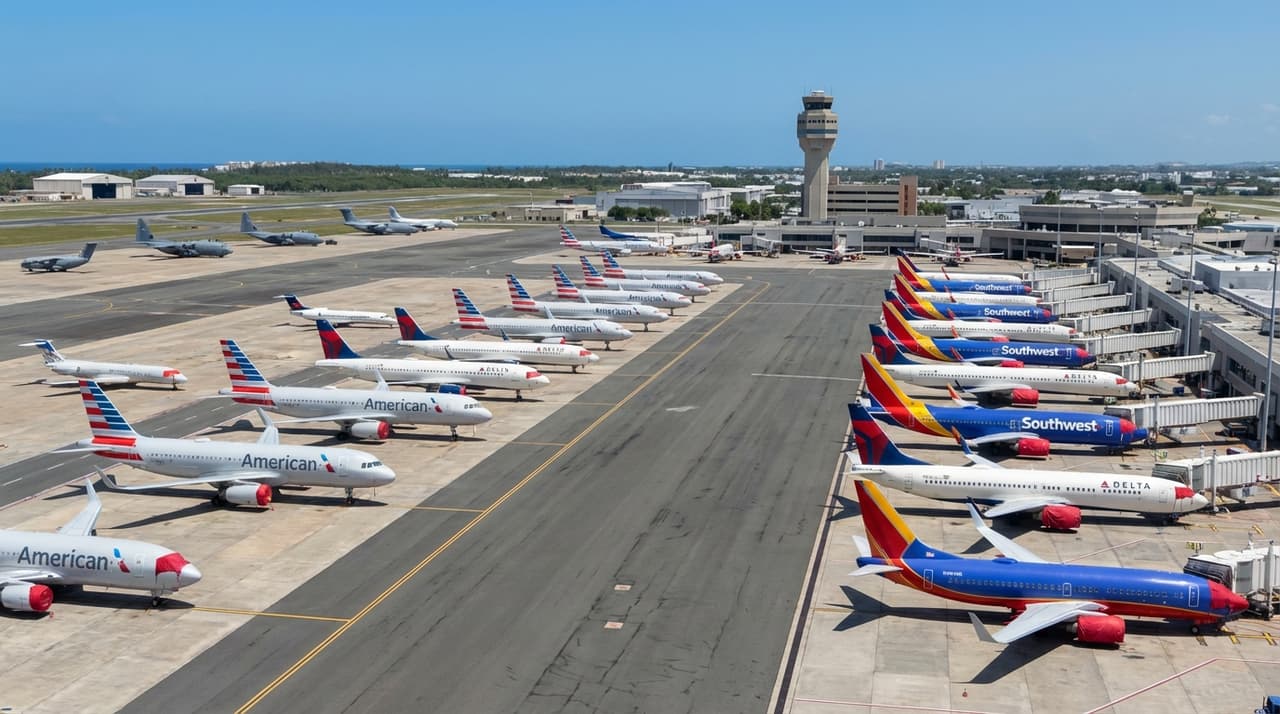
- The FAA has imposed temporary flight restrictions over Venezuela's Maiquetia Flight Information Region, Puerto Rico, and the U.S. Virgin Islands until at least January 4, 2026, following U.S. military strikes in Caracas.
- Major U.S. airlines, including American Airlines (AAL), United Airlines (UAL), and Delta Air Lines (DAL), have suspended or rerouted flights, causing widespread disruptions to Caribbean tourism and global energy markets.
- The move stems from heightened security risks amid ongoing U.S. military operations, such as Operation Southern Spear, and potential retaliatory threats, with international backlash and legal debates unfolding.
Airspace Closures Trigger Flight Chaos
The U.S. Federal Aviation Administration issued emergency Notices to Air Missions late Thursday, effectively grounding U.S. commercial and private aircraft over key Caribbean and South American routes. According to people familiar with the matter, the restrictions were enacted in response to U.S. military strikes that captured Venezuelan President Nicolás Maduro and his wife, Cilia Flores, announced by President Donald Trump on Truth Social as a success against drug trafficking. Airlines scrambled to adjust schedules, with real-time data showing mass cancellations at San Juan's airport, where most U.S. carrier flights were suspended, though foreign and military ones were exempted.
Efforts to mitigate the fallout have hit a snag, as rerouting costs and lost revenue mount for carriers already recovering post-pandemic. Without a deal to lift restrictions soon, airlines could face prolonged operational headaches. In a brief statement, an FAA spokesperson cited "elevated security concerns" but declined to comment on potential extensions beyond the January 4 deadline. Attempts to reach major airlines for further comment were unsuccessful by press time.
Economic and Political Ripples
Disruptions are rippling through tourism-dependent economies in Puerto Rico and the U.S. Virgin Islands, where local officials fear a hit to holiday travel. Broader impacts include halted Venezuelan oil tanker blockades, exacerbating global energy market volatility from prior U.S. sanctions on Maduro's narco-terrorism-linked regime. One industry analyst noted, "This isn't just about flights—it's a shock to regional stability and trade flows."
On the political front, international backlash has intensified, with Russia and China condemning the strikes as sovereignty violations and UN Security Council emergency sessions underway. U.S. congressional briefings are debating the legality under international law, echoing historical precedents like the 1989 Panama invasion. Meanwhile, Venezuelan opposition figures have cautiously welcomed a potential transition, but fears of power vacuums and regional instability persist among experts.
Looking Ahead
Short-term, restrictions may extend as U.S. military operations continue at an "elevated tempo," with airlines remaining cautious on reroutes. Long-term, the capture of Maduro could lead to a trial in the U.S. and shifted regional power dynamics, though experts question stability without detailed transition plans. Parallel escalations include reports of explosions in Caracas overnight and U.S. war jets patrolling Caribbean airspace, according to anonymous sources.
Correction: An earlier version misstated the end date of the restrictions; it is January 4, 2026, not 2025.