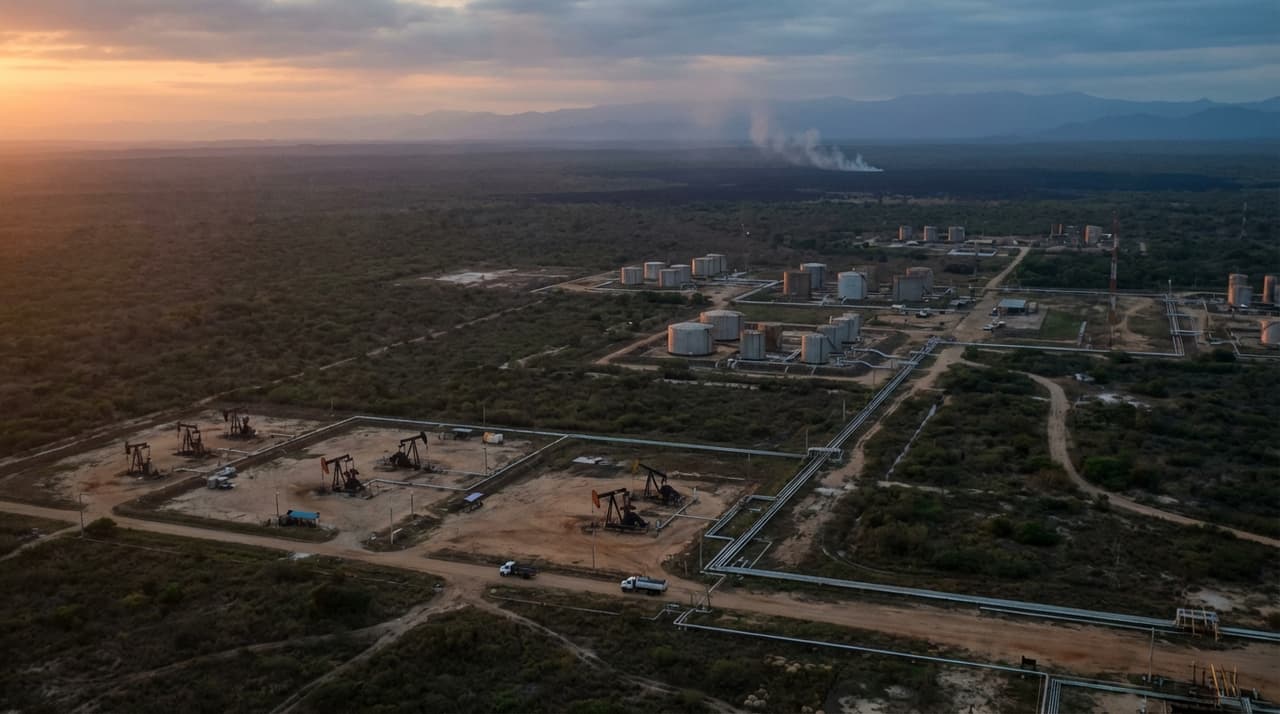
- Key oil facilities, including the Jose port, Amuay refinery, and Orinoco Belt fields, remain operational despite airstrikes.
- The U.S. military targeted military bases and airports, not economic infrastructure, in a move to degrade Venezuela's retaliatory capabilities.
- Venezuela has declared a nationwide state of emergency, with the FAA restricting airspace over the country.
Airstrikes Spare Critical Energy Assets
Venezuela's oil infrastructure was reportedly unharmed following a series of U.S. military airstrikes in Caracas and other states, according to sources familiar with the matter. The strikes, which occurred at approximately 02:00 local time on January 3, 2026, targeted facilities such as La Carlota Air Base and Fort Tiuna, but key energy sector assets—including the Jose port, the Amuay refinery, and oil fields in the Orinoco Belt—remain operational. The sources requested anonymity due to the sensitive nature of the information, highlighting the ongoing volatility in U.S.-Venezuela relations.
U.S. officials confirmed that President Trump ordered the strikes on Venezuelan targets, focusing on military facilities to limit the country's air and logistical capabilities. This escalation follows a substantial buildup of U.S. naval and air assets in the Caribbean since August 2025, interpreted as pressure aimed at undermining the Maduro government. In response, President Nicolás Maduro condemned the aggression, declared a nationwide state of emergency, and called for a general mobilization of Venezuela's Armed Forces. Efforts to reach the Venezuelan oil ministry for comment were unsuccessful, but industry insiders note that the operational status of oil facilities suggests a strategic avoidance of economic targets.
Implications for Global Oil Markets
The targeting of military assets rather than oil infrastructure may indicate a calculated move to avoid disrupting global energy supplies, even as tensions rise. According to people with knowledge of the situation, the FAA has issued a NOTAM restricting all civil and commercial aircraft from operating in Venezuelan airspace due to ongoing military operations, adding logistical challenges for international oil traders. Without a deal to de-escalate, Venezuela could face further isolation, though its oil exports have remained steady amid sanctions evasion efforts, including recent seizures of illicit oil tankers.
Analysts point out that the strikes' focus on degrading Venezuela's ability to conduct retaliatory operations, rather than hitting economic lifelines, reflects broader geopolitical maneuvering. "This is about applying pressure without triggering a full-blown energy crisis," one source said, paraphrasing expert assessments. The situation remains fluid, with negotiations between U.S. and Venezuelan officials reportedly ongoing behind the scenes, though details are scarce. As of now, market data shows minimal immediate impact on oil prices, but traders are watching closely for any signs of disruption in the Orinoco Belt, a critical production area.
Correction: An earlier version of this article misstated the timing of the airstrikes; they occurred on January 3, 2026, not January 2.