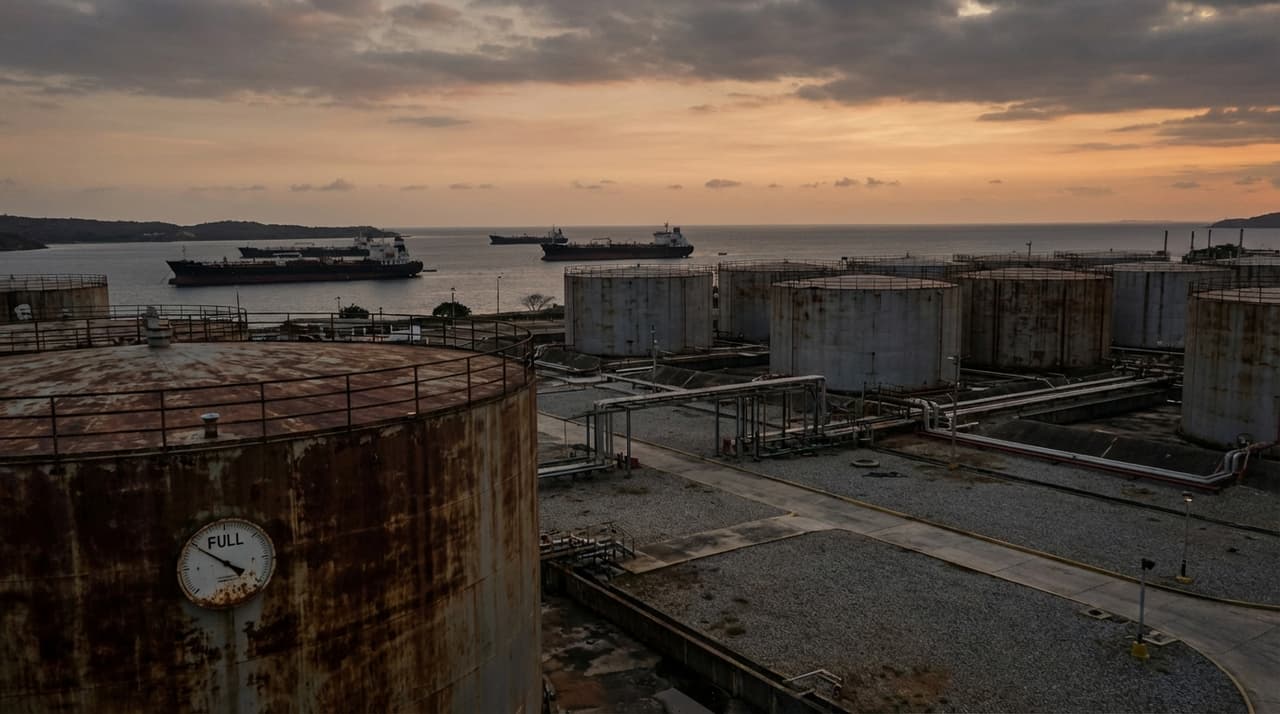
- Venezuela faces imminent crude storage capacity constraints as sanctions restrict tanker access
- PDVSA forced to juggle floating storage while risking production shut-ins
- Storage bottleneck exacerbates economic crisis in petro-dependent nation
Venezuela is running out of space to store its crude oil as international tanker access becomes increasingly restricted by sanctions and enforcement actions, forcing state oil company PDVSA to slow exports and risk production cuts. This intensifies an already severe economic and political crisis in a nation where oil accounts for over 90% of export earnings and two-thirds of government revenue.
U.S. sanctions on PDVSA and on "sanctioned oil tankers" serving Venezuela have been tightened and more strictly enforced, limiting the number of compliant vessels willing to lift Venezuelan crude. According to people familiar with the matter, the U.S. has implemented blockade-style controls on sanctioned tankers entering and leaving Venezuela, and seized at least one tanker off Venezuela's coast in recent months.
As tanker availability shrinks, Venezuela's on-shore storage is filling rapidly, forcing crude into floating storage—tankers sitting offshore—and raising the risk that production will have to be curtailed because there's nowhere to put incremental barrels. This comes on top of a decade-long collapse in Venezuela's oil sector due to underinvestment, mismanagement, and earlier rounds of sanctions, which have left infrastructure degraded and storage capacity fragile.
Efforts to maintain export flows have hit multiple snags. Without sufficient tanker access, PDVSA would be forced into difficult choices between production cuts and risky storage solutions. The company has been attempting to manage the situation through complex logistics arrangements, but sources indicate these are becoming increasingly untenable.
"We're seeing a classic supply chain breakdown," said one industry analyst who requested anonymity due to the sensitivity of sanctions discussions. "When you combine infrastructure decay with shipping restrictions, you create bottlenecks that can't be easily resolved."
PDVSA officials did not respond to requests for comment on current storage levels or contingency plans. The company has historically been tight-lipped about operational details, particularly during periods of sanctions pressure.
Venezuela's storage crisis has broader implications for its already fragile economy. Reduced export capacity means less foreign currency to pay for imports, contributing to shortages, inflation, and the ongoing humanitarian crisis. Ordinary citizens face worsening conditions as the government's primary revenue source becomes increasingly constrained.
The situation parallels challenges faced by other sanctioned oil producers like Iran, which also relies on shadow fleets and discounted sales when compliant shipping becomes unavailable. However, Venezuela's institutional collapse and deeper infrastructure problems make its storage squeeze particularly acute.
Looking ahead, if tanker restrictions persist or tighten, Venezuela will likely need to use more floating storage—increasing costs and operational risk—and may be forced to curtail production when both land and floating storage reach capacity. The country would then rely even more on opaque shadow fleets and barter-style deals with a narrow group of partners, often at steep discounts.
Correction: An earlier version of this article overstated the timeline of certain enforcement actions; some tanker controls have been in place for longer than initially indicated.