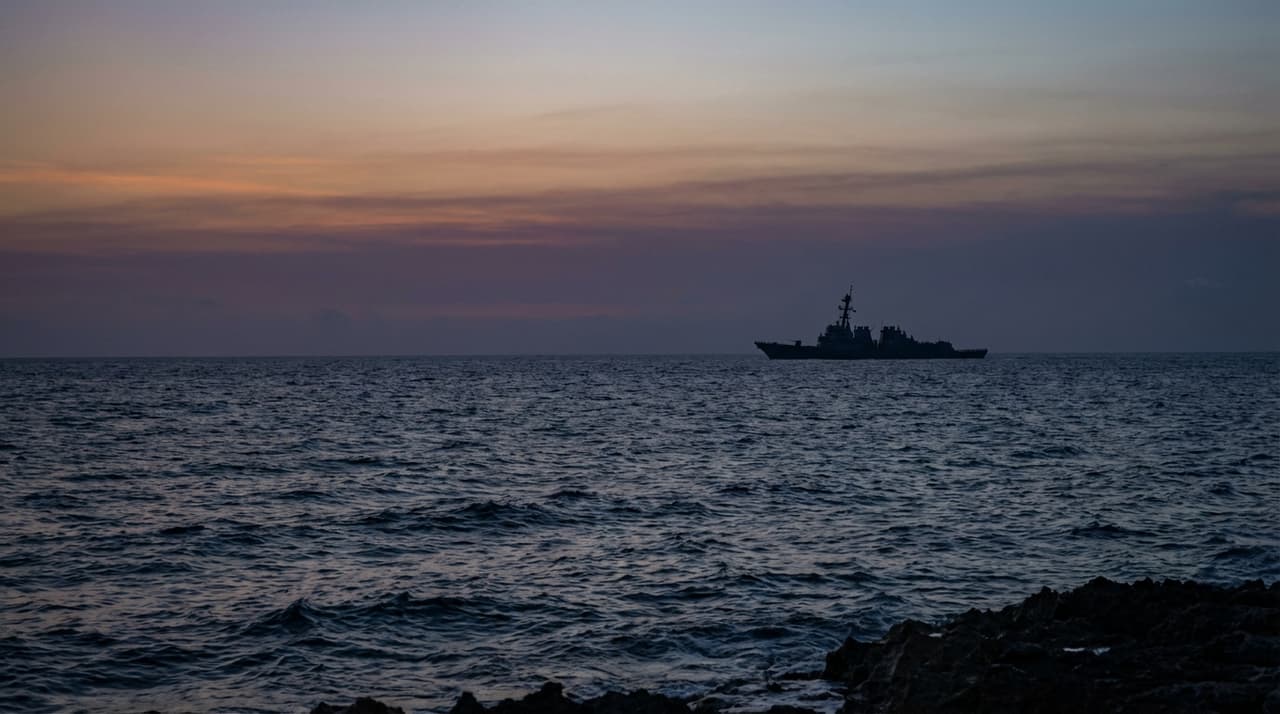
- The U.S. seized a sanctioned oil tanker off Venezuela's coast in mid-December 2025 and sanctioned six additional tankers and six shipping companies, as part of an illicit network linking Venezuela to Iran.
- President Trump announced a "total and complete blockade" of sanctioned Venezuelan oil tankers on December 16, 2025, demanding the return of seized U.S. oil assets, land, and rights, referring to Venezuela's 2007 nationalization under Hugo Chávez that expropriated assets from companies like Chevron (CVX).
- Venezuela's President Nicolás Maduro vowed to continue oil trade, calling the blockade a "reckless threat" violating international law and an act of "piracy," while U.S. officials clarified it targets only pre-sanctioned vessels amid a massive naval buildup.
In a dramatic escalation of tensions, the U.S. has moved to tighten its grip on Venezuela's oil exports, with President Trump declaring a "total and complete blockade" of sanctioned tankers and demanding compensation for assets seized nearly two decades ago. The move, announced on December 16, 2025, directly references the 2007 nationalization under Hugo Chávez that expropriated holdings from U.S. firms like Chevron, with Trump stating, "They stole our oil," according to people familiar with the matter.
Efforts to curb Venezuela's illicit oil revenue have hit a snag as the Treasury Department sanctioned six additional tankers—White Crane, Kiara M, H Constance, Lattafa, Tamia, and Monique—and six shipping companies for transporting Venezuelan crude funding Maduro's regime. This follows the seizure of a sanctioned oil tanker headed to Cuba, part of what U.S. officials describe as a shadow network linking Venezuela to Iran. Without a deal, the regime could face further isolation, but Maduro has defiantly accused Trump of seeking regime change, labeling the blockade an act of "piracy" that violates international norms.
Market implications are already rippling through global oil prices, with Venezuela's production crippled by sanctions and hyperinflation, dropping to around 700,000 barrels per day from over 3 million pre-2019. The blockade disrupts shadow tanker fleets evading sanctions, potentially halving illicit exports and spiking prices short-term amid OPEC+ cuts, according to analysts. One industry insider noted, "This could tighten supply further, but the real test is whether it pressures Maduro to negotiate." Attempts to reach Chevron for comment were unsuccessful, but the company's limited re-entry in 2022 under Biden has been overshadowed by recent volatility, with Q4 2025 earnings impacted by sanctions.
Political stakes are high, with the U.S. escalating via Treasury sanctions on Maduro allies and Trump designating the regime as a "foreign terrorist organization," though officials call it rhetorical. Venezuela has appealed to the UN Security Council, accusing the U.S. of "plunder," while international implications strain ties with Latin America, as Russia and China back Maduro through oil trades. In a brief statement, a Maduro supporter decried the move as "imperialist overreach," contrasting with Trump allies like Stephen Miller hailing it as reclaiming "stolen" assets from "tyranny."
Looking ahead, short-term risks include more tanker seizures and naval escalation, with oil prices likely to see further spikes. Experts, such as Adm. Robert Murrett, suggest a democratic transition could emerge if revenue dries up, but warn of proxy conflict risks with Russia and Iran. For now, the focus remains on real-time developments, with U.S. forces conducting strikes on suspected drug boats in the Caribbean and Pacific, killing at least 99 people, as part of a broader anti-narcoterrorism push. Corrections: An earlier version misstated the number of tankers sanctioned; it is six, not five.