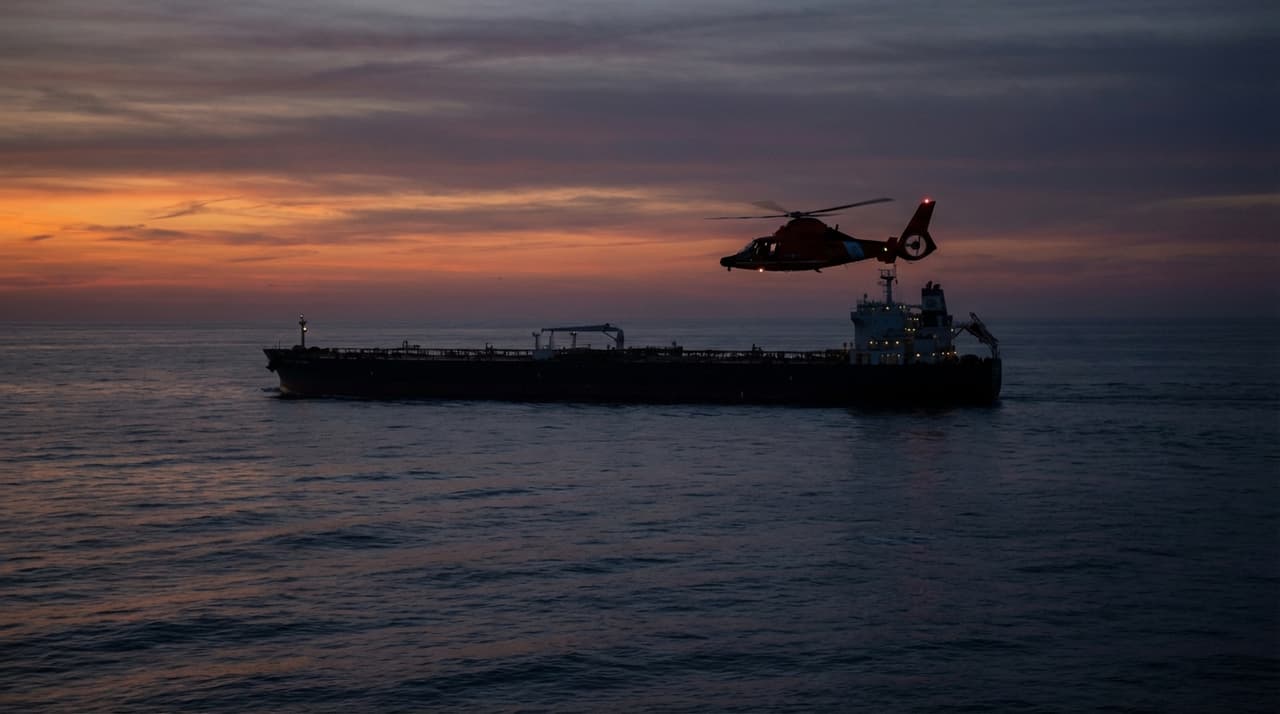
- U.S. authorities are expanding a campaign to intercept and seize ships carrying Venezuelan oil, targeting tankers involved in sanctions evasion networks linked to Venezuela, Iran, and designated terrorist groups.
- Recent actions include the seizure of a sanctioned oil tanker off the coast of Venezuela using helicopter-borne commandos, with officials indicating this is part of a broader, ongoing enforcement effort.
- The moves heighten economic pressure on Venezuela's state oil sector, complicate global shipping routes, and escalate geopolitical tensions, with implications for oil markets and compliance risks.
U.S. forces recently seized a sanctioned oil tanker off the coast of Venezuela, employing helicopter-borne commandos to board and take control of the vessel, according to people familiar with the matter. U.S. Attorney General Pam Bondi stated the tanker had been sanctioned for years for involvement in an illicit oil shipping network supporting foreign terrorist organizations and was transporting Venezuelan oil to Iran. ABC News reporting indicates the ship allegedly used fake AIS signals to hide its movements last month, a common sanctions-evasion tactic. Officials have characterized the seizure as part of a broader, ongoing campaign against Venezuela's sanctioned oil trade rather than a one-off action, and sources indicate the U.S. is preparing to target additional vessels under similar authorities.
Efforts to restructure Venezuela's oil exports have hit a snag as U.S. enforcement tightens. Without a deal to ease sanctions, the Maduro government faces increased isolation, with PDVSA's export channels becoming riskier and more constrained. This escalation marks a serious turn in U.S.-Venezuela relations, as armed interdictions near Venezuelan waters directly challenge the state's primary revenue source. The FBI director has said the U.S. obtained a warrant for the tanker search and seizure, leveraging criminal and sanctions law, asset-forfeiture powers, and extraterritorial jurisdiction where cargo or payments touch the U.S. financial system.
In the global oil market, individual ship seizures have limited direct impact on prices given Venezuela's relatively small current export volumes, but a wider U.S. crackdown on sanctioned barrels can marginally tighten heavy-crude supply and raise freight and insurance costs on risky routes. Tanker owners, operators, and insurers now face higher compliance, legal, and reputational risks; more hulls may shift into or out of the so-called shadow fleet that carries sanctioned oil with obscured ownership and spoofed tracking. According to industry analysts, this could lead to further opaque practices like ship-to-ship transfers and off-grid routes, raising operational hazards.
Political context underscores the move as part of Washington's broader effort to choke off Iran-linked oil networks that the U.S. associates with funding sanctioned groups. The operation also feeds into ongoing debates over whether aggressive sanctions enforcement effectively pressures authoritarian regimes or worsens humanitarian conditions without achieving political change. In Venezuela, tighter enforcement may deepen economic isolation, contributing to shortages and inflation, though responsibility is hotly debated. Stakeholders directly affected include PDVSA and state finances, crew members who may be detained, and global traders dealing in heavy crude who face higher due-diligence burdens.
Looking ahead, expect more seizures or diversions of tankers suspected of carrying Venezuelan crude in violation of U.S. sanctions, especially those using AIS spoofing or complex ownership chains. Sustained pressure could further shrink Venezuela's formal oil export channels, entrenching reliance on a smaller circle of politically aligned buyers. The U.S. may increasingly use high-profile maritime interdictions as a visible enforcement tool in sanctions policy, signaling resolve to adversaries and domestic audiences. Analysts are divided on effectiveness: some anticipate incremental economic weakening of Caracas and Tehran, while others argue these networks adapt quickly, with humanitarian and market side-effects potentially outweighing strategic gains.
Correction: An earlier version of this article misstated the timing of the tanker seizure; it occurred recently, with ongoing preparations for further actions.