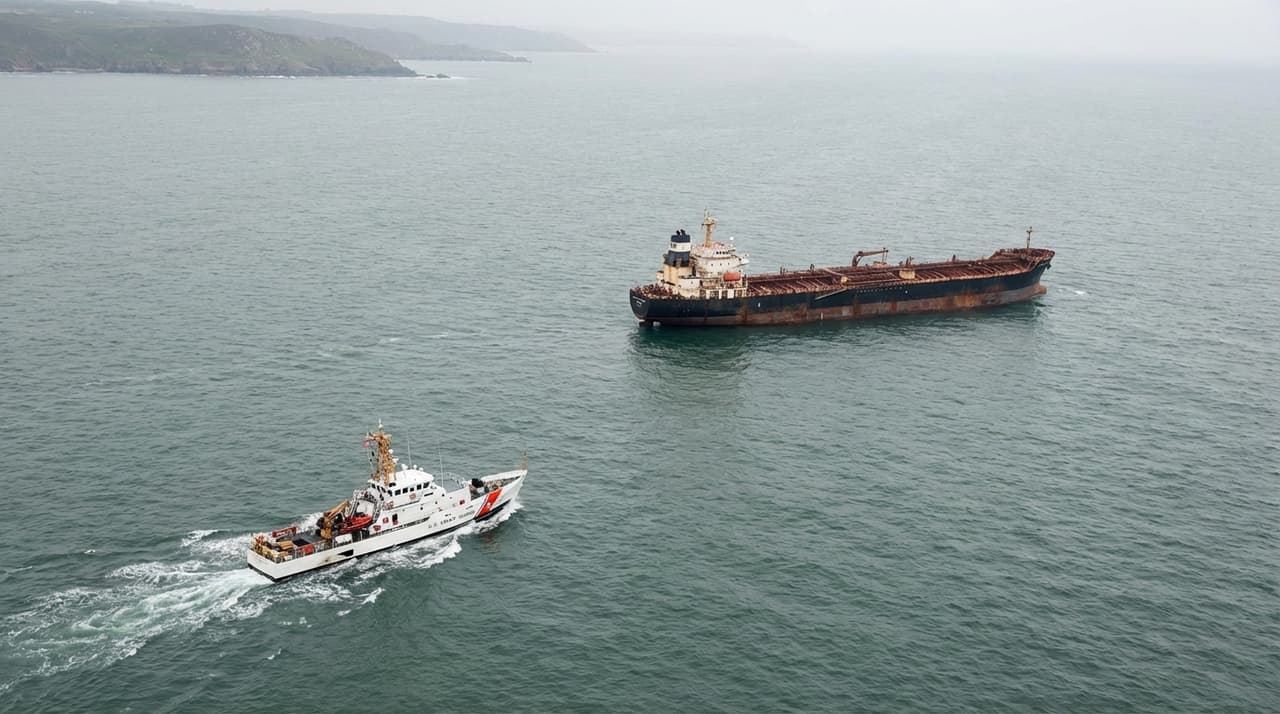
- The Trump administration has seized an oil tanker off the coast of Venezuela in a U.S. Coast Guard-led operation, according to unnamed U.S. officials.
- The seizure occurs as Venezuela's oil exports recently reached over 900,000 barrels per day, one of the highest monthly averages this year, with PDVSA importing more naphtha to blend its extra-heavy crude.
- The move comes amid a massive U.S. military buildup in the region, including an aircraft carrier, fighter jets, and tens of thousands of troops, suggesting a coercive pressure campaign on Nicolás Maduro's government.
Two unnamed U.S. officials told Reuters the tanker was seized “off the coast of Venezuela,” though they did not identify the vessel or its exact position. The Coast Guard referred all questions to the White House, which has not yet commented, while requests for comment to the Venezuelan government went unanswered. Because the vessel is unnamed and details are limited, most reporting focuses on the act of seizure and its geopolitical context rather than the ship’s ownership or operators.
Venezuela’s economy is heavily dependent on oil exports, its main source of revenue. The country has been struggling to sell crude at full price in China due to increased competition from sanctioned Russian and Iranian oil, pressuring Venezuela to find or protect alternative markets and shipping routes. Any U.S. interdiction of tankers in or near Venezuelan waters raises the risk of disruption to Venezuelan crude flows, potentially affecting PDVSA’s cash flow and ability to import fuel or diluents, local fuel availability and inflation in Venezuela, and regional heavy-crude supply dynamics.
Washington has long used financial and oil sanctions as tools against Caracas; an at-sea seizure adds a more overt maritime enforcement dimension. The action risks escalating tensions in U.S.–Venezuela relations and could draw reactions from Venezuela’s partners, such as China, Russia, or Iran, if they see the seizure as a precedent for targeting their cargoes or vessels. Inside Venezuela, any disruption to oil income can translate into reduced state capacity to import food, medicine, and fuel, exacerbating an already severe humanitarian crisis.
Neighboring Caribbean and Latin American states may worry about militarization of regional sea lanes and potential spillover of sanctions enforcement into their waters. In the U.S., public debate is likely to center on arguments over the risks of military escalation and the humanitarian impact of tightening pressure on Venezuela. International law and freedom-of-navigation concerns could arise if the seizure occurred in disputed or international waters.
The U.S. and allies have previously seized tankers tied to sanctioned oil trades, such as Iranian cargoes, under sanctions or civil-forfeiture authorities; this fits that broader pattern of using maritime interdiction to enforce economic pressure. Venezuela’s oil sector has been under U.S. sanctions and financial constraints for years, contributing to declining production and forcing Caracas toward opaque or discounted export channels, which are more vulnerable to interdiction.
In the short term, expect diplomatic protests or denunciations from Caracas once it issues a response, clarification from Washington on the legal basis, and possible insurance and freight-rate increases for vessels lifting Venezuelan crude due to higher perceived enforcement risk. If the U.S. repeats such actions, shipowners and traders may further reduce exposure to Venezuelan crude, pushing exports further into “grey” or sanctioned networks, or use more complex shipping arrangements to evade detection, as seen in Iran and Russia cases. For Venezuela, sustained tanker risk could depress realized export volumes and prices, deepening reliance on a small set of politically aligned buyers.
Expert commentary has not yet fully emerged for this specific seizure, but based on prior enforcement waves, analysts typically warn about higher geopolitical risk premiums for regional shipping and additional strain on Venezuela’s already-fragile economy. Venezuela’s recent export level indicates a partial recovery in shipments tied to increased import of naphtha for blending. Similar patterns of tanker seizures tied to sanctions enforcement have been seen involving Iranian and Russian oil flows, suggesting the current action may be part of a broader U.S. strategy of using maritime seizures as an enforcement and signaling tool in sanctions and pressure campaigns against adversarial governments.