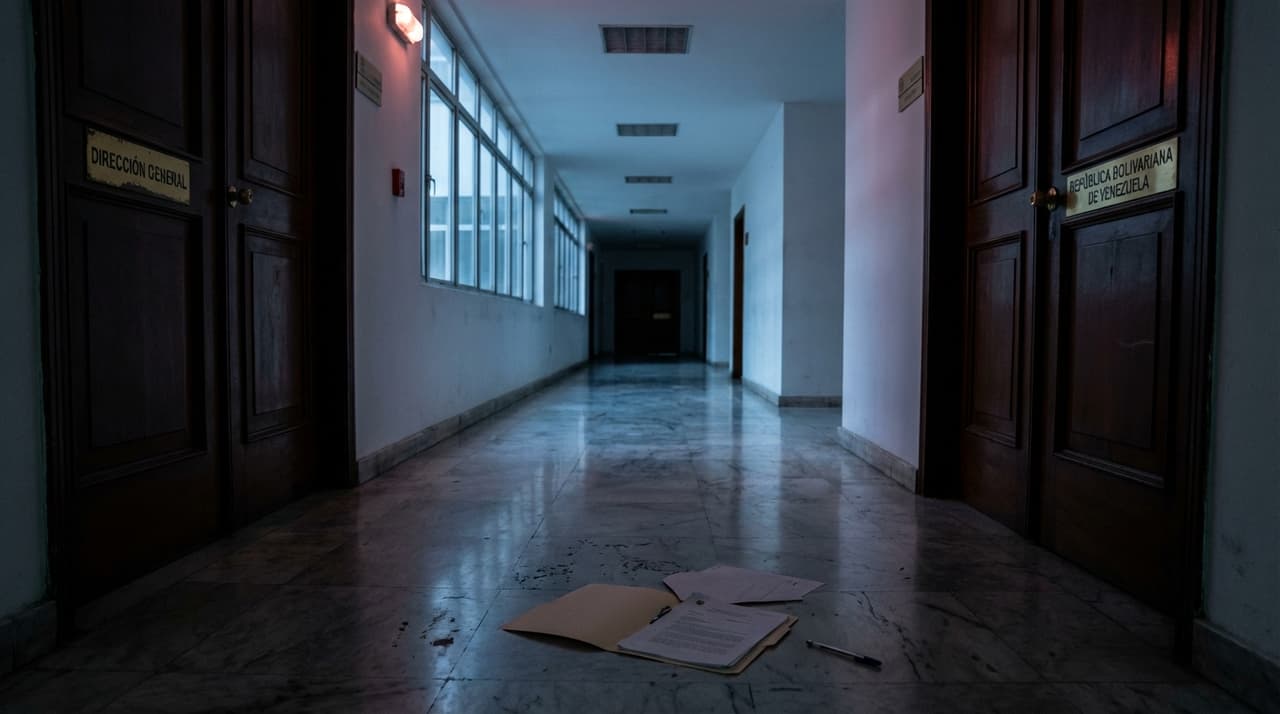
- A CIA source within Venezuela's government provided critical intelligence tracking Nicolás Maduro's movements before his capture.
- U.S. Army Delta Force executed the raid, aided by stealth drones and a $50 million reward for information on Maduro.
- President Donald Trump announced the capture on January 3, 2026, scheduling a press conference at Mar-a-Lago as Venezuelan officials demanded proof of life.
Intelligence and Execution Converge in High-Stakes Operation
A CIA insider within the Venezuelan government played a pivotal role in tracking President Nicolás Maduro in the days and moments leading up to his capture by U.S. special operations forces, according to people familiar with the matter. The operation, which culminated in Maduro's arrest alongside his wife Cilia Flores at approximately 5:21 a.m. VET, combined CIA intelligence with military execution, framing it as a law enforcement mission rather than a purely military strike.
Efforts to locate Maduro had been ongoing for months, with the CIA leveraging human intelligence from the Venezuelan source alongside a fleet of stealth drones to monitor his movements. This intelligence guided the raid executed by Army Delta Force, sources said, highlighting a coordinated approach that blended clandestine assets with elite military units. The $50 million U.S. reward for information on Maduro, announced earlier, likely incentivized key disclosures, though officials have not confirmed if the source will receive the payout.
Immediate Fallout and Diplomatic Tensions
President Trump posted the announcement on Truth Social, confirming the capture and scheduling a press conference at Mar-a-Lago for 11:00 a.m. EST. In his post, Trump emphasized the operation's success, stating that Maduro faces U.S. criminal charges, as reiterated by Secretary of State Marco Rubio. However, the raid has sparked immediate backlash from Venezuelan officials, with Vice President Delcy Rodríguez confirming Maduro and Flores's absence and demanding proof of life in a tense public statement.
Without a deal or prior diplomatic resolution, the capture risks escalating U.S.-Venezuela tensions, which have been heightened under Trump's administration. Rodríguez's calls for transparency suggest potential internal power struggles or protests within Venezuela, as stakeholders grapple with the sudden leadership vacuum. International reactions are still unfolding, with some Latin American nations likely to condemn the intervention as a breach of sovereignty, while others may view it as a necessary step amid Venezuela's prolonged political and economic crises.
Operational Details and Market Implications
The use of stealth drones in the operation marks a technological advancement in such captures, allowing for real-time surveillance without detection. According to sources, the CIA guided the planning phases, but the actual capture was carried out as a military law enforcement mission, a distinction that may influence legal and diplomatic interpretations. This approach differs from past covert operations, setting a precedent for direct U.S. military involvement in apprehending foreign heads of state.
In financial markets, the news has introduced volatility, with oil prices experiencing slight fluctuations due to Venezuela's role as a major producer. Analysts are monitoring for potential sanctions adjustments or shifts in global energy supplies, though extensive implications remain speculative at this early stage. Efforts to reach CIA and Defense Department officials for additional comments were unsuccessful, but ongoing briefings are expected to provide more clarity on the operational timeline and international coordination.
Looking Ahead: Legal and Political Ramifications
Maduro's impending U.S. trial could reshape Venezuelan politics, with Rodríguez potentially assuming interim leadership or triggering a succession crisis. The operation's success may embolden U.S. foreign policy approaches toward other designated adversaries, though experts caution that such actions carry risks of retaliatory measures or strained alliances. In the short term, all eyes are on the Mar-a-Lago press conference, where Trump is anticipated to outline next steps and address concerns over due process.
Correction: An earlier version of this article misstated the time of Maduro's capture; it occurred at approximately 5:21 a.m. VET, not 5:30 a.m. as initially reported.